
Storms do not hit everyone equally... Working women at the heart of the crisis
Climate changes are no longer distant or postponed events; they have become a daily reality imposing on details of life in Egypt. Though presented as environmental, their effects extend deeper to reveal invisible social inequalities.
Asmaa Fathi
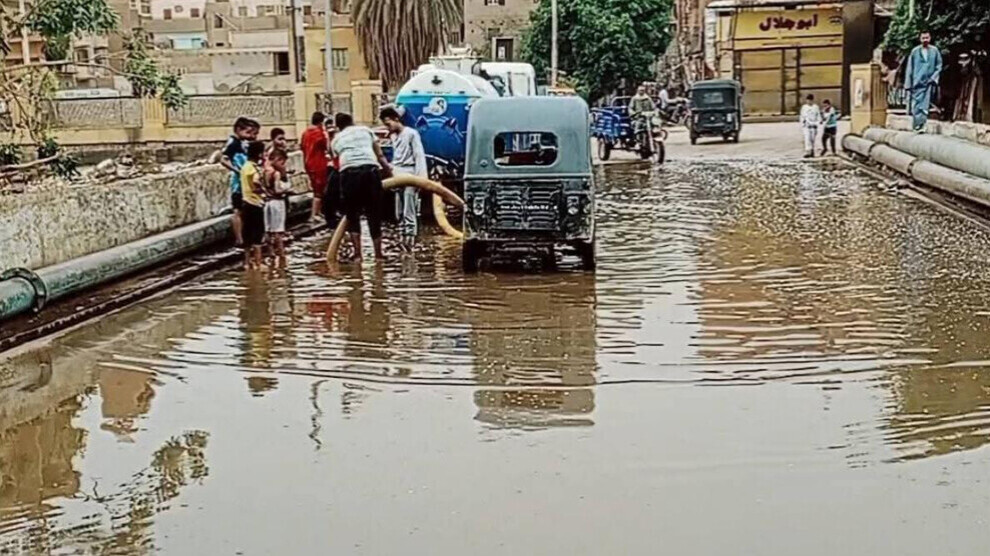
Cairo — In recent days, Egypt has witnessed a wave of severe weather changes, including heavy rain, strong winds, and a noticeable drop in temperatures, prompting authorities to take quick decisions such as suspending school in several cities. These shifts were not merely a passing weather event but imposed a new and sudden reality on daily life, especially for the most affected groups, foremost among them working women.
Double burdens with the storm
For many women, the decision to suspend school was not just passing news but a real moment of confusion between work commitments and caregiving responsibilities. Overnight, working mothers found themselves facing a difficult equation: "How can I continue working while the children remain at home without prior arrangements or adequate support?"
At the same time, the severe weather increased challenges related to movement and transportation, as women faced double difficulties in reaching their workplaces amid rain and wind, especially given infrastructure not fully prepared to handle these conditions. Women disproportionately bear the cost of these crises, whether through delays, forced absences, or even physical risks during commuting.
These developments reveal a deeper gap beyond the weather itself, highlighting the fragility of working women's situations in the face of sudden crises and the absence of flexible policies that take into account their complex roles. With every wave of extreme weather, the question is renewed: "Who supports women when climate crises intersect with the burdens of work and caregiving simultaneously?"
Between work and childcare
In this context, researcher and women's rights activist Rokaya Al-Samalosi spoke about the double cost faced by working women between work responsibilities and childcare. She says they faced dual challenges: the first related to the necessity of going to work despite bad weather, and the second linked to childcare after school suspension, without prior arrangements or suitable alternatives.
Pregnant women face greater risks when climate changes occur, due to the nature of their health conditions that require extra caution. Rokaya Al-Samalosi affirms that the absence of any measures taking into account the needs of pregnant women makes them bear additional burdens in unsafe conditions, whether on the road or in the workplace.
Female vendors and farmers... professions without protection
The nature of challenges varies according to the type of profession, as weather changes directly affect women in vulnerable jobs. Rokaya Al-Samalosi noted that women vendors in popular markets and street vendors were exposed to weather risks or forced to miss work and lose their daily income.
She explained that female farmers in rural areas faced greater difficulties, traveling long distances to reach fields via unsafe transportation, with no means of protection from rain, no hiding places, or places to change clothes. "These women live in extremely difficult conditions, with no means to protect them."
She added that these circumstances make workers in these professions bear double burdens compared to other groups, illustrating the fragility of their situation in the face of climate crises.
When it comes to traveling between cities, the danger becomes greater. Rokaya Al-Samalosi believes that commuting during rain and wind causes great psychological and physical stress, especially when needing to get to or return from work in unexpected conditions. She added that the absence of contingency plans or accurate weather forecasting increases the difficulty of the situation and multiplies anxiety for women during their travel.
Absence of a gender perspective in crisis management
Despite prior knowledge of some weather changes, Rokaya Al-Samalosi believes that government policies and measures taken often do not take into account women's needs, as women are placed at the bottom of the list of priorities when formulating policies.
She explained that this lack of planning makes working women more likely to bear the cost of crises without any tangible support, increasing their fragility. She considers that civil society and feminist organizations can play an effective role in supporting women and enhancing their ability to adapt to climate changes, noting that awareness programs, training, and environmental workshops can help women face risks with greater awareness.
She indicated that this support can include teaching recycling, utilizing environmental resources, and disseminating information via social media to ensure the message reaches as many women as possible.
In conclusion, nothing remains of the storm except its extended effects on the details of working women's lives, each according to her position and the nature of her work. Female employees in the private sector, especially in administrative and customer service jobs, found themselves caught between work commitments and children staying home after school suspension, in the absence of flexible policies to support them. In contrast, daily wage workers paid the price of the conditions directly.
In rural areas, female farmers and field workers faced double challenges, as their work is directly affected by weather fluctuations. As for female healthcare workers, they continued to perform their roles despite transportation difficulties and increased pressure.
These patterns do not only reflect different work locations but reveal a shared reality: that women across multiple sectors bear a greater cost when crises hit. Between those trying to balance work and childcare, those losing their daily income, and those facing road risks or crop loss, the same equation repeats in different forms.
With the increasing severity of climate changes, these facts do not appear to be an exception but rather an indicator of a deeper flaw in labor and social protection policies. The question is no longer just how to face the weather, but how to ensure that working women in all these professions do not continue to pay the price alone, every time.