Oil and Water: Unending Crises in Enclosed Seas.
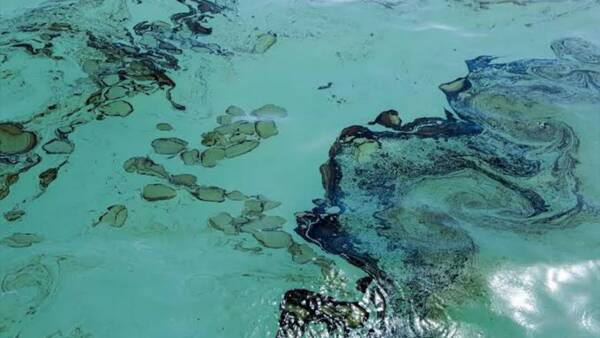
Oil spills in three of the world's gulfs have led to crises ranging from manageable to those with long-term consequences. However, the Arabian Gulf today has transformed into a complex, multidimensional crisis.
Barshink Doltari
News Center — Three gulfs—the Arabian Gulf, the Gulf of Mexico, and Prince William Sound—have, at different times, become arenas of direct confrontation between the oil industry and marine ecosystems. In these instances, an oil spill was not merely a technical accident but a multidimensional crisis with environmental, economic, and political repercussions.
In the Gulf of Mexico and Alaska, although the disasters were vast and destructive, they largely remained within the framework of industrial crises that could be studied and relatively managed. The Arabian Gulf today, however, has entered a different phase: oil spills are no longer just the result of technical error or maritime accidents but have become linked to the logic of war, the explosion of ships, and geopolitical rivalries. This reality has elevated the nature of the crisis from an environmental disaster to a "compound crisis," where environmental damage intertwines with energy insecurity and direct threats to human life.
An Environmental and Geopolitical Crisis
These three gulfs are sensitive marine areas that have all experienced oil disasters, but the geographic, structural, and geopolitical characteristics of each have made the dimensions of the crisis different, affecting the severity of environmental and social outcomes.
While the Deepwater Horizon spill in the Gulf of Mexico was a relatively concentrated and manageable disaster, the Exxon Valdez disaster in Alaska, as well as the current crisis in the Arabian Gulf, are characterized by long-term, multi-layered repercussions that make ecosystem management and rehabilitation much more difficult.
The Gulf of Mexico: A Concentrated and Manageable Disaster
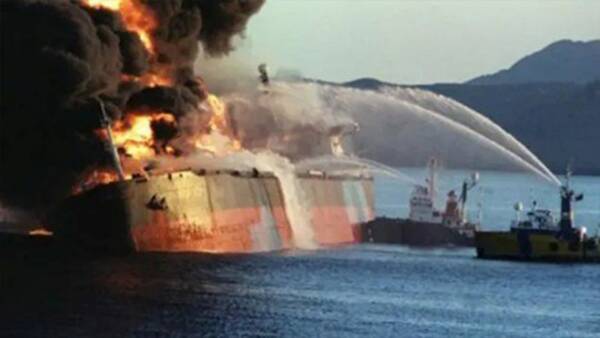
The Deepwater Horizon platform explosion in the Gulf of Mexico is one of the largest oil disasters in modern history, with approximately 4.9 million barrels of oil leaking over several months.
The spill area was relatively limited within a specific geographical range of the gulf, allowing for control, containment, and oil recovery efforts. This incident demonstrated that even in advanced industrial environments, an oil spill can have wide-ranging effects on local and global economies.
However, managerial capacities, legal support, and the presence of major oil companies helped relatively contain the crisis. Thus, this disaster is considered a model of a "controllable industrial crisis" that can be managed despite its severity, with limited geopolitical pressures.
Environmental Impacts
Food webs and marine species experienced severe stress; phytoplankton, shrimp, and demersal (bottom-dwelling) fish were the most affected.
Nevertheless, the ecosystem's recovery was relatively possible and somewhat predictable, and the damage remained within a specific geographical range. The concentration of the spill and the limited number of simultaneous human and natural pressures helped prevent irreversible effects.
However, the economic impacts on fishermen and the local tourism sector showed that environmental disasters in advanced industrial areas carry deep social dimensions.
Geopolitical and Human Dimensions
The geopolitical impact was relatively limited, despite some pressure on global oil prices. Countries and oil companies were able to take control measures.
Moreover, the absence of acute military tensions and geopolitical conflicts helped keep the disaster within a manageable legal and economic framework. In other words, "technical power" succeeded in replacing "political power," aiding effective crisis management.
The Gulf of Alaska: A Historic Disaster with Long-Term Effects
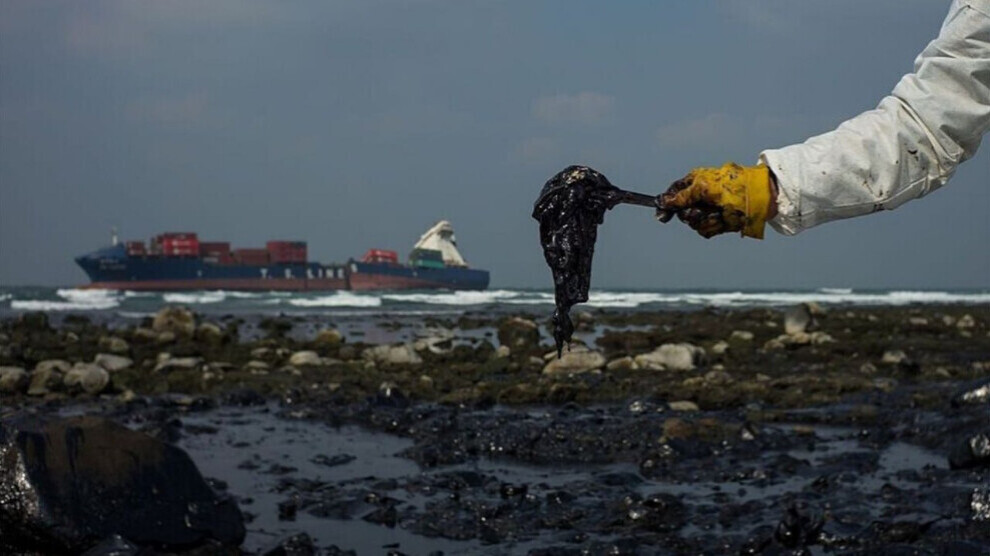
The collision of the oil tanker Exxon Valdez resulted in a spill of approximately 110 million liters of oil into Prince William Sound. This led to massive die-offs of birds and marine mammals, destruction of coastal habitats, and damage to fish stocks.
This incident showed that even in sparsely populated areas, environmental impacts can last for decades. Limited cleanup technologies and economic dependence on natural resources made the crisis long-term. Its economic consequences were severe for local communities and fishermen.
Ecosystem restoration took many years, and its effects are still observed today; food webs were disrupted, and populations of key species such as shrimp, demersal fish, and shorebirds declined.
In other words, the Gulf of Alaska is a model of a "long-term, geographically limited crisis," where the combination of the cold environment's natural stress and ecosystem sensitivity weakened recovery capacity. It also influenced U.S. environmental policies. Local communities dependent on fishing and coastal tourism were heavily affected. This incident shows that even in the absence of regional tensions or wars, the repercussions of environmental disasters can become an internal pressure factor and a tool for shaping long-term policies.
The Arabian Gulf: A Multidimensional Crisis Connected to War
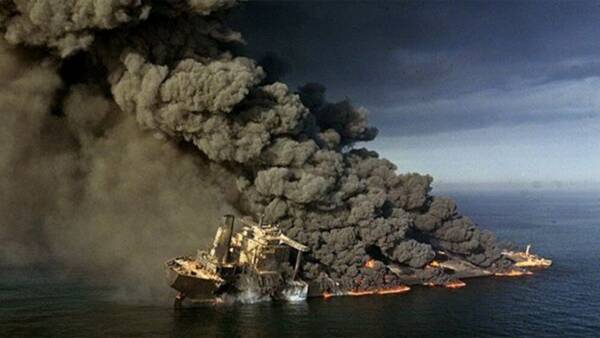
For over a month, the Arabian Gulf has witnessed military tensions between Iran and the Gulf states, along with direct pressure from the United States and Israel. More than 85 giant oil tankers, carrying over 21 billion liters of oil, have been suspended behind the Strait of Hormuz, while vital desalination plants face the risk of attack or shutdown.
In this context, the oil and environmental crisis in the Arabian Gulf has turned into a geopolitical tool. Energy routes and water resources are used as leverage, indicating that the environment is no longer just a victim but has also become an "instrument of power."
From an environmental perspective, the naturally high salinity of the Gulf's waters, combined with the daily discharge of highly saline brine from desalination plants, along with oil spills and rising temperatures, leads to the formation of "hot, salty patches" along coasts and in shallow areas.
This multi-faceted stress nearly eliminates nature's ability to recover. The overlap of military tension with oil spills, salinity changes, and temperature increases raises the likelihood of an irreversible environmental disaster. Clearly, the Arabian Gulf has today become a "laboratory for environmental and geopolitical crises."
Furthermore, the Gulf states rely heavily on desalinated water; Kuwait secures about 90% of its drinking water needs, Oman 86%, Saudi Arabia 79%, while Qatar and Bahrain obtain more than 50% of their needs from these facilities.
This dependence provides external actors with political and economic leverage. Any disruption to desalination plants or oil transport routes simultaneously affects human health, the economy, and regional security. The Arabian Gulf crisis is a clear example of "instrumental biopolitics," where the environment is turned into a geopolitical tool.
The simultaneous pressure from oil, rising salinity, and increasing temperatures disrupts the structure of food webs, reduces species populations, and alters migration routes and the environmental behavior of organisms. Unlike previous disasters, these pressures here are overlapping and synergistic, reinforcing each other. The long-term effects not only threaten species diversity but also impact the functioning of the entire ecosystem and the economic and social stability of coastal communities.
The Arabian Gulf has today become an exposed arena for "advanced environmental biopolitics," where political power, capital accumulation logic, and the fragile ecosystem intertwine in a complex and contradictory relationship. In this geography, nature is no longer a neutral framework but has become a field for the exercise of power, where war, the oil economy, and security policies directly intervene in the reproduction or destruction of life.
Unlike classic disasters such as Deepwater Horizon and Exxon Valdez, which, despite their severity, were relatively containable in time and space, the current crisis in the Arabian Gulf is the result of several simultaneous and escalating pressures, including the militarization of the region, an unprecedented accumulation of oil tankers, threats to vital infrastructure such as desalination plants, and accelerating climate change. Here we face a "compound crisis" — a persistent structural condition, not a transient accident.
In this context, the accumulation of billions of liters of oil behind the Strait of Hormuz, in the form of stranded tankers, reflects a dangerous logic of the global economy that prioritizes energy security over the survival of ecosystems. This situation has turned the Arabian Gulf into a "ticking environmental bomb," where any miscalculation, attack, or even accidental incident could lead to the release of millions of barrels of oil at once — a disaster beyond the containment capacity of any single country or alliance.
At the same time, the threat to target desalination plants reveals another dimension of this violent politics. In a sea already characterized by high salinity, the daily discharge of millions of cubic meters of hot, highly saline brine disrupts the delicate ecological balance. If these facilities are attacked or their intakes are blocked by oil, the crisis will not be limited to a shortage of drinking water; it will also cause deep disruption to the water cycle, the thermal-saline structure, and the foundations of the food chain.
Modeling studies indicate that even under normal conditions, desalination plant activity can raise subsurface temperatures by about 0.6°C and increase salinity by up to 2 grams per kilogram. These are critical figures in a semi-enclosed sea like the Arabian Gulf, representing for sensitive species such as coral reefs, seagrasses, and mollusks the threshold between survival and collapse.
This rise in salinity, along with decreased dissolved oxygen and the onset of osmotic stress, pushes the ecosystem toward what are known as "localized tipping points" — areas that, if combined with oil pollution, could become hotspots of biological death.
In this context, although the Arabian Gulf has not yet reached a "critical salinity tipping point" on a broad scale, this does not mean it is safe. On the contrary, what is happening is a gradual erosion of environmental tolerance thresholds — a process where the ecosystem is driven toward collapse not by a sudden blow but through the accumulation of chronic pressures.
The essential point is that the Arabian Gulf is already wounded. Remnants of oil pollution from the 1991 Gulf War still exist in the sediments, and today they are mixing with new hydrocarbons, heavy metals, and thermal-saline stress. This accumulation has brought the ecosystem to a state described by some as "irreversible environmental degradation," where the system loses its ability to return to its previous state even if the causes of the crisis are removed.
In the event of a major spill, given the Gulf's unique currents, pollutants could spread within days to cover the southern coasts of Iran, mangrove forests, Arab ports, and vital habitats such as dugong (sea cow) feeding areas.
In such a scenario, not only biodiversity would be at risk, but also the livelihoods of millions of people for decades. Here, the environmental dimension directly overlaps with social and political dimensions.
Ultimately, the Arabian Gulf today represents a test of the understanding that the environment is no longer a separate domain; politics, economics, and war directly intervene in reshaping the conditions of life. Every missile, every sanction, every oil tanker, every geopolitical decision can play a direct role in the equation of ecosystem survival or collapse.