

NAGHAM JAJAN
QAMISHLO — Violence against women is a tool for their oppression, marginalization, and deprivation of their right to self-determination and enjoyment of their freedom. This phenomenon is not limited to being an individual or family problem but reflects a mentality and a system that treat the violation of women's rights as natural and acceptable. With the arrival of November 25, the International Day for the Elimination of Violence against Women, the need is renewed to bring about a radical change in prevailing mentalities, strengthen women's voice, and work to build a society that rejects violence in all its forms.
In her interview with our agency about political violence practiced against women, the co-president of the Democratic Society Movement (TEV-DEM), Remsiye Mohammed, shed light on the obstacles and pressures women face in the political field.
Remsiye Mohammed explained that women continue their struggle against violence at the global and regional levels. "Women face violence in various fields, from securing daily life requirements to defending their will. The forces that want women to remain confined to the home, without opinion or will, seek to push them away from their role and social presence. This mentality is not manifested only in physical violence but also appears through restricting women's rights, will, and participation."
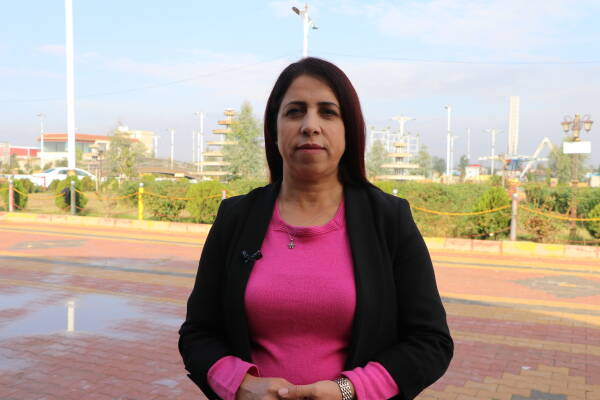
Under the slogan "Woman, Life, Freedom," a social and political force was founded
Remsiye Mohammed pointed out that the women's revolution in Rojava, based on the struggle against violence and raising the slogan "Woman, Life, Freedom," contributed to founding a great social and political force.
She added: "With the launch of the women's revolution in Rojava, women's struggle against violence became the foundation for building a social and political force. However, political attacks and attempts to obstruct this struggle targeted breaking women's will and frustrating their aspirations. Despite the important steps women achieved within the co-presidency system and their ability to entrench their presence in management and leadership positions, the obstacles and pressures imposed on them continue."
Remsiye Mohammed stressed the need to guarantee women's role in political paths and upcoming electoral entitlements, saying: "It is necessary to guarantee women's role and make it a foundation in political paths, upcoming elections, and the process of forming people's councils. Women's participation should not remain mere slogans and statements but must have an active presence in decision-making, management, and the founding of political institutions."
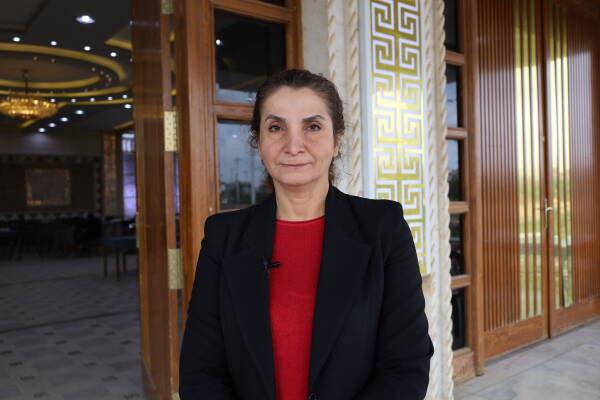
Legal violence... Shortcomings in legislation and protection mechanisms
Speaking about legal violence practiced against women, lawyer Abeer Hassaf reviewed her vision regarding the violation of women's rights, the obstacles preventing their access to justice, and the shortcomings in legal protection mechanisms.
She explained that women are subjected to multiple forms of violence in various areas of life, indicating that the forms of violence women face are not limited to physical violence but also include political, social, and legal violence. Women's bodies are still viewed in many fields as an arena for control and achieving interests.
She also shed light on legislative shortcomings in the field of women's protection, pointing out that current laws do not provide full protection for women's rights in many aspects.
Abeer Hassaf concluded her talk by saying: "These legal and institutional restrictions affect women's freedom and rights and turn into obstacles preventing their recognition as full citizens with rights and duties. Therefore, women's rights must be guaranteed through just legislation and effective protection mechanisms."


