
“Genologia” discusses constitutional and legal guarantees for women’s rights
Egypt’s Genologia Center concluded day two of its legal writing workshop under the “Women’s Pens “campaign, where experts discussed raising women’s constitutional awareness, boosting political participation, and developing national legislation.
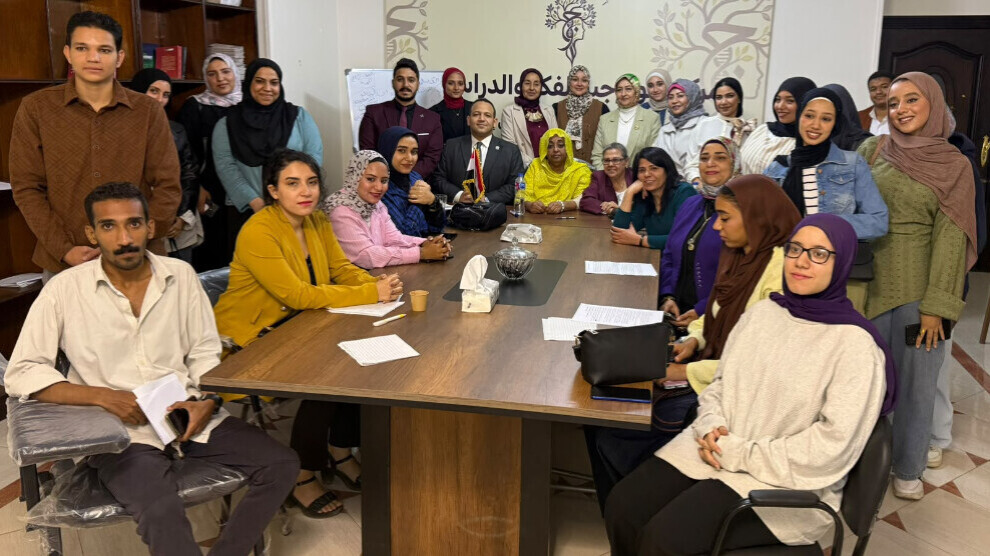
EGYPT — Participants in the second day of the "Women's Pens" campaign discussed ways to enhance women's constitutional awareness, develop the personal status law, and boost political participation, with the aim of empowering women to possess the tools to defend their rights and issues.
Within the framework of strengthening legal and rights awareness and empowering women to possess professional writing tools capable of expressing their issues and defending rights, the Genologia Center for Thought and Studies launched numerous activities as part of the "Women's Pens" campaign, specializing in legal and rights writing, with the participation of an elite group of specialists and experts in the legal and rights field.
The activities of the second day of the workshop concluded yesterday, Tuesday, November 10th, with the participation of the head of the Genologia Center for Thought and Studies, Dr. Dina Mohsen, and the center's executive director, Nujin Youssef, and in the presence of a number of specialists, including Counselor Hussam Allam, lawyer Salwa Absam, the Sudanese human rights activist Dr. Karima Al-Hefnawi.
The head of the Genologia Center for Thought and Studies, Dr. Dina Mohsen, affirmed the importance of raising women's awareness of their legal and constitutional rights, considering that knowing rights represents the first step toward protecting and demanding them. She pointed out that empowering women is not limited to providing opportunities for them, but extends to their possession of the knowledge and tools that enable them to defend their rights and confront any violation of them.
"The constitution is a fundamental necessity for enhancing women's ability to participate"
For her part, the center's executive director, Nujin Youssef, said that women's knowledge of the constitution and the laws that regulate their rights represents a fundamental necessity for enhancing their ability to participate in society and obtain their rights. She stressed the importance of spreading legal and rights culture among women so that rights do not remain mere written texts, but rather transform into a tangible reality and practices that protect women's dignity and safeguard their gains.
Dr. Karima Al-Hefnawi addressed the importance of enhancing women's participation in political life and public work, and learning about the roles of local councils and the House of Representatives, and the difference between the legislative and oversight role of parliamentary councils and the executive role of local councils, in a way that helps women understand the mechanisms of societal participation and exercise their role in following up on citizens' issues and contributing to decision-making.
She also discussed the importance of employing the international agreements and covenants that Egypt has ratified in evaluating national legislation, and monitoring shortcomings or conflicts between some legal texts and international obligations, while presenting the necessary proposals to develop laws, including the personal status law, in a way that enhances the protection of women's and family rights.
For her part, lawyer Salwa Absam reviewed the role of the legal profession in contributing to the achievement of justice, consolidating the rule of law, and guaranteeing the right to defense. She pointed out that the independence of the lawyer represents a fundamental guarantee for practicing the profession, citing what is stipulated in Article One of the Egyptian Lawyers Law No. 17 of 1983 regarding the role of the legal profession in achieving justice, the rule of law, and guaranteeing the right to defense.
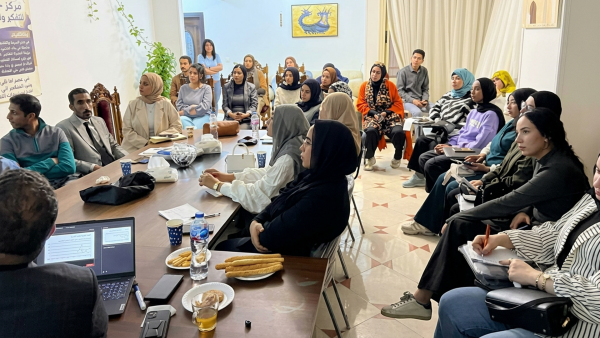
She addressed the legal and ethical controls that govern the lawyer's work, explaining that defending the interests of his client does not mean transgressing the law or using unlawful means. Rather, his commitment to valid evidence, legality, and respect for legal procedures remains among the foundations that govern the practice of the profession.