
When the World Is Lit in Orange... Who Sees the Women in the Dark?
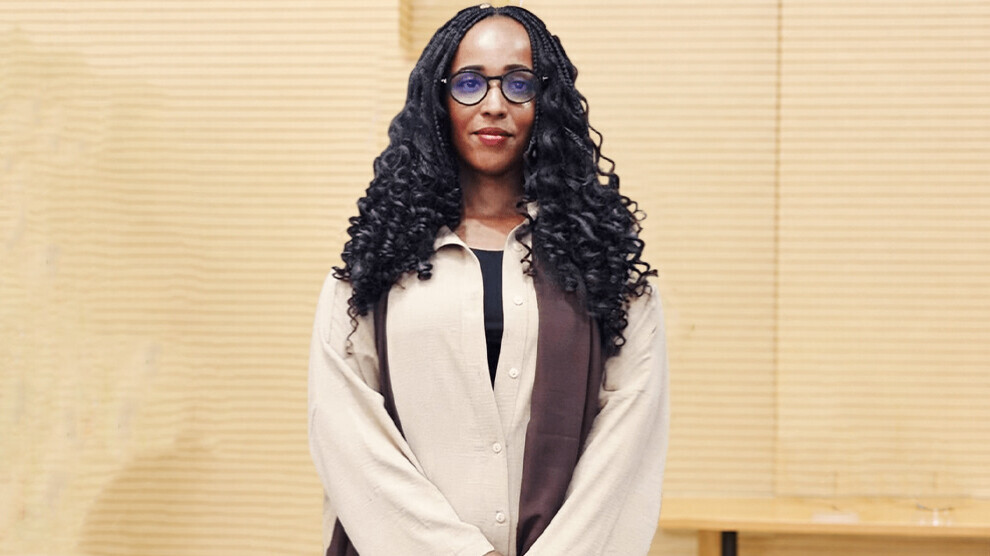
An Article by Somali Activist and Writer Layla Jama
On the twenty-fifth of November, major buildings in the world's capitals turn orange, speeches are delivered, images are published, and many feel for a moment that they have done something. I write from the heart of the Horn of Africa to pose a question no one likes to hear: What about the women whom the light does not reach?
There are wars that top news bulletins, and others that are left to erode in silence. Women in forgotten wars pay the price twice: once through violence, and once through oblivion. This is what happened in Somalia when the state collapsed with the civil war. The woman did not lose safety alone; she lost the existence of anyone to ask and anyone to hold accountable. Since then, rape, sexual violence, forced and early marriage, exploitation, and repeated displacement have remained part of the lives of countless women and girls, and those most exposed to them are those living in displacement camps, where fragility accumulates upon fragility.
The United Nations has documented patterns of conflict-related sexual violence and indicated that displaced women are among the most exposed groups. But reports, however accurate, tell only half the story. The crime does not remain alive because of the perpetrator alone, but because of weak justice and impunity. When a survivor sees the aggressor unaccountable, she realizes that speaking is of no use, and the aggressor understands that the crime has no price.
Here begins the second battle, the one that does not appear in any statistic: the fear of being rejected by her family and society, and the pressure of a "friendly" settlement that closes the file and leaves the aggressor free. Many women choose silence, not because what happened to them was easy, but because speaking may cost them more than the assault itself cost them. So how do we make speaking safe? That is the question from which every serious effort must begin.
Perhaps the most dangerous thing about forgotten wars is that they do not remain where they are. A society in which violence against women is left unaccountable raises generations that see it as normal and pass it on to those after them. A country whose women do not feel safe inside their homes and camps knows no peace, however silent the cannons may be. The fragility of women is the first indicator of the fragility of homelands, and a peace that women do not feel is not peace.
Celebrating women's resilience may, unintentionally, turn into a means of exempting officials from their responsibility. Resilience is not a virtue granted to women, but a burden they carried because the state and society fell short. It is not right to applaud those who survived and then leave the causes that made them need to survive. What is required is that praise turn into commitment: clear legislation that criminalizes violence and does not leave it to the interpretations of customs, and that is actually enforced; a judiciary and police that women can access without fear or intermediaries; shelters and health and psychological services for survivors; education that opens a door for the girl other than early marriage; protection for journalists, researchers, and activists who document violence and are themselves subjected to it; and before all of that, that those whom it concerns be involved in formulating policies. Decisions taken about women without them do not protect them, whatever they may be.
This is not the battle of women alone. Violence against women is a wound in the body of the entire society, and it does not heal unless everyone stands on its right side — not with words on occasions, but with a position when it is costly. And it is not merely Somalia's issue.
The world does not lack information about Somalia; it lacks the insistence to look. Images arrive, reports are published, testimonies are told, and then attention moves to another, noisier crisis. As for the women who survived, they remain with what happened to them after the light moves elsewhere.
This is my testimony as a Somali researcher and activist. I write because I believe that human dignity is indivisible, and that our silence makes us partners in the loss. I believe that the woman who carried society on her shoulders in the cause of care and education amid death deserves to have her voice heard. When a woman's voice rises, freedom rises with it.
And on the morning of the twenty-sixth of November, when the orange lights are turned off and the speech is folded away, a Somali woman will wake up to the same danger she slept on. The question I leave to everyone who reads these words: What will you do then?