
SARA POURKHEZRI
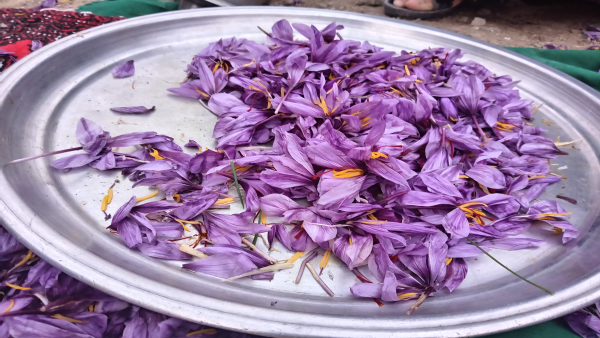
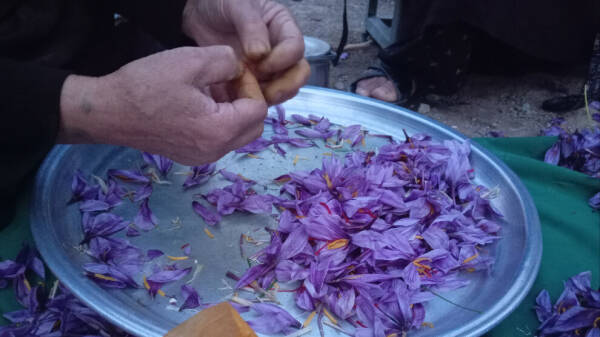
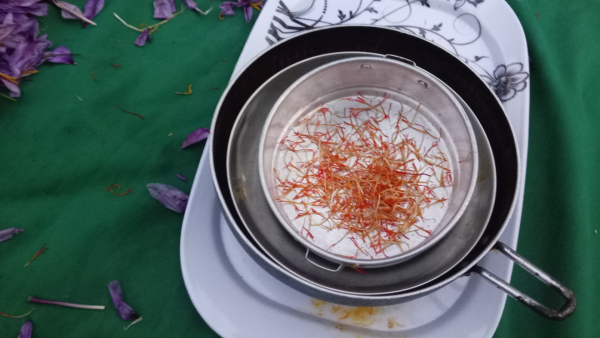
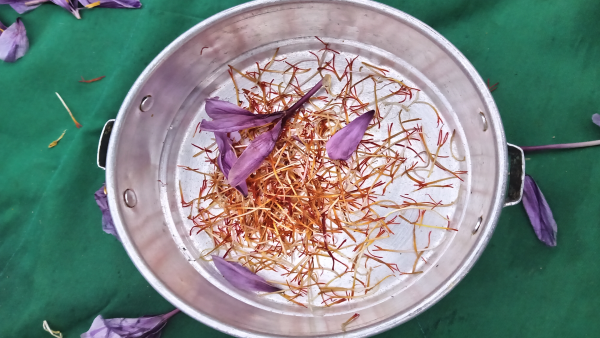
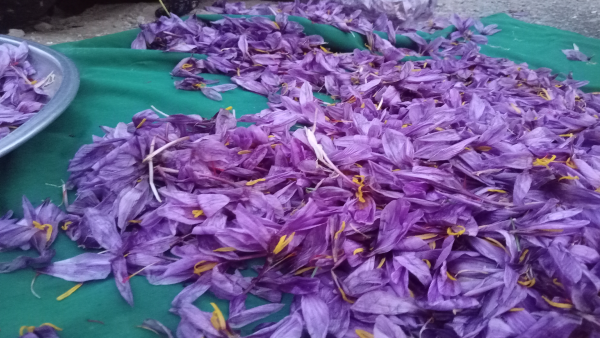
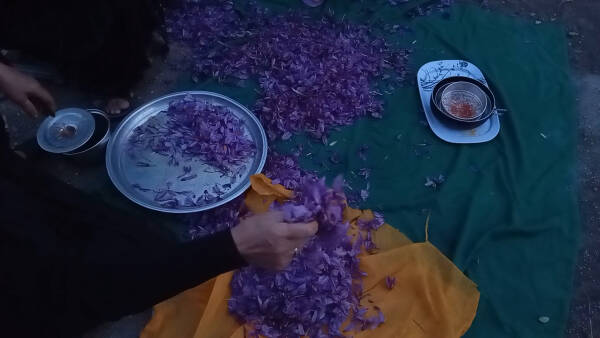
KERMANSHAH — A pile of purple flowers surrounds a group of women, a scene resembling forgotten rituals that seem to leave no trace in memory. They hold each flower with a piercing gaze, extract the red threads from its heart, then move to the next flower. This ritual, repeated every year with the largest burden falling on women's shoulders, is the exhausting process of cleaning (sorting) saffron—long hours of sitting before a mountain of flowers and separating saffron threads for meager and limited wages.
Saffron is called "red gold," a precious commodity traded in luxury packaging and one of Iran's largest export goods. But behind this luxurious appearance hides a bitter reality: the suffering of women who extract red gold from the heart of flowers, while their share of this precious treasure is nothing but meager wages and endless toil.
"Great effort for the lowest wage"
Rababeh Azimi (pseudonym), one of the women working in this profession alongside other women in Kermanshah, says: "This work lasts only one month a year. They used to pay us 140,000 tomans for cleaning each kilogram of saffron flowers, and now, after strong insistence from us, they increased the amount to 170,000 tomans. It is extremely hard work.
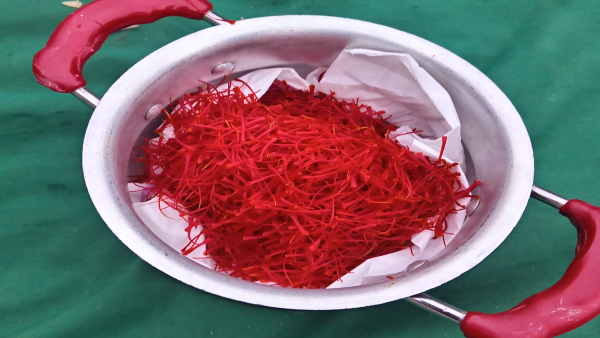
You must be precise so as not to make even a single mistake, and cleaning one kilogram alone takes between two to four hours; if there are two of us, we clean it in two hours."
Women's rights activist Farankis Qodrati (pseudonym) explains that "women's labor has become synonymous with exerting maximum effort for the lowest wage," adding: "Kermanshah tops the country's unemployment rates, and if any job opportunity becomes available, men are given priority in the labor market, making the province an ideal environment for employers seeking near-free female labor. They know full well that extreme poverty, unemployment, and the scarcity of opportunities push women seeking work to submit to any income, however meager."
She affirms that "a woman spending four hours on this work for 170,000 tomans embodies the depth of the poverty crisis in the province and reveals the absence of oversight over wage-setting, which has become entirely subject to employers' whims," noting that they could attract women to clean saffron for much lower amounts if they wanted.
These statements show the extent of pressures women workers face and their forced submission to employers' demands, even at the lowest wages.
For her part, Kobra Hemmati, another woman working in this profession, says: "There is no work and everything has become expensive; we are forced to do any work available. When expenses and costs pressure us to this extent, even 50,000 tomans is valuable to me. I myself know they should pay us more for cleaning saffron flowers; but without the harshness of life conditions, I would not accept these terms. What can I do when I have no choice?"
Wide dimensions of poverty
A review of classified ad websites such as Divar, where job advertisements are posted, reveals that many labor supervisors recruit women for similar seasonal work at much lower amounts; because in seasonal agricultural work such as harvesting saffron, cucumbers, tomatoes, vegetables, and others, women are considered very cheap labor whose abundance gives the employer freedom of action.
Since a large proportion of Kermanshah women are looking for work, they are forced to accept such jobs regardless of their academic qualifications or the difficulty of the work. The presence of large numbers of women workers seeking work and a competitive market among them has led women working in saffron cleaning to accept the first offer an employer makes without any bargaining.
This reality, which reveals the wide dimensions of poverty and the absence of fair income sources for seasonal women workers, reflects their severe living hardship; women seeking their livelihood for meager wages amid dozens of kilograms of flowers called "red gold," yet they can never, with this income, buy even a single grain of it in the market.