
Kilim Adawi… a craft passed down among the women of "Bani Adi" in Egypt
The craft of making Kilim Adawi is a traditional handicraft women rely on for livelihood; they spin and weave despite great physical effort, preserving inherited skill and supporting this art's continuation.
Eman Samir Ali
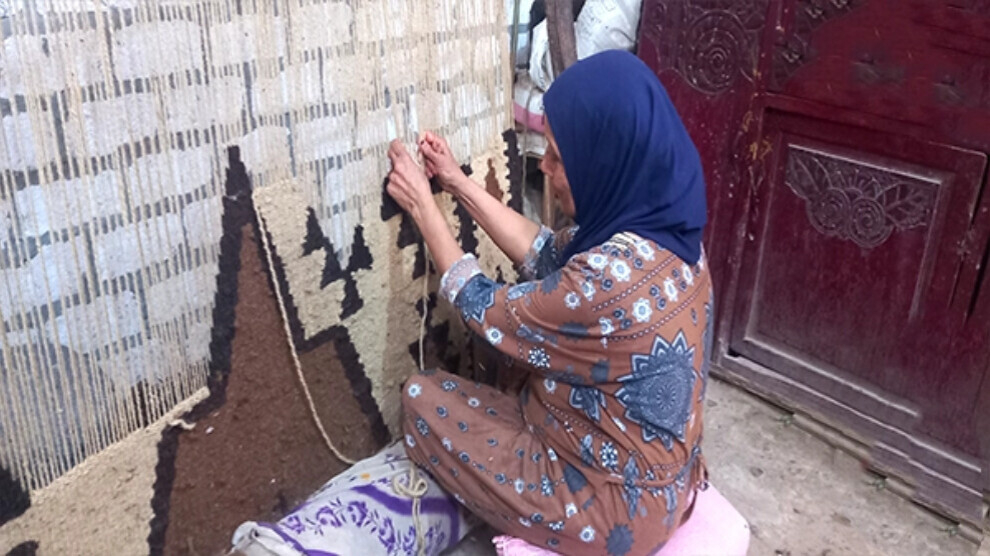
Egypt – In one of the villages of the Manfalut district in Assiut city, Egypt, the handmade Kilim Adawi craft remains strongly present within homes, passed down from generation to generation among women as a source of livelihood and a folk heritage reflecting the identity of the place. Among the women who have preserved this craft, Samia Mohamed Ali stands out. She has been working in Kilim making for more than twenty years, after inheriting the profession from her mother and grandmother, and then teaching it to her four daughters.
Samia Mohamed Ali says that the making of Kilim Adawi goes through several stages, starting with sheep wool, which is processed in factories before reaching the workers in the form of threads of different colors and shapes. She explains that the work is not limited to one person; tasks are distributed among those who spin, those who twist the threads, and those who weave on the handloom.
She added that the women workers in the village do not sell the Kilim Adawi directly; rather, they receive the raw materials from a merchant who markets the product after it is finished, while the woman worker receives only the manufacturing wage.
She affirmed that the village of "Bani Adi" has been famous for this craft for many years, noting that most women in the village work in it, and that the various drawings and patterns are memorized through continuous practice and repeated work. She said that constant practice makes the pattern memorized just as writing is memorized with a pen.
Despite the income that the craft provides to help families meet their daily needs, it requires great physical effort, especially with sitting for long periods in a squatting position in front of the handloom, which causes pain in the legs and back. She explained that the workers are forced to stop from time to time to move and rest so they can continue working.
Regarding the time it takes to make a single Kilim piece, she noted that completing one piece requires an average of 9 to 11 days, depending on the circumstances and daily commitments of the women.
She also mentioned the participation of some workers in exhibitions and events organized in the city to support handicrafts, affirming that these exhibitions helped introduce the local product and encourage women to continue working.
Samia Mohamed Ali believes that preserving this craft requires cooperation among the workers themselves, as women exchange experiences and patterns free of charge, within a framework of social solidarity within the village. She affirms that learning Kilim is not easy; it requires patience, skill, and endurance.
Kilim Adawi remains one of the most prominent traditional crafts in Upper Egypt, carrying in its threads the stories of women and their daily struggle to preserve their livelihood and the heritage of their village.