
Sweida facing siege… an alternative economy and community resilience
The Sweida crisis reveals an accelerating economic and social collapse, as residents face Widespread displacement, loss of income, and absence of services, pushing them toward unsustainable alternative solutions that reflect forced resilience in the absen
Rochel Junior
As-Sweida – The Syrian city of Swieda is is experiencing a complex living crisis, which has worsened over the past ten months as a result of the siege and the repercussions of the events of July 2025, pushing residents to search for new patterns of living outside the official economic system.
Lamis Jawdieh, an economics graduate and coordinator of initiatives in the "Basel" team, says that before these events, Sweida relied mainly on government employees' salaries and remittances from expatriates, along with agriculture as a primary source of income. However, this model was inherently fragile, in light of the absence of development projects and long‑term economic marginalization, which intensified due to political stances opposing the Assad regime.
Displacement and double pressure
The July events formed a sharp turning point, as they led to the burning of thirty‑seven villages and the displacement of their residents toward the city center. This sudden displacement placed great pressure on infrastructure and services, and increased the severity of unemployment, especially since most of the displaced lost their livelihoods linked to agriculture and livestock.
With savings depleted to secure housing and daily needs, a wide segment of the population found itself without any stable financial resource.
A market without liquidity
One of the most prominent manifestations of the crisis is the interruption of employees' salaries, which led to a decline in the monetary mass within markets. As a result, the economic cycle was almost completely disrupted, as the absence of income reflected on various commercial activities, from foodstuffs to non‑essential goods.
The private sector also faces great difficulties, in light of the absence of security stability and rising operating costs, especially with the electricity and energy crisis, which has led to reduced working hours and lower productivity.
Growth of the informal economy
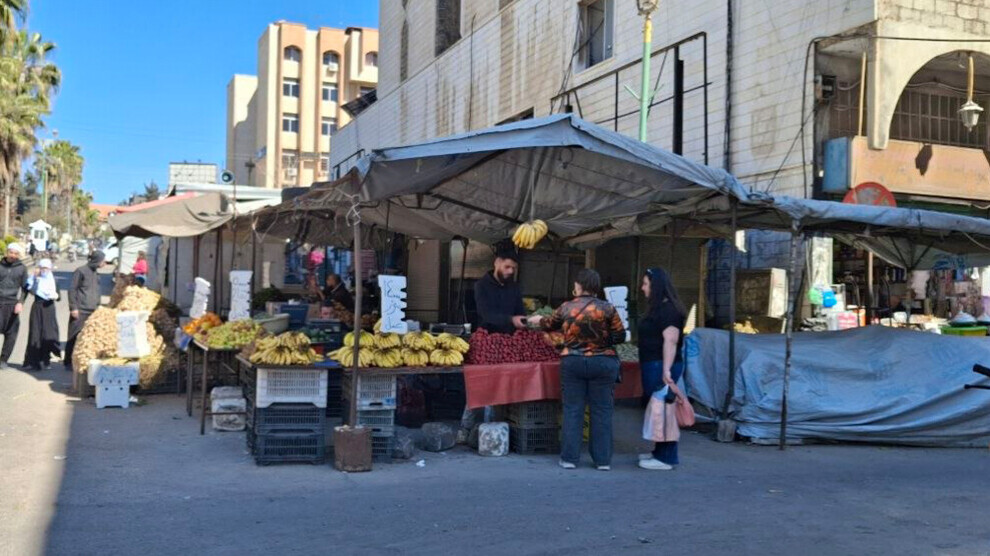
In the face of this reality, the informal economy emerged as the only option for many residents. Street stalls spread, and selling simple goods became a means to secure a minimum income.
In parallel, a large number of families rely on humanitarian aid provided by organizations and associations, despite its limitations and instability. Barter also returned to the forefront, with food items being exchanged among residents to cover gaps in daily needs.
Food security challenges
This economic deterioration directly reflected on food security, especially among the most vulnerable groups. The ability of families to secure balanced meals declined, amid rising prices and difficulty accessing basic materials, in addition to shortages of medicines and nutritional supplements.
Agriculture as a last resort
With rising vegetable prices, residents returned to home gardening as an alternative solution, whether by using balconies and rooftops or collecting seasonal wild plants. These practices have become an important source of food, and sometimes of income through selling surplus.
Notable forms of community solidarity have also emerged, including support for shelters and the provision of educational services and activities for children.
Unsustainable solutions
Despite the emergence of small and micro‑projects that provide limited job opportunities, they remain temporary solutions that do not address the roots of the crisis. Lamis Jawdieh affirms that these responses reflect a "forced adaptation" imposed by circumstances, but they do not replace the need for sustainable development plans.
In conclusion, Lamis Jawdieh explained that Sweida's experience reveals the local community's ability to resist and reorganize itself in the absence of government institutions, but at the same time highlights the scale of challenges that require long‑term solutions.