
Women’s economy in Afghanistan: A continuation of path despite all challenges
Women in Afghanistan, despite marginalization and rising restrictions, have played an essential role in family and community economy—continuing today through new forms of entrepreneurship and resistance.
Baharan Lahib
Bamiyan — Since ancient times, women in Afghanistan have played an important role in the family and community economy, even though these roles were not recorded or documented in many historical periods.
In traditional societies, women primarily participated in domestic activities such as weaving, carpet making, agriculture, and handicrafts, contributing effectively to production and family income. Although these activities were often classified as informal work, they are considered fundamental pillars of the local economy.
Historical studies indicate that even in the pre-Islamic periods, and then throughout various Islamic eras, women in multiple regions of present-day Afghanistan participated in agricultural production and handicrafts. Sources related to Silk Road research and local economy show that women, especially along trade routes such as this road, had a notable role in producing carpets and handmade goods that were displayed in regional and international markets.
Among the early prominent examples of women's economic role in Afghanistan's history, we can refer to figures such as Rabia Balkhi (3rd-4th century AH). Although she is primarily known as a poet, the active presence of women in the court and cultural councils of that time indicates their contribution to shaping the cultural and social economy.
In the modern era, especially in the late 19th and early 20th centuries, with social reforms, women gradually began to gain greater opportunities for economic participation. During the period of Queen Soraya (1919-1929), extensive efforts were made to educate and empower women, paving the way for their participation in economic and social activities. This period can be considered a turning point in the growth of women's entrepreneurship.
Development reports from Afghanistan during the mid-20th century show that with the spread of education and urbanization, larger numbers of women entered the labor market. They worked in fields such as education, health, handicrafts, and small trade. The establishment of carpet weaving and handicraft workshops by women is an example of the beginnings of entrepreneurship in that period.
According to Human Rights Watch, despite the long wars in Afghanistan since 1979, women were not excluded from the economic scene. On the contrary, many of them became the primary breadwinners for their families. In times of instability, they contributed to their families' economic survival by launching small projects such as sewing, selling homemade products, and handicrafts.
After 2001, with increased international support and attention to women's empowerment, greater opportunities for women's entrepreneurship became available. Local and international organizations launched programs to train women in business skills, facilitate their access to markets, and provide financial support. During this period, women were able to establish independent companies, institutions, and projects, and became known as successful entrepreneurs.
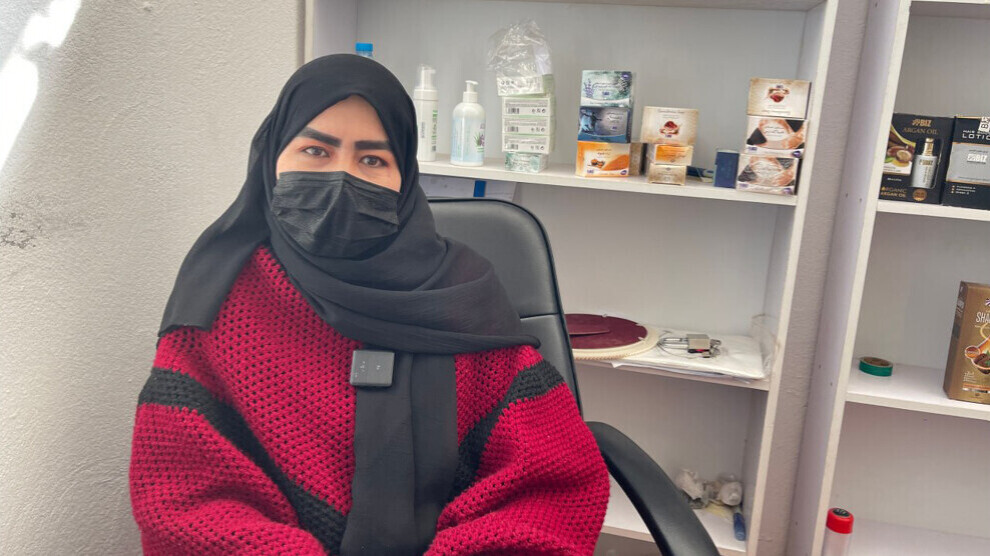
With the Taliban movement seizing power and preventing women from working outside the home, women in Afghanistan continue to play a prominent role and carry on their activities in various fields. Latifa Iqbalai is one of these women; she established a shop selling hygiene and cosmetic products for women in Bamiyan city.
She says, "When I stopped studying, I stayed at home without work. The longer I remained without work, the more stressed I became. So I decided to open a shop at least to occupy myself."
She explains how she invested in her shop: "I obtained a loan from an organization working in Bamiyan. This organization has a fund program based on collecting (50 or 100) Afghanis from women. After a period, they add an amount to what has been collected. I also borrowed from this organization and started investing with simple capital."
Latifa Iqbalai emphasizes that women should start their own projects because "they can work even from inside the home," starting with very simple things, from hand knitting to any other work. The important thing, as she explains, is "not to remain without work."
When a woman remains without work, stress increases and affects her even if she is young, and this is what happened to her. "Staying at home makes a person sick and increases psychological pressure."
About her personal experience, she says, "I used to be a bold woman. But during four years of staying at home, when I speak, my voice trembles, my hands shake. The longer the isolation continues, the worse this condition becomes. Therefore, women in Afghanistan should start from anywhere possible, as this is very beneficial for their mental health."
What this narrative reflects is the continuation of women's vital role in the Afghan economy, despite political restrictions and formal structures. From traditional activities to modern small projects, women continue to struggle for survival, independence, and the preservation of their dignity.
Experiences like that of Latifa Iqbalai show that work and economic participation are not merely a material necessity but also a means of maintaining mental health, personal identity, and hope for the future.