

ZOUHOUR AL-MASHARQI
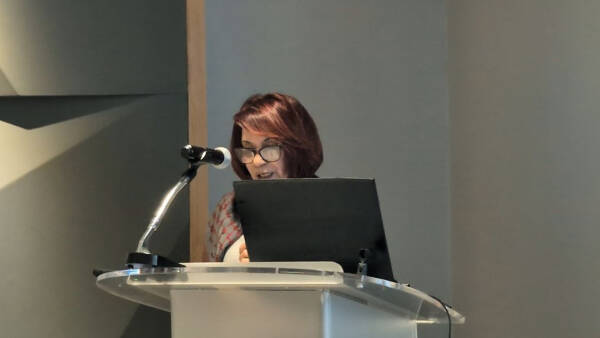
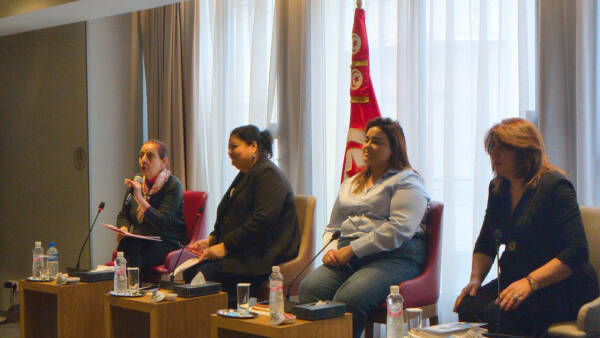
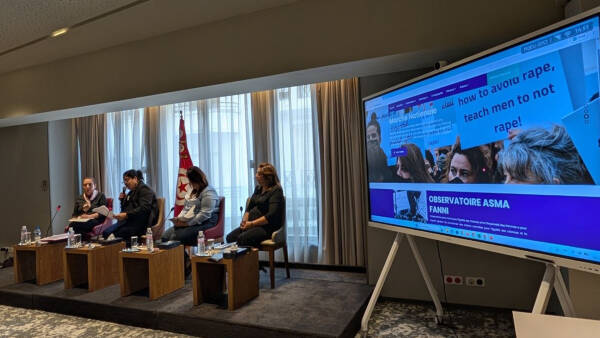
TUNIS — With the launch of the 16 Days of Activism campaign against violence against women, the Tunisian Association of Democratic Women organized yesterday, Wednesday, November 25, a workshop titled "Digital Violence Against Women: Renewed Forms of Discrimination and Challenges."
The participants affirmed that this workshop falls within a struggle and rights station renewed annually to emphasize that combating violence is not merely a passing occasion, but a continuous commitment and collective responsibility requiring the pooling of efforts to ensure women's rights, freedom, dignity, and equality—especially as the digital space has become an extension of the gender-based violence that women face in social, professional, and political spaces, but with new tools and means that require developing understanding and mechanisms of confrontation.
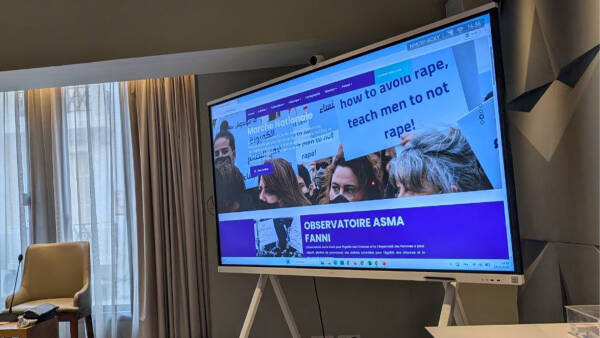
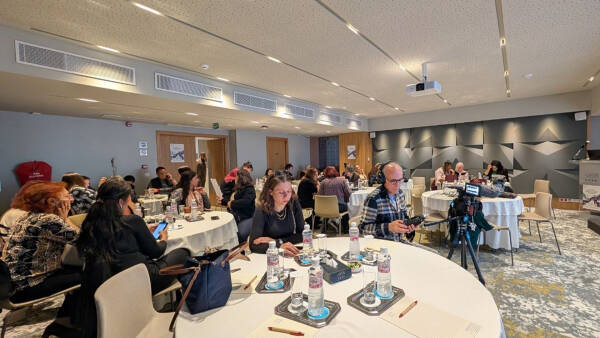
They stressed that digital technologies do not eliminate the discrimination existing in lived reality but deepen it, as the virtual space becomes a tool for practicing symbolic violence and subjecting women to surveillance and social stigmatization through platforms that multiply the speed of spread and the magnitude of harm.
Laws in Tunisia Are "Ambiguous"
The president of the Tunisian Association of Democratic Women, Raja Al-Dahmani, said that the launch of the 16-day activism campaign against violence against women and gender-based violence represents an international station that Tunisia commemorates annually with the participation of feminist and women's associations to reject all forms of violence, affirming that the association chose this year to focus on digital violence, which has become a frightening phenomenon in the country.
She explained that the listening and guidance centers for women victims of violence have monitored a notable increase in the rate of digital or cyber violence in parallel with the evolving use of modern social communication mechanisms, noting that the workshop discusses protection mechanisms and its new forms, as a form of discrimination and marginalization affecting women, and primarily targeting human rights defenders whose voices have become stigmatized and who are subjected to severe violence reaching the point of pain and abuse.
She affirmed that laws in Tunisia are "ambiguous," noting that Decree No. 54, which was established to protect citizens in the digital space, has turned into a tool of pressure and a sword hanging over rights defenders, lawyers, and journalists, with judicial prosecutions and prison sentences recorded on the back of statements and freedom of expression.
She stressed the necessity of ending impunity and directing these legal texts toward the actual perpetrators of crimes against Tunisian women and men, not toward criminalizing the defense of human rights and freedom of opinion and expression. She considered that revising the decree and replacing the prison penalty with a financial penalty enshrines another kind of discrimination that makes the financially well-off more able to express themselves as they wish.
She stated that the well-off escape punishment while the human rights defender becomes the party bearing the consequences of all this. She pointed to the multiple forms of violence practiced against women—marital, domestic, physical, and verbal—explaining that despite the success in issuing Law No. 58 of 2017 to confront these phenomena, its implementation still faces great difficulties, in addition to resistance within the Tunisian judiciary that prevents its implementation on the pretext that it is ahead of society.
Technology-Facilitated Violence Does Not Eliminate Social Hierarchy
In her intervention during the workshop, sociologist and member of the Tunisian Association of Democratic Women, Fathia Al-Saidi, said that digital technologies do not eliminate the social hierarchy existing in lived reality but deepen it. She explained that gender-based digital violence includes practices aimed primarily at subjecting women to the moral and social standards imposed by patriarchal culture, targeting them without exception regardless of their age, social status, profession, or the nature of their activity in the public space.
She noted that understanding this phenomenon requires invoking the concept of symbolic violence, given that violence is not always practiced through direct material coercion, but operates through judgments, classifications, and social representations that make relations of domination appear natural and acceptable, and reduce a woman's status to society's view of her.
She added that comments questioning women's morals, mocking their appearance, or demanding their return to traditional domestic roles transcend the limits of individual insult to reproduce the gender system and entrench the boundaries imposed on their social and political presence. She stressed that the woman's body in patriarchal representation is dealt with as a social body subject to evaluation, surveillance, and collective judgment, not as an independent individual property.
In the context of monitoring the forms of this violence, the researcher pointed to stigmatization and defamation, explaining that the essence of "social stigma" is based on turning certain attributes ascribed to an individual into marks used to devalue their worth and status and redefine them in the eyes of others. She noted that this process takes on multiplied dimensions in the digital space, as stigma is no longer confined to a narrow social circle, but virtual social media and media platforms give it the ability to spread widely and amplify its impact.
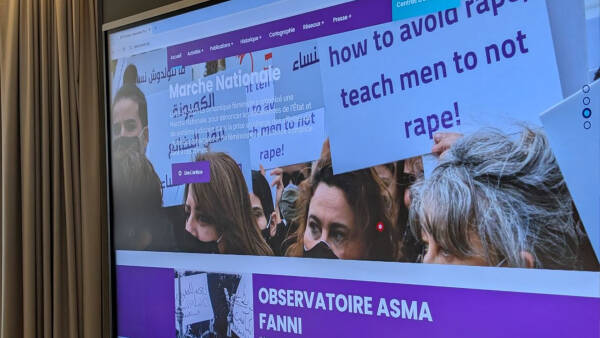
In this context, Fathia Al-Saidi pointed to the exposure of many feminist activists, as well as the official page of the Tunisian Association of Democratic Women, to repeated digital attacks targeting their work and feminist struggle.


