
“Darat Salam” …A Women’s Institution That Believed in Technology as a Tool for Protection
At a time when women’s support programs are often confined to traditional roles, “Darat Salam” came with a different idea, making technology a tool for empowering women and enhancing their participation in peacebuilding and society.
RENIEM KHALOUF
Damascus_ In 2011, with the beginning of the Syrian crisis, civil work began to enter Syria and target women as a segment of Syrian society that had shouldered the burden of family during waves of displacement and asylum, and even for families that remained within areas under regime control—women were the main pillar that carried the family.
Associations and organizations entered targeting either traditional women's work such as sewing, hairdressing, and even aid and psychological sessions. Ideas gradually evolved to target them with training on local administration and decentralization, until the "Darat Salam" project came along, which changed the course of targeting women and the stereotypical roles they were being targeted for.
Technology... A Tool to Target Women!
The idea of "Darat Salam" began in 2017, when Rana Al-Sheikh Ali, the Executive Director and Chairperson of the Board of Trustees, drew on a fellowship experience she had conducted with an American university, through which she worked on the role of women in building and making peace. During the fellowship, she met with different groups of women from around the world who live in conflict zones and who use different tools to support stability in their post-conflict communities. She then wondered: How can knowledge and experiences be transferred between different contexts and between women around the world? And how can this knowledge be employed to serve communities?
Rana Al-Sheikh Ali believes that technology is not only an available tool today but also an end in itself. "At Darat Salam, we work with women and develop their skills and knowledge in everything related to technology and its employment in the service of peace." She illustrated this with an example: "Darat Salam works on issues related to technology-facilitated violence, of which women and the most vulnerable groups are victims. It teaches women about these issues, how to confront them, what women's digital rights are, and how to protect themselves legally and psychologically. It also works to support and empower women in this regard."
"Darat Salam" focuses on other topics related to technology and peacebuilding, which are linked to technological development by working on the skills of women and young women within local communities to develop their technological tools related to digital citizenship, in addition to creating their own technological tools that contribute to community stability, according to the Executive Director of Darat Salam.
A Radical Difference!
"Darat Salam" differs from current civil society institutions in Syria in its idea, which is based on the concept of "women-friendly technology," to reach societies free of violence and characterized by peace. The idea is rooted in a belief in the role of women in leading the post-conflict phase, contributing to building their local communities, at the national level, and even at the regional level.
Rana Al-Sheikh Ali explains that "Darat Salam is not limited to Syria; we seek to ensure that women's contributions exist in all aspects of life, including the digital space, which is one of the spaces where citizenship is practiced from the smallest issues to major national issues." She affirmed that the point of difference from all other organizations is the focus on digitization—that is, digital transformation—and the focus on innovation and advocacy for the governance of the digital space to reach the society that the institution and its workers aspire to.
Since the beginning of its work, the institution has changed the thinking of many women, some of whom were volunteers and became employees within the institution.
From Volunteering to Management!
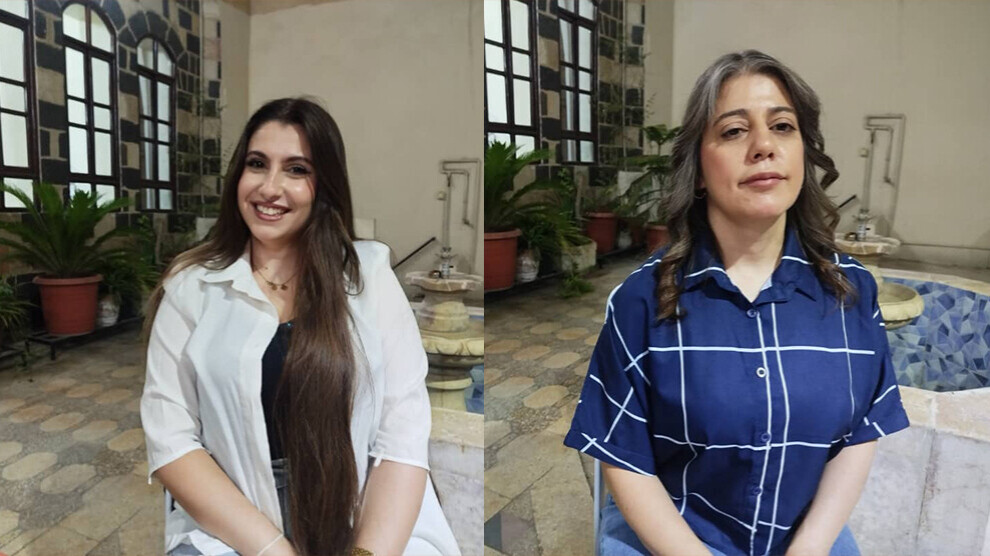
Among the success stories that the Director of "Darat Salam" spoke about is the transformation of volunteers into employees within the institution. Among them is Grace Al-Naqiri, who spoke to our agency about her journey at Darat Salam: "My journey with Darat Salam began in 2024, through a training program within a project called 'You Are the Leader,' which addresses citizenship and women's digital rights. I became a volunteer after the project, and then my work developed to become a manager of the institution's social media pages, writing and publishing content consistent with the institution's values."
She added: "They trained me, and I worked with them on a project about misinformation and protecting women digitally and how women can achieve digital well-being to protect themselves from hate speech, especially at a time when such speech is widespread."
Grace Al-Naqiri explained her experience, saying: "The experience taught me how to deal with things, how to protect myself, and how to become an effective person in society. Most importantly, it taught me how to defend myself as a woman in Syria."
She noted that "during the period when I transitioned from a volunteer to an employee, I learned what my rights and duties are as an active person in society. I learned a lot about Syrian law and about proper administrative work methods. I faced all the difficulties, and today I am a social media manager."
The members of "Darat Salam" strive to deliver their distinct civil message on the Syrian scene, no matter how much the details of Syrian life change.