

BARJAM JODI
KOBANI _Through its language, culture, and inherited customs and traditions, the city of Kobani confronts the transformations imposed by capitalist modernity. This distinctiveness is clear in its transformations imposed by capitalist modernity. This distinctiveness is clear in its countryside, where life based on participatory and social solidarity still maintains its place.
In the villages of Kobani, old houses built of mud and stone catch the eye, some dating back about a hundred years. Although many of them have become ruins bearing witness to the past, others are still inhabited and in use, alongside mud structures that were dedicated to raising livestock and poultry.
Telijib village, located east of Kobani, stands out as one of the villages that still retains the features of this authentic architectural heritage, with its landmarks reflecting the region’s history and culture.
“Mud houses are more beautiful and more valuable”
Zuleikha Nisan, 60 years old, originally from the village of Kurtik and married in Telijib village, recalls her memories with the mud houses, evoking details of their construction and their place in the lives of the locals. She says: "These mud houses surrounding me belonged to my husband's father's family, and their traces still stand today. This style of building was different, and we loved it very much. Some families would build their houses themselves, while other families would use builders and craftsmen."
She added: "The houses were built of mud and straw, after determining the land area, and then the construction would be carried out accordingly. These houses are characterized by warmth in winter and coolness in summer, making them suitable for different seasons. People later moved from building with mud to black stone, and eventually to modern block construction. But I see that mud houses are more beautiful and more valuable and meaningful than modern houses and apartments."
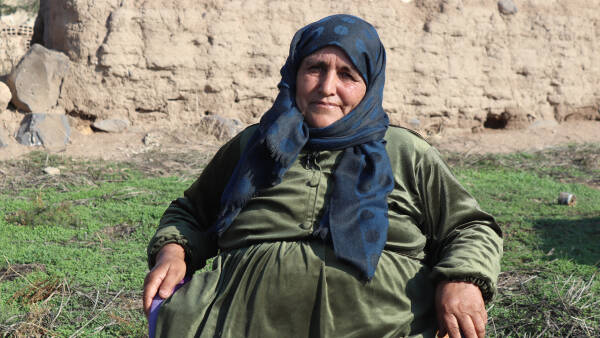
"Mud brings back the most beautiful memories of my life"
Zuleikha Nisan's relationship with these houses is inseparable from her family memories, as she witnessed years of her life and its daily details. She says: "My house was also built of mud, and in it I raised my child. But the house was later demolished and a new building was erected in its place. Whenever I walk around these houses, the most beautiful moments and memories I lived come back to my memory. That is why mud houses occupy a deep place in my memory and soul."
She continued: "I used to renew the mud of the house once a year, and we, women and men, would cooperate in restoring and maintaining it. After the mud mixed with water, a beautiful, unforgettable smell would emanate. We were young then, and we had a great passion for decorating, arranging, and cleaning the houses, so we took care of them as we take care of our eyes."
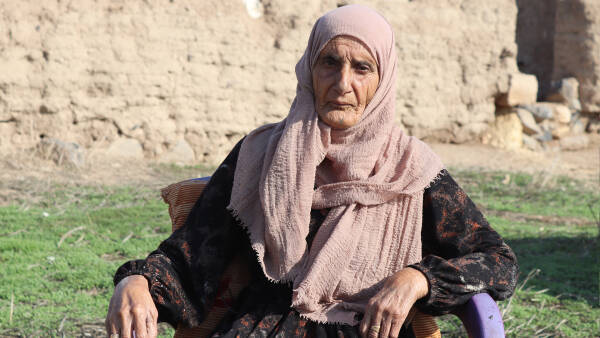
"Mud houses are part of our existence"
Zuleikha Nisan criticizes the new generation's distancing from this heritage and its failure to realize the value that mud houses carry in the memory and identity of the locals. "Mud houses are part of our existence, but the current generation does not realize their value and meaning. Even my children and grandchildren ask me: How did you live in these houses? But these houses are not just walls; they are part of our history, carrying the story of long toil and a deep, endless connection to the land."
"Mud houses are the archive of our region"
For her part, Fatima Khalil, 50 years old, affirms that mud houses transcend being a traditional architectural style_they store the memory of families and details of their lives. She says: “Mud houses used to gather family members under one roof, carrying the scent of earth and water. That is why they occupy a great place in our memory and soul. With the emergence of modern building styles, the use of these houses declined and they became part of the past. To this day, attempts continue to remove what remains of their traces. But how can we demolish our mud houses? They are our archive, and the witness to our history and exıstence.”


