
Human shields... have the souls of civilians become a tool for the survival of the Iranian regime?
More than a month has passed since the attacks began, but the fundamental question remains unanswered: does the real danger to the Iranian people come from foreign missiles, or from a policy that turns civilians' lives into human shields in war?
Nasim Ahmadi
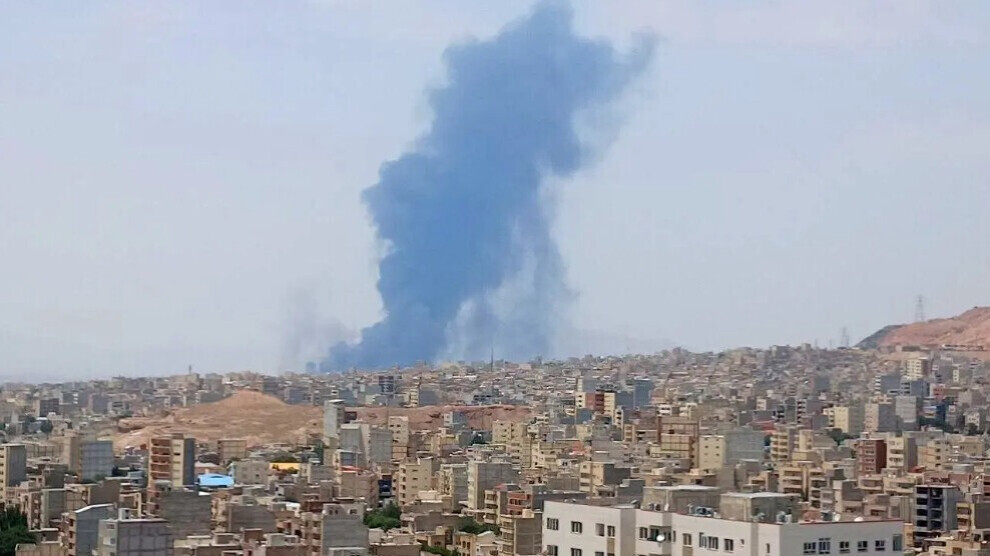
Kermanshah — Since the early days of the war, Iranian authorities have sought to shape the narrative by accusing the United States and Israel of targeting residential neighborhoods, schools, and hospitals through the media. However, testimonies from eyewitnesses and local sources indicate that the authorities themselves exposed civilians to danger by using them as human shields.
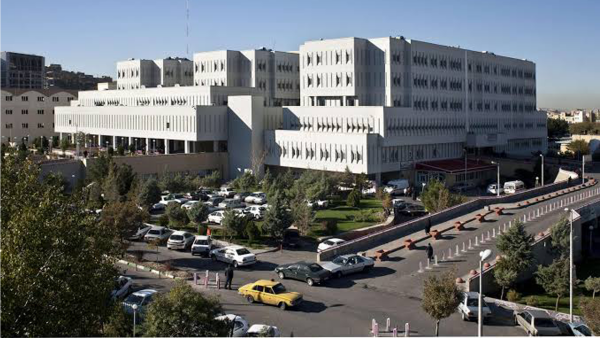
According to eyewitnesses in Kermanshah, military forces of the Islamic Republic in this province have widely moved and deployed weapons near densely populated areas, so that in the event of an attack, it could be portrayed as targeting civilians. Some local sources reported that Iranian authorities deployed military weapons in parking lots near Imam Reza Hospital, in the industrial zone on Bisotun Road, and in a secondary school in the Anahita neighborhood, then moved them to other locations after a few days.
These repeated movements suggest that Iranian authorities deliberately place weapons, especially missile launch platforms, in non-fixed locations and sometimes near schools and hospitals, to avoid detection and destruction, while simultaneously exposing civilian areas to the risk of bombardment.
Maryam H., a resident of the Karnaji neighborhood in Kermanshah, recounts: "Some neighbors said a missile launch platform had been placed in a school in the Anahita neighborhood. Since we are close to there, we feared that other schools in our neighborhood might have been used the same way. At night, my son and my son-in-law went to check. They found nothing in Karnaji School, but at Anahita School there were suspicious movements of people in civilian clothes and the transport of large trucks. The next morning, the school was evacuated, but suspicious movements continued."
These practices are not new. In the Twelve-Day War, launch platforms were placed near Imam Reza Hospital, leading to the area being targeted by Israel. The explosion near the hospital indicated that the location choice was deliberate.
In addition to deploying weapons in civilian areas, many witnesses in Kermanshah reported that after the American and Israeli attacks on checkpoints and security centers, Iranian authorities moved their forces to areas near residential neighborhoods.
Parvin G., an activist in human and child rights, explains: "Since the beginning of the war, the government set up checkpoints at the entrances and exits of cities. After the attacks, these checkpoints were moved inside cities and near homes, so that if targeted, the US and Israel could be accused of striking residential areas. Even in some border cities, security centers left their positions and moved their vehicles near homes or orchards surrounding villages."
She added that it is not only about moving forces: "At many checkpoints, instead of military forces, the government used children under 18 from student Basij members, in exchange for promises of reducing military service time or granting high school grades. This has effectively turned civilians, and even children, into human shields. It is also a way to protect the regime's core forces."
The arming of civilians is not limited to students. Many witnesses reported that authorities recruited some poor tribal members with various promises and threw them into checkpoints as military forces.
Parvin G. pointed out: "At the entrances to cities such as Javanrud, Sarpol-e Zahab, Sahneh, and others, the government recruited some tribal members with various promises to use them as defensive shields. These people do not even have proper clothing or equipment. Many wear everyday clothes and simple shoes, covering their faces with old keffiyehs or women's scarves. The main problem is that these belong to the poorest segments, and the government has placed them, with the most basic means, in the line of American and Israeli missiles."
Comparing the equipment of these poor forces with the heavily armed repression forces that crushed protests, it becomes clear that Iranian authorities use the latest tools to kill their own people, while taking innocent civilians as human shields against foreign enemies.
In recent weeks, authorities have issued statements encouraging young people to join the armed forces. But this encouragement is, in reality, a form of coercion to provide enough forces to serve as human shields in case the US and Israel launch a ground offensive.
Sara F., a civil activist living in Kermanshah, says: "Since the beginning of the war, the government has used civilians' souls as a means of defense. Recently, it launched a campaign in the streets called 'We Are the Avenger.' This campaign forces government loyalists to take to the streets, driving cars and walking. Many believe this is a cover for moving military forces and weapons; the government moves its sensitive forces by placing them in the heart of society."
In short, it can be said that the main threat to the lives of the Iranian people is not limited to the specter of war alone, but also includes the entrenched policy of Iranian authorities to sacrifice lives to protect themselves — the way the Islamic Republic has always built its defensive fortresses with the bodies of innocents.