
The Sixth Congress of the Autonomous Administration in Shingle calls for unity and solidarity.
Held under the slogan “Unity, Freedom, and Solutions,”Shingle’s sixth autonomous administration congress calls for Yazidi unity, institutional development, and confrontinf ongoing threats.
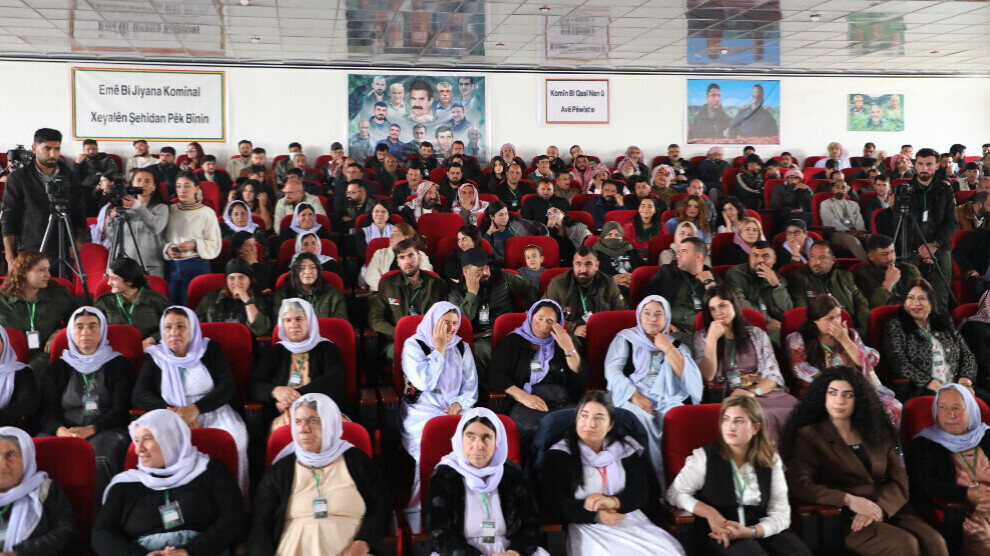
Shingle — In a delicate political and security atmosphere experienced by the Shingle region, participants in the sixth congress of the Democratic Autonomous Administration Council in Shingle (MXDŞ) affirmed their commitment to continue the struggle, protect gains, and defend their identity and culture.
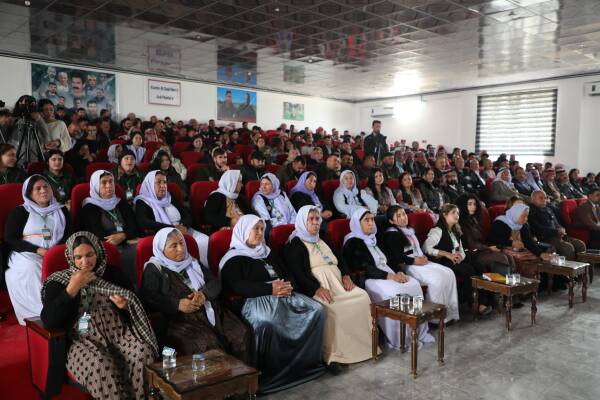
The proceedings of the sixth congress of the Democratic Autonomous Administration Council in Shingle began on the morning of Saturday, March 28, under the slogan "Unity, Freedom, and Solutions," with the participation of 250 delegates and the presence of Yazidi figures, political leaders, and representatives of community institutions.
The congress opened with a speech by the former co-chair of the council, Nayef Shamo, who reviewed the council's journey since its founding in 2015, affirming that the autonomous administration in Shingle was built on "sound foundations" that enabled it to achieve important accomplishments. He noted that "steadfastness to the principles of the martyrs" was a key factor in the continuity of the project, stressing that the goal of the congress is to strengthen Yazidi unity and establish the foundations of coexistence within a democratic framework.
Mother Pakiza also delivered a speech on behalf of the families of martyrs, in which she congratulated the congress to leader Abdullah Öcalan and to the martyrs, affirming that the "great sacrifices" made by Yazidis are what brought the community to this stage, and called for solidarity.
The Yazidi Women's Freedom Movement (TAJÊ) delivered a message through its representative Rehan Hajjo, who described the convening of the congress at this time as "extremely important," noting that ten years had passed since the council's founding. She affirmed that the struggle waged by the Yazidi community was great but was not without shortcomings. She called for a review of the experience and correction of mistakes, considering that "Yazidi unity and the democratic resolution of their issues" is a shared responsibility, especially in light of the continued threats facing Yazidis inside and outside Sinjar.
Support and fears of a repeat of the genocide
This was followed by the reading of messages from the Union of Yazidis in Rojava and the Union of Yazidis in Armenia. The latter affirmed that the Yazidi community there follows developments in Shingle "with pride," but believes that "the danger still exists," calling for organizing ranks to prevent a repeat of the 2014 tragedy. As for the Union of Yazidis in Rojava, it expressed hope that the congress would contribute to resolving the issues of Iraq and Sinjar, pointing to the suffering of Yazidis in diaspora for a century and the importance of "living with dignity on the land of their ancestors."
The Autonomous Administration is the fruit of a long struggle
From North Kurdistan, Weysi Aktaş, representing the Imrali Secretariat, delivered a message praising the struggle of the Yazidi community, considering that the 2014 genocide was "the beginning of a radical change" in the consciousness and organization of Yazidis. He pointed to the assessments of leader Abdullah Öcalan, who considers Yazidis "one of the oldest peoples of Mesopotamia," affirming that the progress achieved by Yazidi women represents a "historic transformation," and that the freedom of Yazidis lies in building their own self-organization, not in relying on external forces.
He affirmed that the unity of Yazidis and Kurds is a necessity to confront threats, noting that thousands of survivors of the 2014 genocide were able to escape thanks to "collective solidarity," and that freedom for Yazidis means recognition of their identity, language, culture, and will, warning that the absence of freedom places identity and the future in constant danger.
In a video message, the co-chair of the Democratic Union Party (PYD), Gharib Hesso, stated that Shingle has become "a symbol of legendary resistance," affirming that the Yazidi community proved its existence through its resistance to ISIS, noting that Shingle built its democratic institutions over 12 years, and that women, youth, and elders played a pivotal role in this path. He called on the Iraqi government to recognize the will of the Yazidi community, considering that democratic integration between the two sides is the optimal way to guarantee rights.
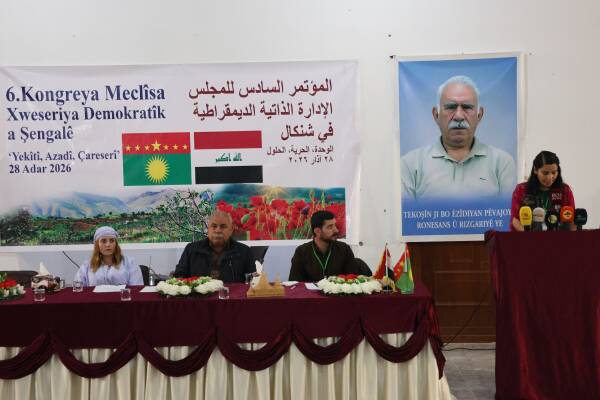
The proceedings of the sixth congress of the Democratic Autonomous Administration Council in Shingle continue, amid extensive discussions on the future of the autonomous administration, strengthening Yazidi unity, and mechanisms to protect the community from ongoing threats.