

NEWS CENTER — In a world where environmental crises intertwine with struggles over power, rights, and freedoms, women have emerged who made defending nature a form of resistance and a struggle for change, and Kenyan Wangari Maathai was one of the most prominent of these figures.
Wangari Maathai was born in 1940 in the Nyeri region of Kenya, and was the first woman in East and Central Africa to obtain a doctorate. She overcame the barriers imposed by patriarchal domination in academic circles, but she made her struggle a cause transcending the university's boundaries, to fight her battle against environmental destruction and the marginalization suffered by women in rural areas during the post-colonial phase.
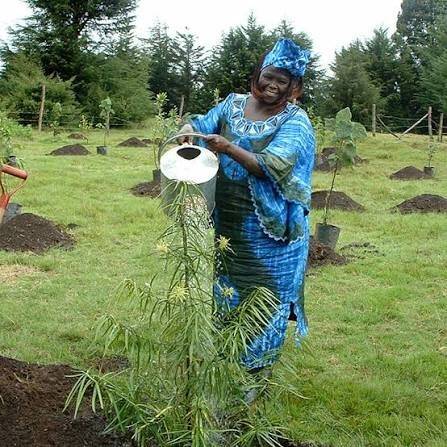
With the late 1970s, commercial exploitation of forests led to the drying up of rivers and the degradation of agricultural land, which deepened the suffering of women who depend on agriculture to secure their livelihood, and who were forced to travel long distances in search of firewood and clean water.
Faced with this reality, Wangari Maathai founded the "Green Belt Movement" in 1977, making tree planting an entry point to confront environmental degradation and enhance women's independence.
From Planting Trees to Political Resistance — The movement began by training women in rural areas to produce seedlings and plant trees, but it soon turned into an organized women's movement confronting environmental destruction and the policies of Daniel arap Moi's authoritarian regime. Every tree the women planted was not merely a step to protect the soil from erosion, but also a means to enhance their economic independence and entrench their presence and self-confidence in public life.
For Wangari Maathai, tree planting was not only an environmental activity, but formed part of a broader battle for democracy and human rights. She repeatedly faced police violence, arrest, and threats because of her leadership of protests to prevent the construction of a skyscraper in Uhuru Park in Nairobi, and her participation in hunger strikes alongside the mothers of political prisoners. Despite repression and threats, she continued her struggle without retreat.
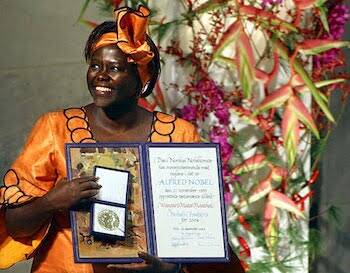
A Struggle Crowned with the Nobel Peace Prize — Thanks to her efforts through the Green Belt Movement, Wangari Maathai contributed to planting more than 50 million trees across Africa. In 2004, her struggle was crowned with the Nobel Peace Prize in recognition of her contributions to promoting sustainable development, democracy, and peace, becoming the first African woman to receive this award.
Wangari Maathai passed away in 2011, but she left a legacy that transcends the millions of trees planted; a legacy that embodied the interconnection between environmental protection, women's liberation, anti-colonialism, and the defense of democratic rights, and remains a source of inspiration for women defending the earth and life.


