
Tunisian activist: Implementation of equality is hindered by political will and patriarchal mentality.
Tunisian activist Douda Gallali says patriarchal mentality and prevailing political mindset cause equity regression and gender discrimination by targeting the Personal Srarus Code and undermining women’s achievements.
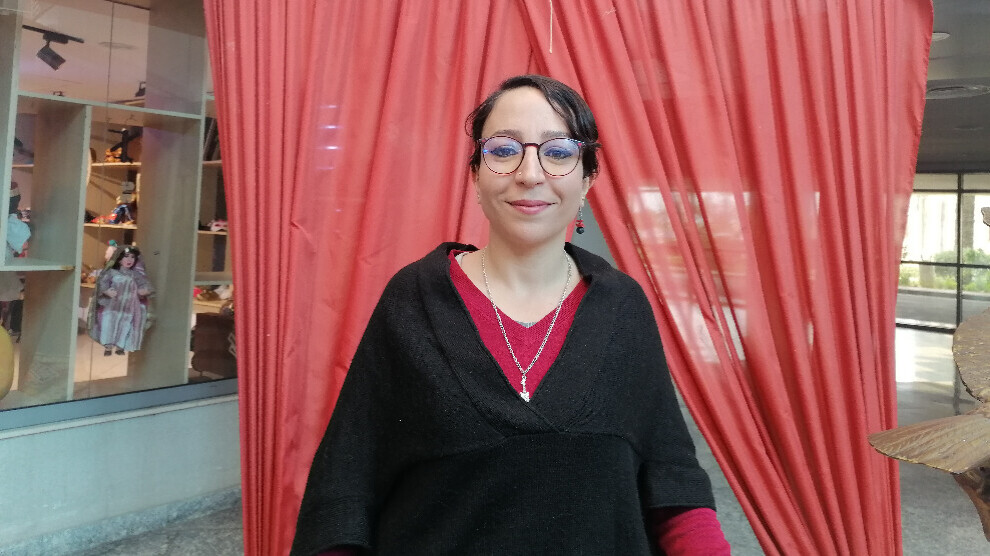
Naziha Boussaid
Tunis — Achieving equality and eliminating all forms of gender discrimination in Tunisia has not taken a positive trajectory despite existing laws and the ratification of international laws and treaties, foremost among them CEDAW. On the contrary, there are matters being plotted in dark rooms aimed at moving backwards through amendments to some laws that protect these gains, while silence prevails over important amendments, foremost among them equality in inheritance.
The undermining of the principle of equality has prompted civil society to mobilize on more than one occasion to confront all attempts to push women backwards.
In this regard, Douha Gallali, a civil society activist and member of the "Musawat" (Equality) organization, stated that this organization is the women's arm of the Workers' Party, but it remains open to all women from different backgrounds. She explained that "Musawat," founded in 2012, has made it a priority since its inception to focus on all issues related to women in Tunisia and the world, whether economic, social, cultural, or political. It also works to defend women's rights and seeks to improve their conditions by proposing solutions to help them overcome what the organization considers a difficult and unjust reality for women in Tunisia.
She explained that Musawat considers itself part of the women's movement in Tunisia by developing programs and organizing activities, whether in markets, popular neighborhoods, cities, villages, or rural areas. It focuses more on women working in the industrial and agricultural sectors, housewives, and also tries to carry out awareness activities for their benefit and accompany them in the event of a strike, protest, or incident, especially for women in the agricultural sector.
Regarding partnerships with women's associations and organizations, she said: "We have carried out many activities in partnership with many women's organizations and movements in Tunisia, and we have intersected with them on more than one occasion. Perhaps the most prominent example in Tunisia's history since the revolution is the march of August 13, 2013, which contributed to the fall of the troika government at that time, when there was an attempt to define women as 'complementary to men' in the constitution."
She explained that major marches were organized, and "Musawat" was present in partnership with other associations and joined the Coalition of Free Women of Tunisia, where field activities were carried out and joint statements were issued.
She explained that the organization has established partnerships with women's organizations around the world because its concern is not limited to women in Tunisia or the Arab world, but includes women wherever they are. She pointed out that "Musawat" operates within an international dimension through joint activities and seminars with Arab and international women's movements, after it became clear that women's problems are similar across different countries, such as the conditions of agricultural and industrial workers, discrimination, lack of pay equality, occupational accidents, in addition to digital violence—issues shared by women in the region and the world.
She added that women everywhere face multiple and compounded forms of violence. Alongside physical, moral, and economic violence, women in war and occupation zones suffer additional violence that weighs heavily on them. She affirmed that women are often the most affected by the consequences of wars, as they are subjected to harassment, rape, and arrest, and are treated as the weakest link.
Systems impose on women what they must do
Douha Gallali considered that networking and feminist solidarity are no longer an option but a pressing necessity, because women's liberation in any country cannot be achieved in isolation from what women face in the rest of the world. She affirmed that improving the conditions of Tunisian women is also linked to understanding and addressing what women in other regions endure, as they are united by a single reality of oppression, discrimination, non-application of laws, and disregard for international conventions—even going beyond that to serious violations documented with numbers, images, and videos.
She explained that women, whether living under reactionary or authoritarian regimes or under direct or indirect occupation, face different forms of exploitation and violence, especially in countries classified as the "Third World" where they are deprived of the right to freedom and life. She added that these systems impose on women what they must do, while presenting a glossy image abroad through seminars, statements, and flashy photos, hiding behind them a harsh reality lived by women in various societies.
Regarding the extent to which equality is applied in Tunisia, she explained that the choice of the name "Musawat" was not arbitrary. The intention is not only equality between genders but equality among all citizens. However, she believes that the activation of equality on the ground remains weak despite the existence of some laws, as discrimination continues in several areas, including wages.
She added that unemployment among women is very high, exceeding 22%, and according to official statistics from the National Institute of Statistics, female holders of higher degrees in Tunisia represent 70% of degree holders overall, and their unemployment rate exceeds 30%. These are official statistics presented by the government, which even spoke of the feminization of unemployment or the feminization of poverty.
Patriarchal mentality hinders equality
Douha Gallali explained that the non-application of laws on the ground, such as the law protecting female agricultural workers and the law combating violence against women and girls, exacerbates the dominance of the patriarchal and paternalistic mentality and the inferior view of women. Some men fear giving women their full rights and feel threatened when true equality is achieved, while women demand nothing but their rights as human beings, regardless of their gender or ideas. She believes that "the roots of the problem go back primarily to upbringing, as we leave our families carrying a patriarchal mentality and social complexes that we later need to struggle to overcome."
She explained that a male child grows up within the family enjoying preference under the slogan "my son is a man," where household chores are not his concern. He does not tidy his room, wash his clothes, or do his dishes, and grows up with the idea that men only care about purchasing supplies from outside. Thus, we establish a kind of discrimination and disparity between the sexes, meaning there are tasks that men attend to and tasks that women attend to, to the point that a man who cooks, for example, feels great pride.
Social upbringing instills in men the idea of their physical and mental superiority over women, based on religious and social interpretations that portray women as less rational and more emotional. She noted that these perceptions turn into "masculine heroics" unrelated to competence, passed down through generations, despite notable improvement among new generations thanks to technological openness and the influence of the feminist movement.
She asked: "What prevents a woman who has studied and worked hard from assuming the position she deserves by her competence, while a man who did not care about his studies gets preference simply because he is male?" She added: "The high prices, cost of living, and economic crisis in Tunisia push us to deal with each other as partners so that we can live and face life's demands."
Equality in laws and legislation
Douha Gallali explained that discussions within parliament and political authority often tend toward reviewing laws, but these reviews do not always move in the direction of progress; they may be used to retreat from women's gains. She mentioned that before the 2014 constitution, the "Musawat" organization campaigned to align legislation with the principle of equality, yet the problem remains posed today. Indeed, some current proposals push towards regression.
She added that the Personal Status Code, which constitutes the most important achievement for Tunisian women in organizing the family and protecting it legally, today faces attempts at amendment that entrench discrimination and undermine what has been achieved, especially after political discourse considered equality "a liberal idea foreign to society." This is seen as a green light for retreating from rights, such as rejecting equality in inheritance or keeping the head of the family exclusively male, despite the existence of families headed by women. She also pointed to issues such as alimony, affirming that the goal is not to imprison the husband but to find fair alternatives for both parties.
The civil society activist, Douha Gallali, concluded her remarks by affirming that achieving equality requires a comprehensive review of the upbringing, education, culture, and mentalities system, and adopting positive thinking that changes society's pattern for the better, rather than returning to reactionary molds that serve no group in society.