
Syrian Women Between Gains and Risks: A Continuous Struggle to protect Rights and the constitution
As Syria undergoes rapid political and military change, women’s gains risk regression due to war, conflict and notential legal changes that could gradually erode rights.
Asma Mohammed
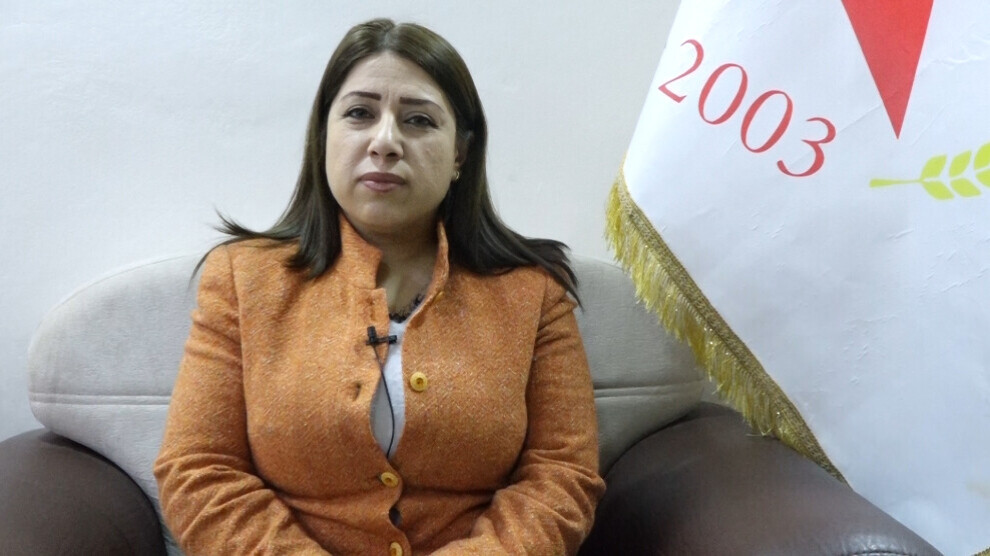
Qamishlo – Sema Bekdaş, the spokesperson for the Democratic Union Party, explained that the historical gains of women in Rojava face multiple political, legal, and military challenges, requiring continuous efforts to protect them. She emphasized that these rights must be clearly and explicitly included in the upcoming constitution to ensure their continuity and protection from any future setbacks.
As political, social, and military transformations continue in Syria and the region, women's rights and gains have become a top priority in public discourse. This is not only due to wars and armed conflicts but also because of potential changes in laws and political agreements that could gradually and indirectly affect these rights. The current phase is delicate and decisive, as any regression or neglect in protecting women's achievements will endanger women and undermine rights won through decades of struggle and resistance.
In this context, Sema Bekdaş, spokesperson for the Democratic Union Party, spoke to our agency about the future risks that Syrian women may face. She affirmed that the challenges are not limited to wars and conflicts but extend to legal amendments and official policies that may gradually reshape rights, making political, diplomatic, and legal struggle an urgent necessity to ensure the continuation and protection of women's gains.
She stated that the suffering of women in Syria and the Middle East region results from a dual interaction between unjust laws and ongoing wars. She explained that there is a historical injustice against women in the Middle East, but this injustice is compounded in some countries due to existing laws, such as personal status laws in Syria and Iraq, which grant men unequal powers compared to women, diminish their rights in inheritance, marriage, and divorce, and make them subject to continuous discrimination.
When we add wars and armed conflicts, the reality becomes even harsher. Women are often victims of displacement, sexual violence, rape, and killing, while children also suffer from the direct and indirect repercussions of these crises. She affirmed that combining these two factors multiplies women's suffering. However, women who organize themselves and defend their rights, as happened in the Rojava Revolution, can face these challenges, reduce their impacts, and transform difficult circumstances into tools of power and effective political and social participation.
Women's Struggle and Historical Gains
Sema Bekdaş explained that women's struggle in Syria extends over decades, and what has been achieved today would not have been possible without long-term sacrifices. She said, "Syrian women have struggled for thousands of years for their basic rights: the right to education, the right to vote, the right to run for office, and participation in decision-making centers. These rights were not given but were wrested through continuous struggle and countless sacrifices, whether through civil, political, or military resistance. The women's revolution in Rojava was a historical turning point, where women participated in leading democratic projects, establishing communes, managing councils, and implementing the principle of co-presidency to ensure gender equality."
She clarified that this revolution was not merely symbolic but has become a global model for women's movements in the Middle East and the world. She added that the gains achieved by Syrian women today represent hope for all women and must be protected and included in the upcoming Syrian constitution to ensure their continuity and prevent any backtracking.
The Constitution and Laws as the First Line of Defense
Sema Bekdaş stated that the constitution or social contract is the foundation upon which all laws and policies are based, stressing that the constitution must be just and fair to all components of society, including women, youth, and religious and cultural groups. "The judiciary and courts cannot be fair unless their rulings are based on a constitution that protects women's rights and considers any violation of them a crime punishable by law." She pointed out that the decentralized system in Rojava provided space for enacting local laws protecting women, such as the Women and Family Law, which abolished what was known as "honor crimes" and considered the killing of women a crime punishable by law, while ensuring protection for women from economic and social violence. She affirmed that these gains must be entrenched in the upcoming Syrian constitution to ensure the continued active participation of women in all state institutions, including the army, parliament, and local councils.
Future Risks and Challenges
She added that the coming phase requires preparation to face multiple challenges—political, military, and legal. "Women must be ready to defend their gains and establish strategic alliances with women's and democratic organizations to ensure their rights are included in the constitution. International pressure is important, but it does not replace internal struggle because local political consensus is the foundation for protecting rights. Neglecting this phase will lead to great risks for women and society as a whole."
She explained that preserving the democratic experience of Rojava has broad regional resonance. "If we succeed in protecting this experience, it will become an influential model for all women's movements in the Middle East and an intellectual reference for all those seeking to promote women's rights and democracy. This is what we see today in terms of support and women's alliances worldwide." She affirmed that political and diplomatic struggle is inseparable from preparation to face any potential attack on gains, whether military or political.
She stressed the necessity for all women's parties and organizations to unite and be ready to confront any assault on these gains, because the democratic experiment in Rojava affects the entire region and proves that women are capable of managing society's affairs and achieving equality.
Unity of Struggle and the Necessity of Alliances
Sema Bekdaş explained that unifying women's efforts at the national and regional levels is the way to protect rights. She said that Syrian women today are leading a pioneering experience, but its continuity requires political and diplomatic struggle, alliance with democratic women's parties, pressure on the temporary Syrian government to ensure rights are included in the constitution, and not allowing any party to return women to square one. "The women's cause is one cause, and our voice must be unified, whether inside or outside Syria, to ensure rights and protect them."
Sema Bekdaş stressed the necessity for all women in Syria and the Middle East to unite their efforts and struggle, work to guarantee their gains, and face all political, military, and legal challenges. "The current phase requires full readiness, collective awareness, and continuous work to ensure a just and democratic future for all Syrian women.