Syrians Between Promises of Economic Rescue and a Reality Colliding with Contradictory Decisions
Syria holds vast oil wealth, yet its people face daily queues and rising prices—a suffocating paradox of abundance alongside crippling deprivation and poverty.
SILVA AL-IBRAHIM
News Center — At the crossroads between rich underground wealth and successive livelihood crises linked to a scarcity of petroleum derivatives and their high prices, the Syrian economy stands before a difficult equation. Syrians face a tragic reality after promises stumbled due to weak efficiency in managing the country's economy and its underground resources.
The Syrian scene today moves within a critical grey area governed by contradictions, where the ink of political agreements and new administrative maps intersects with daily queues extending before fuel stations and wasted opportunities. The challenge in Syria is no longer limited to formulating understandings but lies in these understandings' ability to answer the most pressing question on the streets: Where do the country's wealth go?
Between documented oil reserve figures beneath the ground and the "dollarized" prices of petroleum derivatives in local markets, lies a structural gap charged with living and service pressures.
Between Rescue Promises and the Reality of Collapse... The Complex Syrian Scene
Upon assuming power in Syria, the jihadists of Hay'at Tahrir al-Sham made dazzling promises of salvation, presenting themselves as a rescue project to end years of war, lift international isolation, and rebuild institutions to attract investments and achieve living and security stability.
However, after a year and a half, those hopes have dissipated, replaced by an entirely different reality. Despite the easing of sanctions, the opening of Arab and Western capitals to Damascus, and the flow of international and Gulf support, living conditions have deteriorated unprecedentedly, raising perplexing questions on the Syrian street about the reasons for this decline.
Today, the crisis manifests in several key aspects: the expansion of poverty, as the middle class has completely eroded and wide segments have slipped below the poverty line, making securing food, medicine, and fuel a daily struggle for survival.
In addition to economic collapse, markets are witnessing daily price hikes against a complete incapacity of salaries, as well as security and administrative chaos, with rising rates of murder, kidnapping, and theft amid sharp criticism of weak government administration and the penetration of ideological and religious discourse into state institutions, leaving the government completely incapable of controlling markets or protecting citizens.
In this context, this suffocating living reality was translated into a fact revealed by a joint report issued by the Food and Agriculture Organization (FAO) and the World Food Programme, as Syria was officially classified among the list of countries most suffering from hunger worldwide alongside 12 other countries, with UN warnings of a deeper deterioration in food security in the country in the coming months.
Syria: Possessor of Oil Resources and Among the Most Deprived of them
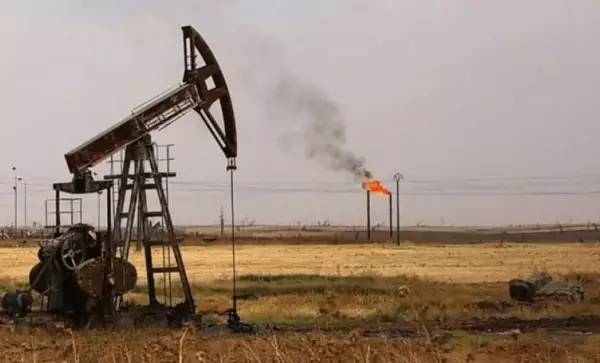
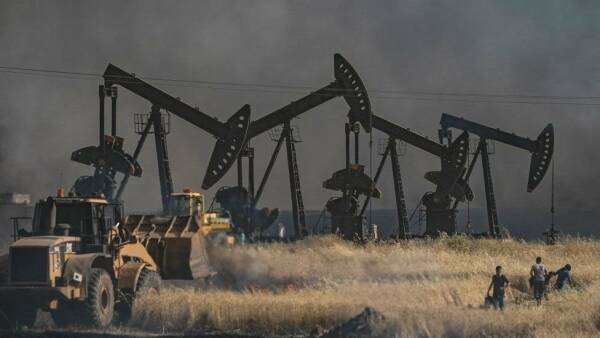
This suffering comes at a time when Syria's geography abounds with promising oil wealth and energy resources, as the country possesses proven reserves estimated at approximately 2.5 billion barrels. Yet Syrians face a harsh paradox that makes their country one of the most severely affected by a crippling fuel crisis. Instead of these resources contributing to economic well-being, the people live a suffocating reality that has made securing heating fuel, gas, and gasoline a daily challenge threatening survival.
This crisis was clearly embodied when the Syrian Petroleum Company raised fuel prices on May 7 by rates ranging between 17 and 30 percent. The price of a liter of diesel (first grade) jumped by approximately 17.3 percent to reach $0.88, up from $0.75.
The price of 90-octane gasoline recorded an increase of nearly 29.4 percent to reach $1.10, up from $0.85, followed by 95-octane gasoline which rose by about 26.4 percent to reach $1.15 compared to $0.91 previously.
The increase was not limited to vehicle fuel but also included gas cylinders, with the domestic cylinder rising by about 19 percent to reach $12.5, up from $10.5, and the industrial cylinder rising by the same rate to reach $20, up from $16.8. These burdens coincide with a continuous fluctuation in the local currency, with the exchange rate of the Syrian pound against the US dollar at 14,230 pounds for buying and 14,300 pounds for selling, doubling the impact of these dollarized prices on the Syrian citizen.
Interestingly, the subsequent decline in the global market was not reflected at all in these prices in Syria, which remained fixed at their elevated levels. This is despite the fact that international fluctuations had previously been the primary justification for passing those increases. This complete disconnect proves that local fuel pricing is no longer subject to the global supply and demand equation but is driven by more influential internal financial and economic factors—perhaps most notably the government's desire to gradually phase out subsidies, cover the accumulated budget deficit, and secure the necessary liquidity to finance contracts with international companies entrusted with maintaining the dilapidated infrastructure of fields that have not been maintained since 2011.
This crisis comes after the commencement of the implementation of the January 29, 2026 agreement, which stipulated in its economic section the handover of vital oil and gas facilities, foremost among them the Rmelan and Al-Suwaidiyah fields, to the authority of the government's Ministry of Energy for centralized management. However, the growing popular discontent over the continued fuel crisis clearly demonstrates the executive authorities' inability to employ these recovered resources in serving the people and alleviating the burden of living pressures on them, instead of imposing further burdens.
Repercussions of Fuel Price Increases on the Syrian Street
This fuel price hike has cast its dark shadow over the details of daily life, causing a sharp decline in purchasing power and inflationary prices, as diesel and gasoline entered as a fundamental factor in production and agricultural costs, immediately raising the prices of basic food commodities such as bread and vegetables.
This was accompanied by a crippling transportation crisis following the increase in public transport ("servis") fares by up to 20 percent, which became costly for passengers while vehicle owners themselves complain that this increase does not cover the exorbitant costs of maintenance and fuel refilling.
The energy and daily services crisis also worsened unprecedentedly, as private generator owners ("amperes") raised subscription fees or reduced operating hours, while families faced extreme difficulty in securing basic cooking requirements as the price of a domestic gas cylinder reached $12.5 and industrial cylinders reached $20. The shortage and high diesel prices also extended to strike at the nerve of life by increasing the costs of transporting drinking water tankers and securing heating fuel.
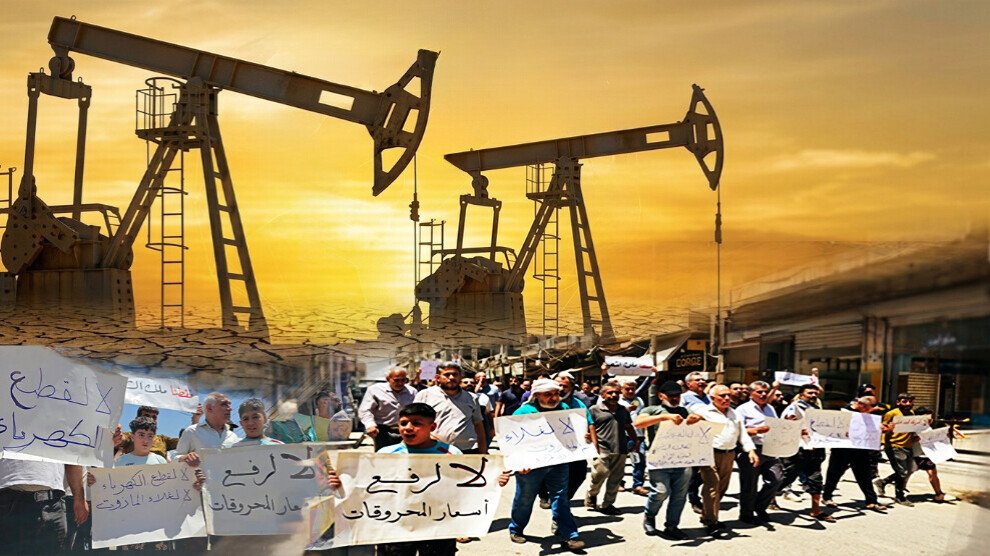
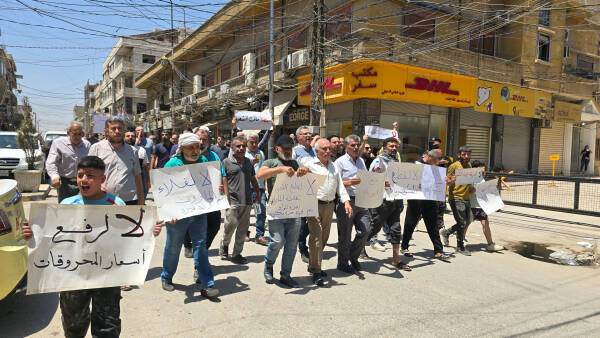
This continuous living pressure and the sharp price gap ultimately led to the expansion of popular discontent, paving the way for angry field protests in several Syrian regions, which included road closures and tire burning in condemnation of supply shortages and demands for urgent rescue solutions to end this vicious cycle of suffering.
In conclusion, the Syrian citizen today lives between the hammer of deferred government promises and the anvil of a complex and crisis-ridden reality. Despite the political and economic horizons heralded by the integration decision and the centralization of national wealth management, the direct impact on the ground has been disappointing to expectations.
The continued disconnect between local price movements and global declines, and the transformation of daily bread and heating fuel into dollarized figures exceeding exhausted purchasing power, portends a deepening of class divisions and the expansion of poverty.
The Syrian street will not be able to emerge from the cycle of hunger and daily anxiety unless those investments and energy sector rehabilitation contracts translate into tangible solutions that stabilize markets, revive salaries, and ensure the fair distribution of the resources of a country whose subsoil lacks nothing in terms of goodness, but rather whose reality lacks planning and actual rescue.