
Children… the silent victims of wars and crises
"Children's suffering in conflict zones intensifies as wars become a nightmare stealing lives, security, education. Amid bombings, displacement, malnutrition, recruitment, forced marriage, millions face harsh reality threatening present and future."
Ghadeer Al-Abbas
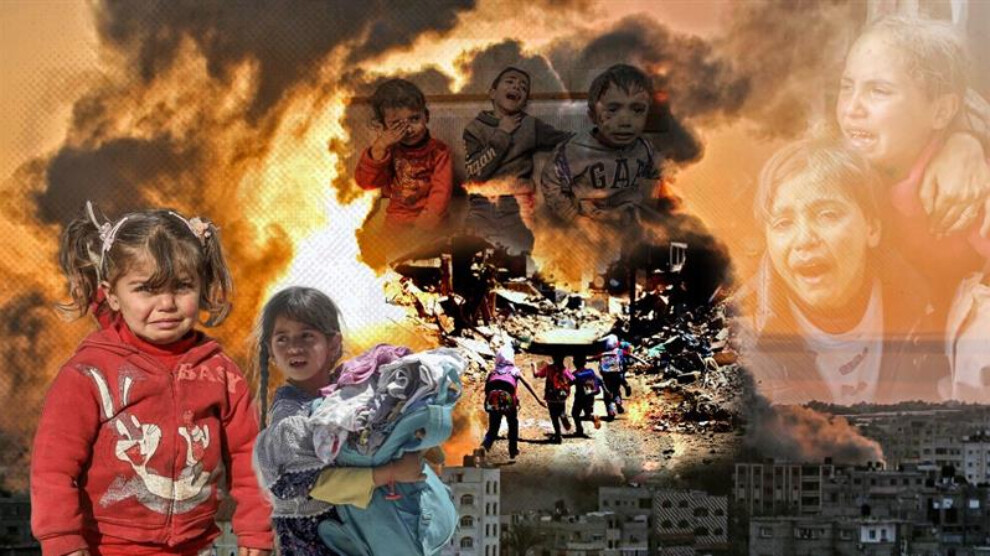
News Center — Armed conflicts in various regions of the world show that children are the most affected group, as they are subjected to widespread violations that impact their right to life, safety, and education. The effects of wars on them extend to long-term psychological, social, and health dimensions, making the study of these impacts a necessity to understand the scale of challenges threatening an entire generation’s future.
Wars and armed conflicts are among the most dangerous challenges facing the Middle East and Africa in recent decades, causing widespread destruction, infrastructure collapse, and the displacement of millions of civilians. However, children remain the most affected by these conflicts due to their vulnerability and complete dependence on a safe and stable environment for growth. Wars in Gaza, Lebanon, Sudan, Iran, Yemen, Syria, Afghanistan, and African countries have led to severe human losses, rising malnutrition rates, deteriorating mental health, interrupted education, and the spread of dangerous phenomena such as child recruitment and child marriage.
Human losses and violations against children
In Iran, which is currently witnessing an open-front war waged by both the United States and Israel, bombings and clashes have killed hundreds of children. International data indicates that waves of violence have resulted in the deaths of approximately 244 children and injuries to 1,767 others. The bombing of the Shajareh Tibbiyeh School in Minab city was a major tragedy, killing 168 children. Rights organizations have also documented widespread arrests of wounded children and even attacks on medical teams attempting to treat them.
Lebanon has seen a sharp rise in civilian casualties. Since the escalation began, more than 1,345 people have been killed and 4,040 injured, including hundreds of children. Humanitarian organizations estimate that a full classroom of children is killed or injured daily due to the bombings. Five hospitals and 49 health centers have gone out of service, and ambulances have been directly targeted.
In Gaza, the tragedy worsens day by day. According to UNICEF reports, 16,000 children have been killed, and more than 50,000 others injured. But numbers alone do not reflect the scale of the catastrophe. Hospitals are operating beyond capacity, essential medicines are nearly nonexistent, and many children are dying from injuries that could have been treated under normal circumstances. Children also suffer from severe shortages of clean water and food, amid a near-total collapse of infrastructure, with more than 1.1 million children in urgent need of humanitarian aid.
Moving to Yemen, we find one of the longest and most destructive conflicts for children. UN reports indicate that more than 11,000 children have been killed or injured since the start of the conflict. In Syria, more than 29,000 children have been killed since 2011, according to rights reports. Additionally, 6.5 million children need urgent humanitarian assistance. Repeated displacement has destroyed children’s psychological stability, and hundreds of thousands suffer from severe mental disorders due to constant exposure to bombings and loss of family members.
In Africa, where natural wealth is mixed with the wounds of war, millions of children live a reality that resembles nothing of childhood. Countries experiencing protracted conflicts—such as Sudan, the Democratic Republic of Congo, Somalia, Mali, Nigeria, Cameroon, and the Central African Republic—are not spared from the cycle of violence that devours the dreams of the young and leaves deep impacts on their lives and future.
Sudan is experiencing one of the world’s worst humanitarian crises. UN reports indicate that more than 13 million children need urgent aid, and the country is witnessing the world’s largest child displacement crisis. Hundreds of thousands suffer from acute malnutrition, and infectious diseases spread in overcrowded camps lacking water and sanitation. International organizations also document cases of child recruitment in armed conflicts.
In the Democratic Republic of Congo, the picture is even harsher. This country is among those with the highest rates of child recruitment by armed groups. In Somalia, conflict has lasted for decades, leading to the collapse of educational and health infrastructure. Children suffer from malnutrition due to food insecurity and face difficulty accessing schools, which are often threatened or destroyed. The effects of war intertwine with drought and poverty, making survival a daily challenge.
Mali, Nigeria, Cameroon, and the Central African Republic are among the worst places for children in conflict zones. Armed attacks, sectarian violence, and terrorism converge, leading to school closures and increased abductions and forced recruitment. Children live in constant fear, deprived of education, healthcare, and adequate food, while displacement worsens, tearing apart family bonds and creating unstable environments.
Afghanistan is one of the countries that has witnessed protracted conflicts for decades, and children have been the most vulnerable and affected by these wars. Unstable security conditions, economic collapse, and deteriorating basic services have created a harsh environment threatening children’s lives and future. As conflict continues, the psychological, social, and health effects accumulate on an entire generation that grew up amid violence and deprivation.
Integrating children into wars and its catastrophic impact
Among the harshest violations in armed conflicts is the phenomenon of integrating children into wars, whether through direct recruitment or using them in dangerous tasks. Children have become part of the war scene, pushed to the front lines before they even develop the ability to understand the meaning of life itself. UN reports indicate that thousands of children have been recruited in recent years, some as young as ten. These young ones are used as guards, ammunition carriers, or even fighters on the front lines. In other cases, they are forced into logistical roles such as intelligence gathering or carrying supplies—tasks no less dangerous than fighting.
International organizations report that some children are recruited due to poverty and hunger, while others are forced at gunpoint. In Yemen alone, the UN has documented more than 4,000 cases of child recruitment since the start of the war, while unofficial estimates suggest the real number could be much higher. In Sudan, security chaos has increased child recruitment by various armed groups, while Syria saw the recruitment of thousands of children in multiple areas during the war years.
In Afghanistan, children are recruited and used in the conflict, whether through coercion, economic inducements, or unregulated religious schools. Latest international reports indicate that thousands of children remained in Taliban ranks as of 2024, despite the movement announcing committees to prevent recruitment. The UN documented at least 400 violations against 120 children during 2023, including cases of direct recruitment and use in armed operations. Although several UN and humanitarian reports were issued during 2025, they do not include any new statistics on the number of recruited children in Afghanistan.
Although Iranian authorities do not release official figures on the number of recruited children, international organizations confirm that hundreds of children participated in logistical and security tasks over the past two years, some in sensitive locations within cities. The recruitment age was effectively lowered to 12 years this year, opening the door to involving minors in tasks whose risks they do not comprehend.
Impact of wars on children’s education
The educational process is among the sectors that collapse most rapidly in conflict and war zones, and children are often the first to pay the price. Education has become a luxury that millions of children cannot access. Destruction of schools, displacement of families, loss of teachers, and turning educational institutions into shelters or military barracks have made continuing education nearly impossible.
UN reports indicate that more than 28 million children in the Middle East and North Africa are out of school due to wars. In Syria alone, 2.4 million children are out of the educational system, while one-third of schools have been damaged or destroyed since the war began. In Yemen, more than two million children have been deprived of education, and over 2,500 schools have been destroyed or used for military purposes. In Sudan, massive displacement has cut millions of children off from schooling, as thousands of schools have been closed due to fighting or turned into shelters.
In Gaza, education has almost completely stopped. Dozens of schools have been destroyed or damaged, while others have become shelters for the displaced. Children who dreamed of returning to their classrooms now find themselves trapped between fear and destruction, without books, teachers, or a safe learning environment. In Lebanon, bombings and displacement have disrupted schooling in wide areas, while the education system suffers enormous pressure from hosting large numbers of displaced children.
In Afghanistan, war has caused thousands of school closures and declining education quality, in addition to restrictions on girls’ education. Data indicates that 1.4 million girls have been deprived of secondary education from 2021 to 2024, while millions of children remain out of school due to poverty, displacement, or fear of attacks. Loss of education increases the risks of child labor and recruitment into armed conflicts and reduces their chances of a better future. Education is not just