
Women in Times of War: How Are Women’s Roles Being Reshaped in Yemen?
The issue of women in Yemen reflects conflict transformations, where religious discourse intersects with tribal structures and security systems, turning women’s bodies and social roles into arenas of political struggle.
Ghadir Al-Abbas
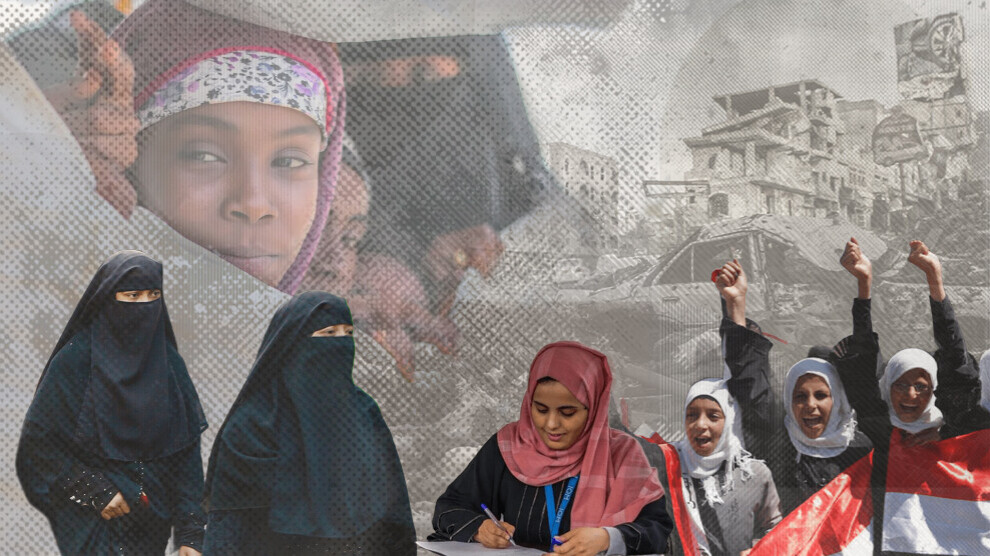
News Center_Today, Yemeni women live in an extremely complex landscape where politics intertwines with religion, and where projects of power intersect with identity conflicts. As Yemen has become a field of local and regional competition, women are no longer merely affected by war; they have become part of the discourse of conflict itself—symbolically invoked, politically instrumentalized, and having their roles reshaped according to the needs of competing powers.
Since the outbreak of the conflict, religious discourse has emerged as a central tool used by different actors to justify policies and direct social behavior. Issues such as the veil, gender mixing, education, and employment are framed as frontlines between “identity” and “threat.” This politicization has made women a direct target of restrictions and a tool for demonstrating legitimacy, rather than independent actors within society.
In areas controlled by the Houthis, women face strict restrictions on movement, expanded social surveillance, and direct mobilization within propaganda and recruitment structures. In areas controlled by the internationally recognized interim government, although there is relatively greater space for movement, weak institutions and collapsing public services limit women’s ability to participate. In the south, political tensions intersect with traditional social structures, producing a mixed reality that combines relative openness with social restrictions. As a result, women’s rights become dependent on the authority of whoever holds power on the ground.
These transformations have directly affected women’s daily lives. The collapse of infrastructure has led to a sharp decline in basic services, particularly education and healthcare, disproportionately affecting women and girls. At the same time, gender-based violence has increased amid weak legal protection mechanisms.
At the political level, women’s participation has declined compared with the gains achieved during the National Dialogue Conference in 2013. Since 2011, Yemen has experienced a series of profound transformations that reshaped women’s position in society. The popular uprising created a moment of relative openness that allowed women to appear in the public sphere, followed by the National Dialogue Conference in 2013, which granted women unprecedented representation. However, with the Houthi takeover of Sana’a in 2014 and the outbreak of war in 2015, a broad wave of regression in rights and freedoms began. Between 2016 and 2025, divisions deepened, authorities multiplied, and restrictions on women increased while violations and political violence escalated, culminating in 2025, which marked the peak of security and social deterioration for women.
Women Between Tribe and Weapon
For centuries, Yemeni society has been based on a tribal-patriarchal system that defines the individual’s position within the community, granting men broad social authority while restricting women’s roles and mobility. This system is not merely a social tradition but a comprehensive framework that regulates relationships, determines who holds decision-making power, who may represent the community, and who is permitted to appear in public life.
Within this context, Yemeni women find themselves governed by strict rules that limit their choices and link their social value to adherence to standards of honor, obedience, and family discipline.
With the outbreak of conflict, these traditional structures did not weaken; rather, they became more entrenched, as armed actors invoked them to reinforce loyalty, control society, and justify their practices. As a result, tribal customs have become the primary reference for resolving disputes, depriving women of justice and increasing social pressure on them. Women have become part of the discourse of control, symbolically used to demonstrate “moral commitment” or the “preservation of identity.”
Assassinations as a Tool to Silence Women’s Voices
Political violence against women represents one of the most serious challenges to their participation in public life. Instead of the political arena being a space for free expression and civic engagement, it often turns into a field of threats and intimidation, reaching its most extreme form in assassinations targeting female activists, community leaders, and journalists.
In 2025, killings escalated, with the assassination of Aftihan Al-Mashhari being among the latest crimes to shock public opinion. These crimes do not target only the victim; they send a message of fear to every woman considering entering public life, especially in the near-total absence of accountability.
The assassination of Aftihan Al-Mashhari in September 2025 clearly revealed the risks faced by women in positions of responsibility. Her killing was not an isolated incident but part of a growing pattern of political violence directed against female leaders. The crime carried clear threats to any woman holding public office or working to combat corruption and underscored the urgent need for security and judicial reforms that ensure women’s protection and strengthen the rule of law.
Human rights reports indicate that Yemeni women were among the groups most exposed to violence and abuses in 2025, particularly in areas under Houthi control. According to reports from the Yemeni Women’s Empowerment Foundation (YWEF), more than 40,000 violations against women were recorded between 2015 and 2025. These included 1,901 cases of arrest and abduction, some involving enforced disappearance and torture, in addition to 2,940 other arrests accompanied by death sentences, imprisonment, or fines.
The reports also documented 2,720 deaths caused by indiscriminate shelling, 375 sniper injuries, and 605 injuries from landmines and explosive devices, along with 42 cases of rape in detention facilities or during displacement.
The absence of accountability remains one of the most significant issues associated with these crimes. Many cases are recorded against unknown perpetrators, or investigations are opened only formally without leading to real outcomes. This reflects the fragility of the justice system and confirms the existence of a political and security environment that enables impunity.
Political assassinations against women carry a dual nature: on one hand, they are political crimes targeting influential figures; on the other, they are gender-based crimes targeting women specifically because of their public presence. These crimes often target women working on human rights issues, exposing corruption, or leading community initiatives perceived as threatening to powerful interests.
Arrests and Security Persecution
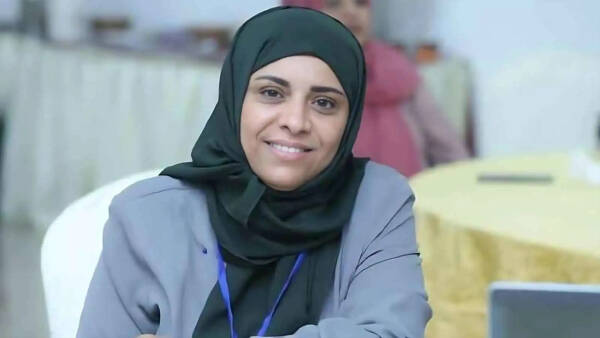
Arrests and security persecutions targeting women in Yemen are not aimed at them merely as individuals; they are intended to create a climate of fear that prevents women from participating in public life and reproduces traditional roles that exclude them from politics, rights advocacy, and community work.
In 2025, arrests and abuses against women continued, particularly in Houthi-controlled areas. Human rights organizations documented thousands of violations, including hundreds of cases of arbitrary detention, abduction, and enforced disappearance. Among the most prominent incidents was the case of Dr. Ashwaq Suleiman Al-Shumairi, who was abducted in November, sparking widespread shock due to the nature of the raid on her home, her academic status, and the continued uncertainty surrounding her fate.
Religious Discourse as a Tool of Social Control
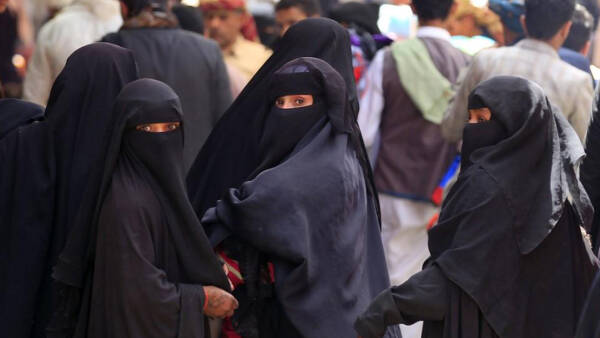
Religious discourse is frequently used to define women’s roles and regulate their behavior by imposing specific dress codes, restricting mobility, and linking women’s role to childbirth and serving the family. With the continuation of the conflict since 2015, this discourse has become more rigid and politicized, contributing to a significant regression in women’s gains.
Historically, religion has played a central role in shaping social norms in Yemen. During the conflict, its instrumentalization by armed groups and both official and unofficial religious institutions intensified.
Control over women’s bodies manifests through practices presented as “religious duties,” though they often originate in social customs. These include imposing specific dress codes tied to notions of honor and virtue, restricting movement by requiring a male guardian or preventing travel without permission, controlling reproductive health by linking women’s role to childbirth and family service, and criminalizing bodily expression or any appearance considered “improper.” Such practices function as tools of social control and are framed as part of “religious identity.”
Women Between Symbolic Empowerment and Institutional Absence
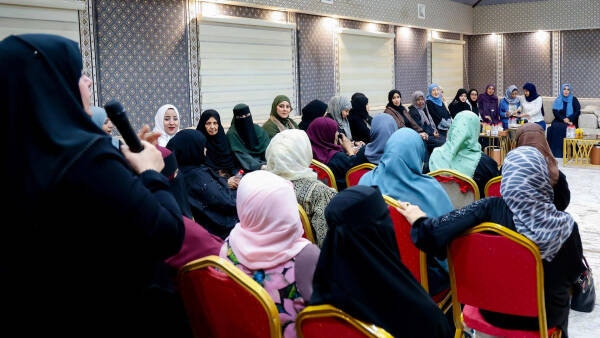
Official discourse in Yemen often uses broad rhetoric about supporting and empowering women. This language is reproduced in national occasions, policy documents, and officials’ statements, seemingly as an attempt to present the government as progressive before the international community, particularly amid pressures related to human rights and equality.
Behind this polished discourse, however, lies a more complex reality: women’s presence in decision-making positions continues to decline, and their opportunities for actual employment within institutions remain limited.
Studies by the Sana’a Center indicate that the conflict has widened the gender gap and that women face compounded challenges in the labor market, with Yemen dropping from 115th to 155th place in the Global Gender Gap Index between 2006 and 2021.
The state’s approach to women in Yemen is based on a complex equation combining symbolic empowerment used to improve political image with an institutional absence that leaves such empowerment without tangible impact.
Often, institutional reform is replaced by symbolic appointments of a limited number of women to public positions or by media initiatives that remain confined to statements. Although these steps may create the impression of progress, they do not change the deep structural realities that keep women’s participation limited.
A Symbolic Step or the Beginning of Transformation?
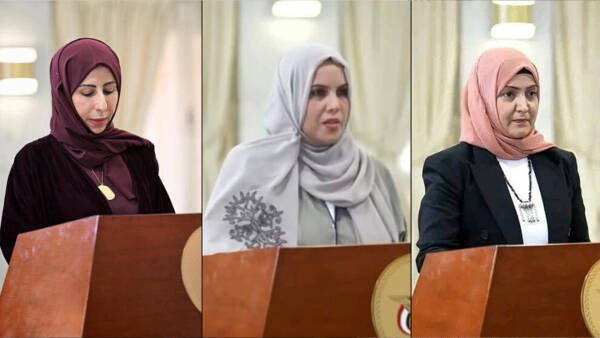
Recently, the appointment of three female ministers in the new Yemeni government sparked cautious optimism. The decision appeared to signal political openness and an effort to present a more balanced image to the international community.
While this appointment suggests a move toward strengthening women’s presence in decision-making positions, it raises a fundamental question about whether such change will genuinely influence the structure of institutional empowerment.
Despite its symbolic importance in terms of representation, the impact of this step remains limited unless supported by clear institutional reforms. The presence of three female ministers does not necessarily change hiring mechanisms or the distribution of power within the administrative system, nor does it guarantee broader opportunities for women in mid-level and lower-level positions. The effectiveness of these appointments also depends on whether the ministers can exercise real authority free from political pressure or bureaucratic constraints.
Resistance in the Open: Presence Despite Exclusion
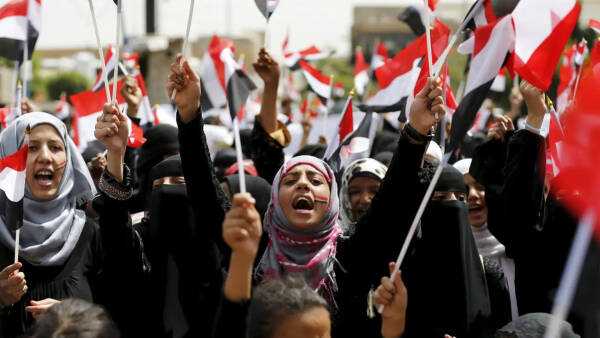
Despite attempts to marginalize women from decision-making processes, reports on women’s participation in peace efforts indicate that they have played a central role in protecting civilians, providing care, and organizing campaigns demanding the release of detainees.
In displacement camps, devastated cities, and community initiatives, women lead awareness campaigns, manage support networks, and confront the discourse of violence with a discourse of life.
Spaces of women’s resistance in Yemen are not always visible or openly declared. Some occur publicly, others quietly, and many are embedded in the details of everyday life. Yet they share one common element: women’s determination to remain active agents rather than mere victims.
The year 2025 was particularly heavy for Yemeni women—a year filled with assassinations, arrests, disappearances, torture, and stigma. Yet amid this darkness, there were women who refused to have their presence erased—women who wrote, protested, protected, documented, and resisted.
Telling these stories is not merely documentation; it is an act of resistance in itself. Every name mentioned and every story told is a step toward ensuring that violence does not become normalized and that women are not erased from Yemen’s memory.