
Forest Fires in Tunisia…An Environmental Wealth Under Threat and a Shared Responsibility for protection
Tunisian forests face increasing challenges due to climate change and the recurrence of fires, threatening biodiversity, natural resources, and the livelihoods of many families, making their protection a shared requiring awareness,proactive intervention.
IKHLAS AL-HAMROUNI
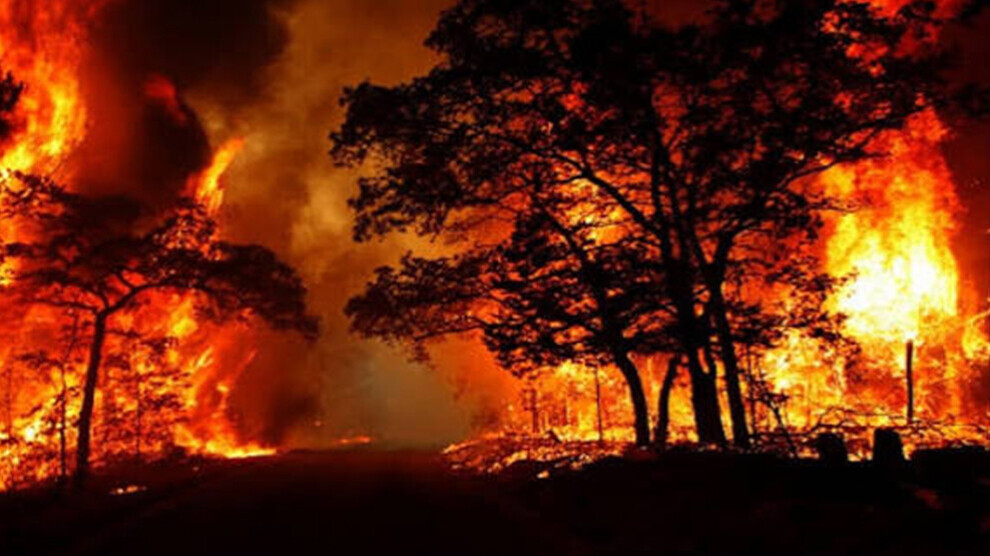
Tunisia-At a time when the pace of climate change is accelerating and fires are increasing, Tunisia’s forest wealth remains threatened with extinction, despite its vital role in maintaining ecological and climatic balance. Between rising temperatures, scarce rainfall, and irresponsible human behaviors, this wealth has become the target of recurring fires that devour the green and leave behind environmental, economic, and social destruction. What is the truth of this reality? What are the underiying causes behind these fires? And who is responsible for protecting what remains?
A Huge Wealth
In her assessment of the reality of forest wealth today, engineer Yasmine Boualiya confirmed that forests in Tunisia represent 10% of the total area, describing them as "a huge and very great wealth" because they maintain ecological and climatic balance.
She pointed out that most of the challenges this wealth experiences under climate change are: rising temperatures, scarce rainfall and a decrease in its quantity, in addition to unexpected and irregular floods, recurring remarkably over the decades. She explained that these phenomena have become tangible in recent years, especially in the summer of 2026, when a rise in fire rates was recorded, not only in Tunisia but in the entire world.
She noted that "these challenges have left a state of imbalance and near extinction of forest wealth, causing erosion and change in biodiversity, soil erosion, an increase in desertification rates, and deterioration in plant and even animal structure." She said: "We used to invest in forests and extract from them wood, fertilizer, and arable soil that was originally used in local plant production, but after the fires and the destruction they left at the national level, we lost this very important stock and this ability to produce."
In the context of her talk, she pointed out that the forest contributes to supporting national production and supporting farmers, as they benefit from this environment in producing rosemary and Aleppo pine. She explained that because of the fires, citizens lost these plants in many areas, which affected job opportunities and the livelihood of many families.
Regarding the plants found in forests, such as esparto grass, Aleppo pine, rosemary, thyme, and wormwood, she explained that they used to contribute to providing job opportunities for many families.
Everyone's Responsibility
Regarding the main causes behind the recurrence of forest fires in recent years, Yasmine Boualiya classified the causes of fires into two main parts: the first is natural, represented by rising temperatures as a contributing and fundamental factor in the outbreak of fires. The second is human, which is the most influential.
In order to protect this wealth, she confirmed that "preserving forests and limiting the spread of fires and others is everyone's responsibility," explaining that this responsibility is shared by individuals, associations, and regional authorities, confirming that everyone must unite to confront this situation.
In this context, she distributed the roles as follows: The role of the citizen: "A person must be aware of the importance of forest wealth, meaning he must be personally convinced of the necessity of protecting this environmental stock and refraining from throwing any flammable materials such as waste and fuels, because they are a source of ignition, especially with the lack of humidity and high temperature."
As for the role of associations, Yasmine Boualiya explains that associations must carry out activities: the first and most important of which is awareness-raising activity, especially in schools, rural areas, forest areas, and even in administrations and others. There are also associations that contribute, according to her, to reforestation, restructuring these forests, redirecting their natural course, and proposing strategies and plans to protect forest wealth, because there are associations that keep pace with global strategies seeking to preserve this environmental stock.
Regarding the authorities, she believes that their role is embodied in enacting laws, keeping pace with and monitoring these changes, and assessing risks (risk assessment).
Preventive Measures
Regarding the most important preventive measures that can limit the spread of forest fires, Yasmine Boualiya identified a set of preventive measures: "The most important measures that must be taken are periodic monitoring, where a person must preserve forests and not throw into them anything quick to ignite such as waste and combustible materials because they are a source of fires, especially with the lack of humidity and high temperature."
She added: "Dead tree remains that facilitate the ignition process must also be removed, and these are preventive and proactive measures." She called for opening forest paths to facilitate rapid access to fire sites, which limits the expansion of the area of burning and burned areas. She confirmed that a simple path can make a big difference in the speed of access and limiting the burned area.
She pointed to the necessity of intensifying monitoring during the summer season, known as the fire season, saying: "In the summer period, which is known to be the fire season, monitoring must be continuous because access to distant mountain areas is difficult even by donkeys, which requires proactive intervention." She called for involving citizens in the monitoring process and early reporting of any potential danger.
At the end of her interview, engineer Yasmine Boualiya directed a message, saying: "Efforts must be combined to preserve these natural resources, because they are not only ours, but belong to future generations."
She adds: "We count greatly on awareness among all parties: associations, the citizen, and the regional authorities present to work hard to protect forests." She confirmed that awareness campaigns must be conducted according to studies that take into account the ecosystem and biodiversity, calling on everyone to continuous and integrated work because responsibility is shared and the goal is one: protecting forests as a national and human heritage.