

SARA POURKHEZRI
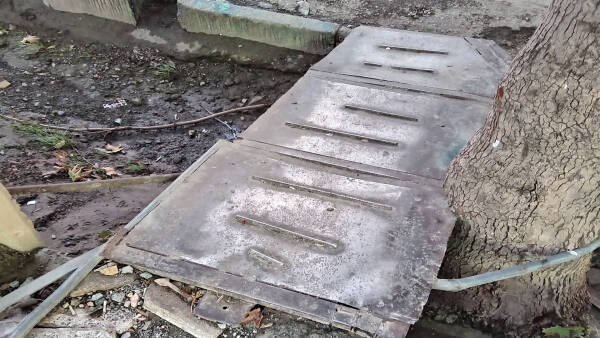
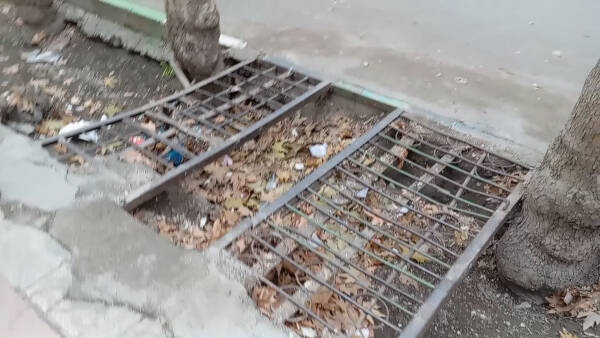
KERMANSHAH— Even if you do not need anyone's help to walk and move around the streets of Kermanshah and meet your daily needs, and you can go to work, shop, drive, and use public transportation on your own without difficulty, a quick look at the city's sidewalks and pedestrian paths reveals a disturbing truth: any passing moment of inattention could drop you into a hole, make you lose your balance on a small bridge, or put you face to face with obstacles that constantly block your way.
If this is the situation for the able-bodied, how does the scene look for a person with a physical disability who is forced to leave home relying on a wheelchair or crutch? Reality says that the city's spaces lack the simplest standards of accessibility, even by one percent, so these people find themselves from their first step outside the home besieged by an endless chain of obstacles—a result of urban planning that completely ignored their basic right to movement and mobility.
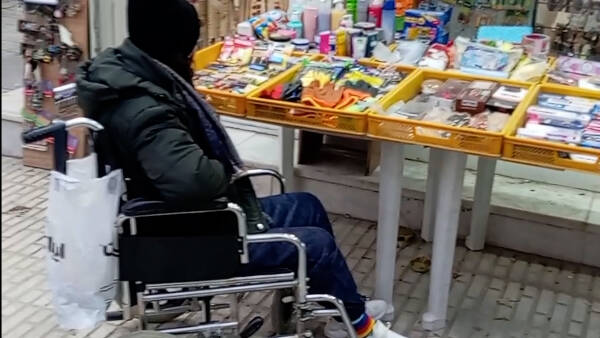
The city was not built for people with disabilities
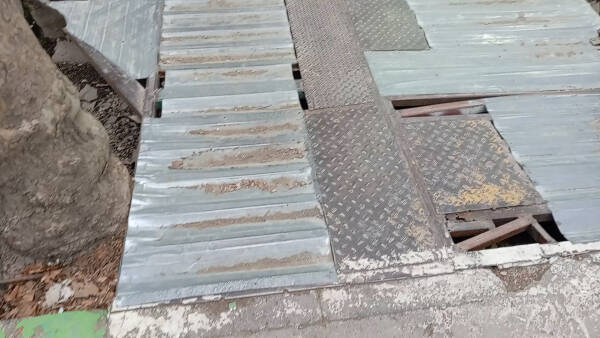
Mehin S., a student specializing in urban planning, says that 100 percent of the city's paths were not designed for the movement of people with motor disabilities or the blind. In urban spaces, ramps or special tiles for blind paths may appear in form, but at the implementation and installation stage there was no oversight over them, so they are useless; they have become more decorative in nature, and many of these paths are full of various obstacles.
She added: "It seems the goal of implementing them was merely to provide statistics and administrative reports to officials to say that these standards were adhered to, while their effectiveness on the ground equals zero. We have repeatedly seen these paths designated for the blind end suddenly at a wall, a hole, or a tree, and I have witnessed in many streets the path suddenly cut off without placing other guiding tiles."
On the other hand, these people usually lack financial independence due to the absence of job opportunities, and families are unable to secure their basic needs as a result of the absence of government support. Despite officials' claims that this group is covered under the umbrella of the "Social Welfare Organization," the data show that the monthly salary allocated to them, determined based on the severity of the disability, ranges between 2 and 6 million tomans—a meager amount that does not cover even a small part of their basic living costs, pushing them to live in the harshest living conditions.
Doubled restrictions on women
Difficulties multiply when another inhibiting factor accompanies the restrictions resulting from the health condition, making circumstances harsher and more exhausting: the pressure tool of gender. In an environment influenced by patriarchal stereotypes, men with disabilities, even under equal health and biological conditions, enjoy gender preference compared to women with disabilities. The mere fact of being a woman makes the burden of disability heavier in the general view, while society accepts men's vulnerability and weakness more easily.
This doubled discrimination is clearly evident in the issue of marriage, where a man with a disability's association with a woman without disabilities is viewed as largely normal, while the traditional stereotype requiring "perfection and flawlessness" in women leads to the exclusion of women with disabilities and their practical isolation from the circle of attention and equal family and social opportunities.
Pari S. confirms this reality, saying: "My brother and I face the same visual disability, but the view of those around us is completely different. They constantly repeat to me that I will have no chance of marriage, and whenever my mother buys me something, they tell her: 'Don't spend too much on her; she can't see anything anyway.' While they constantly urge my mother to choose a wife for my brother, so she can take care of his daily life affairs."
The absence of a suitable environment for the lives of people with disabilities in public space, and the prevailing beliefs toward them on the other hand, have made these individuals languish under increasing pressures. On the other hand, a society influenced by authority policies, through its non-acceptance of them as humans who have the right to a life equal to others, has exposed them to further discrimination.
As a result, life has become more difficult for them, while if the appropriate ground and environment were available to them, they might have been able to prove that they are not much different from other humans, and that they too have a share in this world whose only criterion for participation should not be physical safety alone.


