
School Corporal Punishment and 'Feminization': Debating Women's Role in Syria
As Syrian education faces challenges, debate arose over upbringing methods and women's school presence, with competence and safe environments key to progress.
ROCHELLE JUNIOR
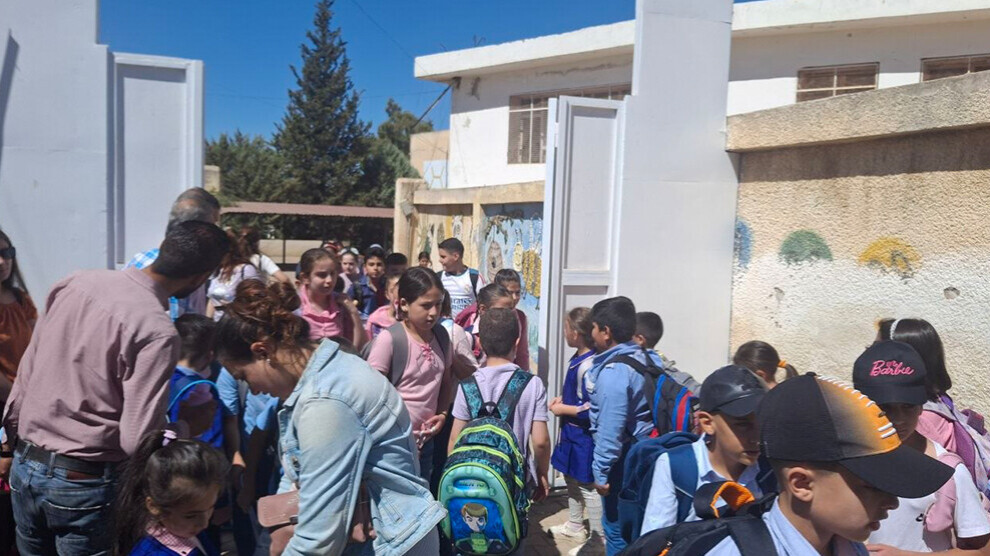
Sweida — Renewed talk of reinstating corporal punishment in schools and reducing women's presence in the education sector—under the pretext that the "feminization of education" weakens the child's personality—has opened a broad discussion about upbringing methods and women's role in building generations. This proposal is based on the idea that a woman's emotion overcomes firmness, and that schools' greater reliance on female teachers may make dealing with students less strict, especially males.
A member of the Syrian People's Assembly, Mohammed Ibrahim Al‑Zoubi, sparked controversy with his statements about the high proportion of female teachers compared to male teachers in schools, considering that this disparity affects "the school's prestige" and the formation of students' personalities. His remarks came during a hearing session for the Minister of Education, Mohammed Abdul Rahman Turko, where he criticized what he described as a lack of balance in the teaching staff.
At a time when schools in Syrian cities face challenges related to restoration, lack of equipment and educational tools, in addition to the economic and social crises the society is experiencing, this discussion opens the door to questions about the priorities of the educational process, and about the criteria that should be adopted in selecting teaching staff—away from the teacher's gender, and focusing on competence and the ability to deal with children.
Corporal Punishment... Upbringing or Fear?
Teacher Maysaa Joudieh says that corporal punishment is not an appropriate means of raising generations, affirming that the school is supposed to build children on tolerance, understanding, and good treatment.
She explains that corporal punishment may leave negative effects on the child, whether in their relationship with the teacher or in their acceptance of the educational process, noting that a student who is subjected to corporal punishment may become alienated from the teacher and lose trust in them, and may reach a stage where they do not respond to other educational means.
She adds that awareness and dialogue can be more effective means of dealing with students, because a relationship based on respect helps bring the student and teacher closer and contributes to conveying information better.
Maysaa Joudieh believes that punishment, when necessary, can be educational and non‑physical—such as briefly separating the child from the group or directing an educational stance toward them—while taking into account their age and ability to understand the mistake, away from corporal punishment and violence.
Does Women's Emotion Weaken the Child's Personality?
As for the issue of the "feminization of education," it is based in part on the idea that women are more emotional, and that the predominance of emotion may make them less strict in dealing with students, and thus may affect the formation of the child's personality, especially males.
But Maysaa Joudieh rejects linking emotion to weak personality, affirming that a child needs someone capable of embracing them and supporting them psychologically and morally, not someone who frightens them.
She says that a woman is the one who gives birth and raises, and that her presence in the educational process does not mean that children will emerge with weak personalities. Rather, a child can draw their strength and confidence from a person who treats them well, supports them psychologically, and can convey information to them correctly.
She affirms that tenderness does not mean the absence of firmness, and that building a child's personality depends on the method of upbringing and dealing with them, not on the gender of the person teaching them.
She notes that women play a fundamental role in raising generations and shaping society, and that marginalizing their role or depriving them of the professional field does not serve the process of building a balanced society.
She cites women's role throughout history, including Queen Zenobia, to affirm that women's presence in positions of responsibility and work is not a new phenomenon, and that their ability to participate in various fields is not related to being a woman or a man.
She says that a woman is "capable and able to do everything a man does," considering that the standard in work should be ability and competence, not gender.
School and Building Self‑Confidence
The role of a female teacher is not limited to providing information; it extends to building the child's personality, enhancing their self‑confidence, and teaching them their rights and duties.
She notes that some students arrive at school lacking self‑confidence due to negative words they are exposed to at home, such as repeatedly being described as "failures." She believes a teacher can play an important role in changing this image by enhancing the student's self‑confidence and encouraging them to try.
The female teacher also gives the child space for independence, building their personality, and interacting with their peers. This space may be important for children who do not get enough opportunity at home to express themselves.
Maysaa Joudieh affirms that building a human being requires working on the moral and psychological aspects, not dealing with the child as a body that needs to be deterred by force. A word can leave a deep impact on a person; therefore, upbringing and guidance must be used in a way that preserves the child's dignity and helps them develop.
Competence Before Gender
On the other hand, the issue of the "feminization of education" raises a question about the criterion that should be adopted in selecting male and female teachers. Maysaa Joudieh affirms that a woman has a natural right to work and participate in professional life, and that confining her role to the home does not reflect the scale of the role she can play in society.
She says that society is made up of men and women together, and that building it requires the participation of all its segments, considering that marginalizing women and depriving them of their professional role leads to weakening one of the fundamental components of society.
Away from the debate over corporal punishment or women's presence in schools, Syrian education still faces fundamental issues related to the reality of schools and their equipment, and the need of educational institutions for restoration, modern means, and qualified staff, in addition to providing a safe educational environment for students and teachers