
Women of Van Between the Whirlpool of Violence and the Obstacles to Achieving Justice
IHAMED member torantailk warned of impunity policies and societal pressures in Turkey and northern Kurdistan, stressing activated protection mechanisms and accountability for negligent parties to ensure perpetrators are punished.
MAMIHAN HALBIN ZIDAN
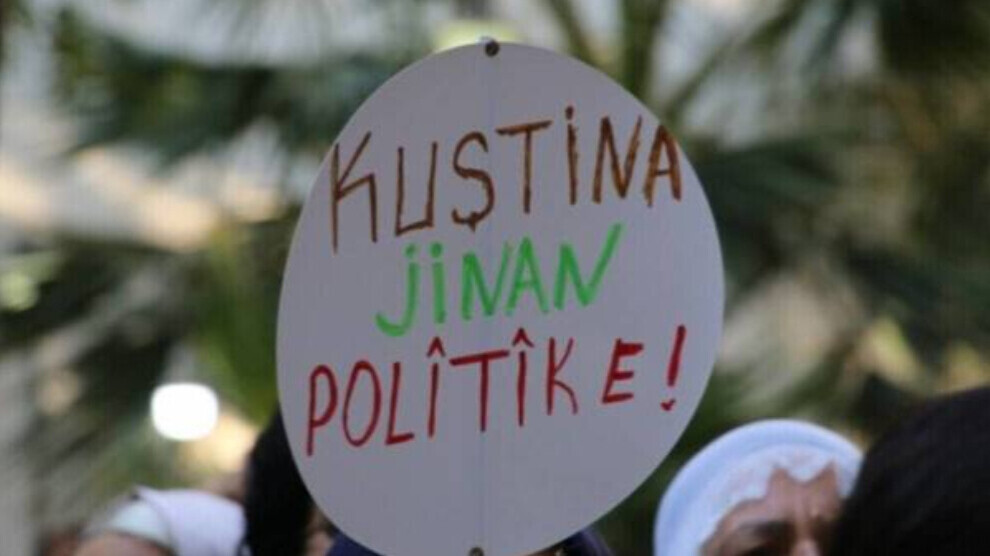
VAN_Amid the increasing femicide crimes in Turkey and northern Kurdistan, a large portion of suspicious women’s deaths are recorded as suicide cases. Shortcomings in investigations, impunity policies, and the obstacles facing women in accessing justice weaken the mechanisms protecting women’s right to life.
According to the statistics prepared by JINNEWS agency to monitor acts of violence, 376 women were killed in the cities of Turkey and northern Kurdistan during the first nine months of 2026. The identity of the perpetrators was known in 212 cases, while 164 cases were recorded as suspicious deaths. In Van, the deaths of 25 women were considered suspicious over the past two years.
Social and Legal Reasons for the Increase
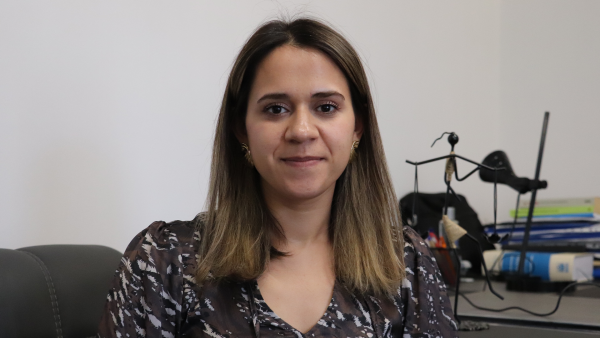
Commenting on this, Madina Torantailek, a member of the Human Rights and Media Association (İHAMED) in Turkey, explained that suspicious deaths of women are increasing in Van, noting that the reasons for this increase are due to both social and legal factors. "The state's failure to fulfill its positive obligations, which it is supposed to carry out, also leads to the non-recognition of the existence of femicide in the country. When a woman loses her life under suspicious circumstances, evidence is not collected in investigation files in a timely manner, and the events that the woman went through before her death are not investigated."
She added: "Failure to investigate such details gives perpetrators greater strength. If the necessary investigations had been conducted, it might have been possible to reach the perpetrators, or to reveal the record of violence the woman had previously been subjected to, and then to develop appropriate policies and solutions for these cases. But the absence of these measures is what leads to the continuation of the problem."
Women Suffer a Second Psychological Trauma
Speaking about women's feeling of loneliness, alongside the violence they are subjected to, Madina Torantailek stressed that women feel particularly isolated regarding access to justice mechanisms. "In villages and districts, access to justice mechanisms is not available as required, and public officials responsible for preventing violence do not perform their duties as they should. We often encounter cases where a woman subjected to violence goes to the police station, but is sent back without her complaint being registered. In other cases, a protection order is issued, but due to incorrect guidance in other legal procedures, we later witness the violence incident ending in the woman's killing."
She stressed that "from this standpoint, femicide and suspicious deaths can certainly be prevented. Applying the measures stipulated in the legislation in force correctly and at the right time, monitoring violations, and dealing with investigation files related to women's deaths under mysterious circumstances with greater accuracy and speed are all matters that mean activating prevention mechanisms."
She continued: "On the other hand, women are repeatedly subjected to psychological trauma as a result of violence. After being subjected to violence, they face a second psychological trauma when they resort to the police, the public prosecution, or the bodies responsible for receiving complaints, where they are forced to recount the violence they were subjected to in front of different people once again. At a certain stage, this second trauma leads the woman to withdraw and retreat from pursuing the case, because she cannot continue to bear that suffering, so she decides not to return to those bodies again."
The Impact of Societal Pressures
Madina Torantailek stressed that many cases of women's deaths under mysterious circumstances are covered up and classified as "suicide" cases, explaining that the media, especially major media institutions, contribute to entrenching this trend through the way they address these issues.
She said that the concerned authorities refuse to acknowledge the existence of the phenomenon of femicide, which is also reflected in the course of trials and judicial rulings that do not rise to expectations. She noted that official recognition of this phenomenon and taking the necessary measures to confront it would have changed the reality significantly.
She pointed out that instead of addressing these problems, Turkey announced last year what was called the "Year of the Family," within a discourse suggesting that the family faces no problems, and that it is being subjected to external interventions. She noted that some femicide and suspicious death cases, following this announcement, are now presented as mere simple family disputes, in line with the policies being followed.
She stressed that the repercussions of violence and killing are not limited to women and their safety, but extend to constitute a serious threat to societal health. She also explained that the absence of justice in these cases does not only affect women's rights alone, but undermines the entire society's confidence in the justice system.
"Implementation of Decisions Must Be Followed Up After Their Issuance"
Madina Torantailek recalled that the European Court of Human Rights had previously condemned Turkey for its failure to conduct effective investigations into femicide crimes, noting that the necessary mechanisms have not been activated as required.
She stressed that there are cases that require holding public institutions and officials responsible for negligence in performing their duties accountable. "There are cases in which public institutions and public officials who fall short in performing their duties should be held accountable. For example, when a woman goes to a police station requesting shelter in a women's shelter, accompanied by her small child, and she is told that she cannot take him with her, and that she can only be received alone, that is clear negligence, as she certainly has the right to take her child with her. When measures contrary to that are taken, and then a more serious incident occurs later ending in the woman's killing, the public official responsible for this negligence must also be held accountable."
She stressed the necessity of rehabilitating public officials who deal with women, subjecting them to comprehensive training programs on relevant legislation and the procedures to be followed, in addition to organizing specialized work programs in this field.
Regarding Law No. 6284, she stressed that cases related to it should not be dealt with as mere judicial files, but each case must be carefully studied and a comprehensive assessment conducted before issuing decisions. "Unfortunately, we do not witness sufficient application of these measures. In addition to the importance of conducting an accurate assessment before making decisions, the necessity of following up on their implementation after issuance, verifying whether they have been violated, and monitoring the developments of each case stands out. Hence, public institutions bear the responsibility of ensuring that these decisions are followed up seriously and effectively."
"Amnesty Decisions and Penalty Reductions Give Perpetrators More Power"
She stressed that "these issues must be addressed and the culture of impunity eliminated, because these policies make the perpetrator think as follows: I will kill, then I will say what I want, and I will benefit from the penalty reduction, and I will leave prison within a short period. Files of violence against women and femicide must also be excluded from amnesty decisions and penalty reductions that appear from time to time within amendments to laws on the execution of penalties."
"Families Blame the Woman Instead of the Perpetrator"
In emphasizing that there are problems in access to justice mechanisms in Van, Madina Torantailek explained that women living in areas relatively close to the city center can access institutions faster, while women in districts and distant villages face much greater difficulties.
She added: "The issue of trust in public institutions also affects many cases. Fear that these institutions will not be able to provide protection, and anxiety about what will happen later, are among the reasons contributing to the worsening of this phenomenon. I cannot generalize this to all of Van, but we often encounter cases where women later withdraw their complaints due to pressure from their families. But we often face cases where women try to hide the filing of complaints, and ask that no official notifications be sent to their homes, and confirm that they will not file a complaint if such notifications are likely to reach the home. In cases where the perpetrator is a family member, we also see some family councils gathering to pressure the woman, and holding her responsible based on social customs and traditions, with the aim of forcing her to withdraw her complaint, reaching the point of declaring her guilty instead of holding the perpetrator accountable."