
Agriculture in southern Lebanon… mounting lossed and women resisting
Supporting the agricultural sector today doesn’t only mean saving a season, but protecting an entire society from collapse, and preserving the role of women who have proven that, in the heart of crises.
Fadia Jumaa
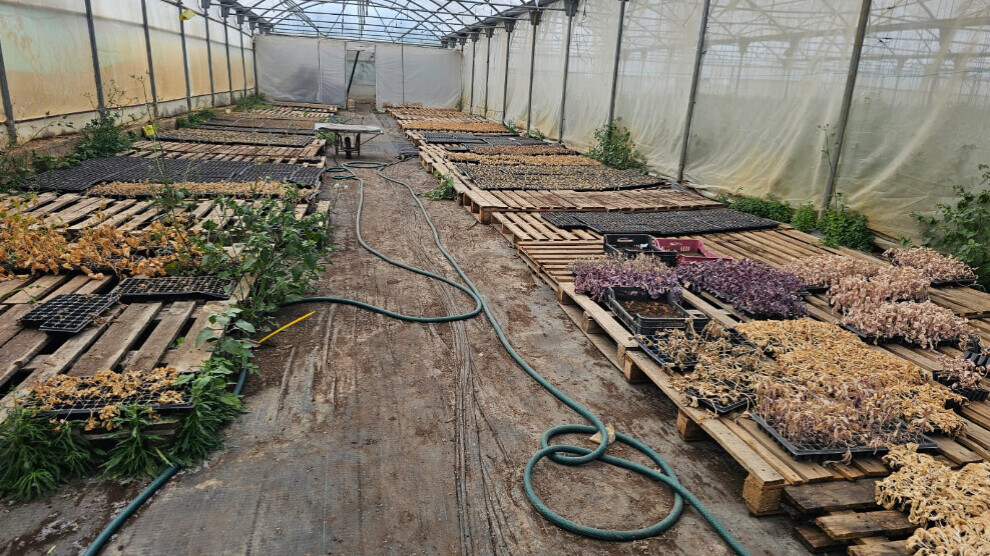
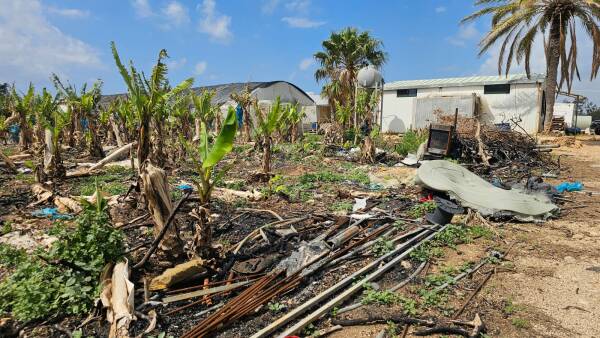
Lebanon_ In southern Lebanon, attacks can’t be considered a passing event that moves over the land without leaving deep traces on its soil and its people. Agriculture, which for decades has been a source of livelihood and a pillar of resilience for southern families, now finds itself at the heart of the targeting. Agricultural lands have turned into danger zones, seasons into open bets on loss, in addition to land leveling, mining, burning with white phosphorus, and the uprooting and theft of ancient olive trees by Israeli forces.
In this scene, challenges multiply, especially with the expansion of forced displacement and the disruption of production chains, threatening food security and placing farmers before an unknown reality. Amid this fierce war, women emerge as a line of defense for the land. Their participation in agricultural work is no longer just an economic role; it has turned into a daily act of resistance in which survival intersects with dignity and the preservation of the land.
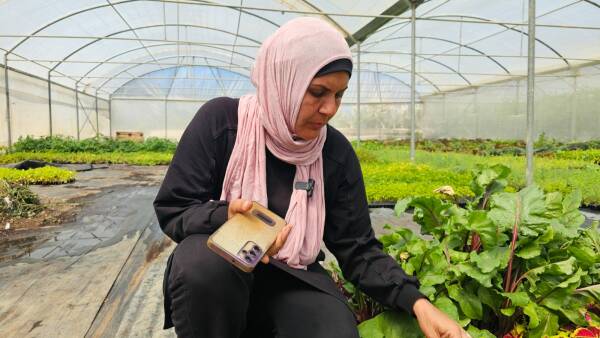
When the roads emptied, they carried the burden of family and production together, facing fear and loss, in a relentless attempt to save what can be saved of seasons threatened with extinction.
Damage by the numbers
The third report issued by the Ministry of Agricultur shows a dangerous escalation in the scale of damage affecting the agricultural sector in Lebanon. More than 22.5% of agricultural land has been damaged – equivalent to 51,956 hectaers – with 2,392 hectares recorded as damaged in just one week. More than 10,261 agricultural holdings have been damaged, while 78% of farmers in the south have stopped working, and the displacement rate reached 76.8%, reflecting an unprecedented crisis threatening the continuity of agricultural production.
Damage has affected various basic crops, from wheat and vegetables to legumes and tobacco, in addition to significant losses in greenhouse farming, threatening both the current and next seasons. In contrast, farmers’ need are urgently increasing, especially in the areas of Marjayoun, Bint Jbeil, and Nabatieh, including fuel, animal feed, water, and production inputs.
Agriculture as an act of resistance
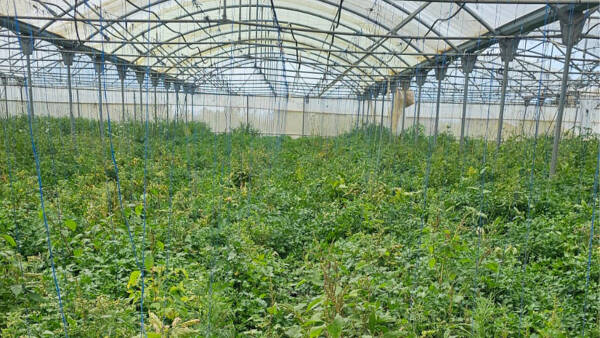
Rima Al‑Hussein, a farmer from the Mansouri area, says: "I used to manage about 20 agricultural tents in my areas – Al‑Qalila south of Tyre and the Mafraq Maarka intersection northeast of Tyre. At the beginning of the war and displacement, I kept going back and forth to both areas to take care of them and water them, despite the risks of being targeted, until the Lebanese army evacuated its center in Mansouri after it was hit by an airstrike."
She added: "I had no choice left; I was forced to stay away. By that time, I had already been displaced to another city. But I endured the hardship of traveling from one city to another to preserve the crops. However, after access to Al‑Qalila became impossible, I concentrated my work on saving what remained of the tents in the second area."
She noted that her daily journey was fraught with danger. "The streets were empty, bridges were bombed, the sound of raids was terrifying and disturbing, the sound of ambulances, and targeting could happen at any moment. I would do the watering and leave, returning to Sidon."
Rima Al‑Hussein explained that this work posed a great challenge. "I was trying to reduce the severity of losses and to ensure that we would survive, even with little livelihood, because livelihood equals life itself." She added, "I am also a mother and wife, and that multiplies the challenge and gives me the determination to remain steadfast. This is what we, as southern women, have become accustomed to."
Amid the numbers of great losses and individual stories of resilience, another face of war in the south is revealed: a war on land, livelihood, and memory. Yet women like Rima Al‑Hussein continue to weave from fear their strength, and from loss their determination to carry on.