
International Workers' Day… the holiday of the toiling woman
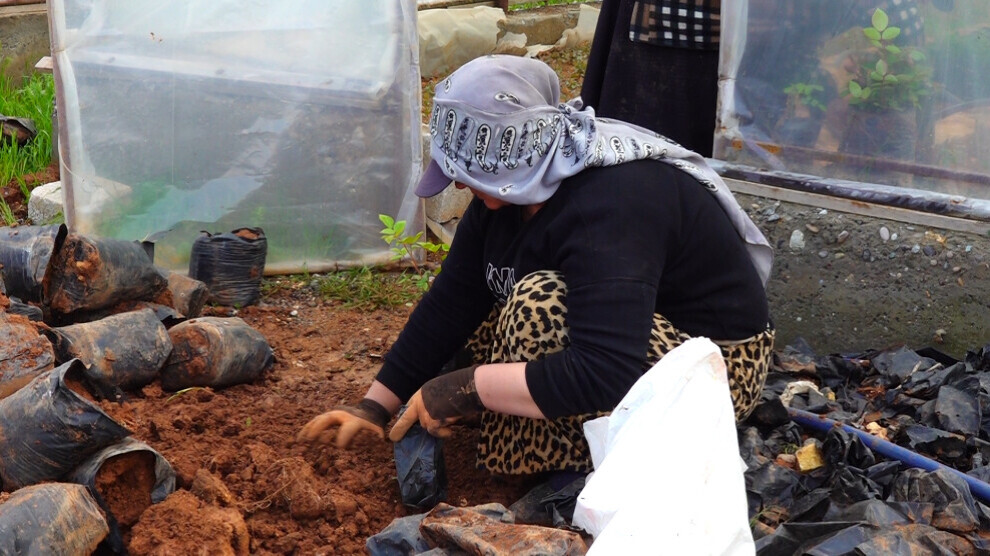
International Workers' Day honors the working class, especially women, recognizing their effort and toil in all life fields, and their fundamental role in building society and preserving its stability.
Nurshan Abdi
Kobani_ International workers’ Day emerges as a space that reveals the extent of the effort women exert both inside and outside the home. Despite their role in building the family and society, they still face denial and marginalization. On this day, their demands are renewed for recognition of their work, defense of their achievements, and resistance to the mentality that seeks to exclude them.
From 1886 to the present, the world celebrated May 1 as international workers’ Day, an occasion of solidarity and appreciation of the efforts of the working class and toilers everywhere. Women stand out especially on this day for the pivotal role they play in building a healthy family and a free, democratic society – whether in Rojava, the Middle East, or various parts of the world. Despite the great efforts made by working women within society, many of them still face marginalization and denial of the value of their work by the authoritarian male mentality that belittles their contributions and sacrifices.
“Leader Öcalan valued women's effort and toil and demanded their rights”
Citizen Amineh Mahmoud spoke about the importance of International Workers' Day for the women of Rojava, pointing out that women work both inside and outside the home. They bear the responsibility of building the family and contributing to building society at the same time, which makes them the most exerting of effort and toil in various areas of life.
She explained that women's labor is often marginalized and not recognized as it should be, saying that women work in all fields – whether at home, in agriculture, or in institutions – yet the prevailing mentality in society still denies their efforts, erases their achievements, and robs them of their right to recognition for what they have offered throughout history and up to today.
She added that women manage family affairs and contribute to organizing society, yet the male mentality still robs women of their labor and effort by controlling their will and belittling the value of their role. She affirmed that protecting women's achievements and preserving what they have attained through effort and toil within society is the way to confront this mentality and overcome the attempts at denial that target women's will.
Amineh Mahmoud pointed out that what women offer to society is often met with disregard, considering that what the Women's Protection Units (YPJ) are subjected to today is a clear example. These forces "faced the most dangerous terrorist organizations and defeated them, defended women and the entire society, and made great sacrifices, as each fighter sacrificed her spirit for the freedom of society." Yet despite this, these forces are not recognized as an official force by the interim Syrian government.
She added that society has often denied women's existence and role, while Leader Abdullah Öcalan defended their rights, spoke about their suffering, and stood by every woman who suffers injustice or whose effort is denied.
Appreciation of the efforts of female labor
Citizen Sadiqa Habo, for her part, said that May 1 carries a special meaning for every working hand in society, whether woman or man, because it is a day that expresses the value of the effort exerted to build a dignified life. She affirmed that women, by virtue of their role within society, work to establish a better life, considering that this effort itself is a form of resistance to prove that women are capable of managing the family and society, and that they are a fundamental partner in building life.
She added that society's denial of women's labor and toil is "unacceptable," especially on International Workers' Day, which is an occasion to demand rights, stressing that women will continue to demand their rights and highlight their real role within society.
Sadiqa Habo explained that women have the ability to work both inside and outside the home. They manage family affairs and raise children, while at the same time being able to work to secure their household needs. She mentioned that she personally is able to manage her home and raise her children, in addition to working in her small shop from morning until night to meet her family's requirements.
She pointed out that on International Workers' Day, one must pause at the extent of denial that women face from the male mentality and authority, considering that the entire world still ignores women's existence and erases their achievements and efforts. She added that Leader Abdullah Öcalan provided women with a vision and philosophy that helps them become self‑aware, demand their rights, and appreciate their labor and toil.
Sadiqa Habo concluded her speech by affirming the need for every woman who faces violence or injustice inside the home to liberate herself, break the constraints imposed on her, and take the struggling woman who fights for her freedom as an example and role model – as she too defends her rights and her existence within society.