
Occupational safety in Halabja… between weak awareness and increasing risks
Brwas Mohsen, an environmental monitor from Halabja, affirmed that occupational safety needs greater attention, worker protection begins with awareness, and promoting health and safety culture is not a luxury.
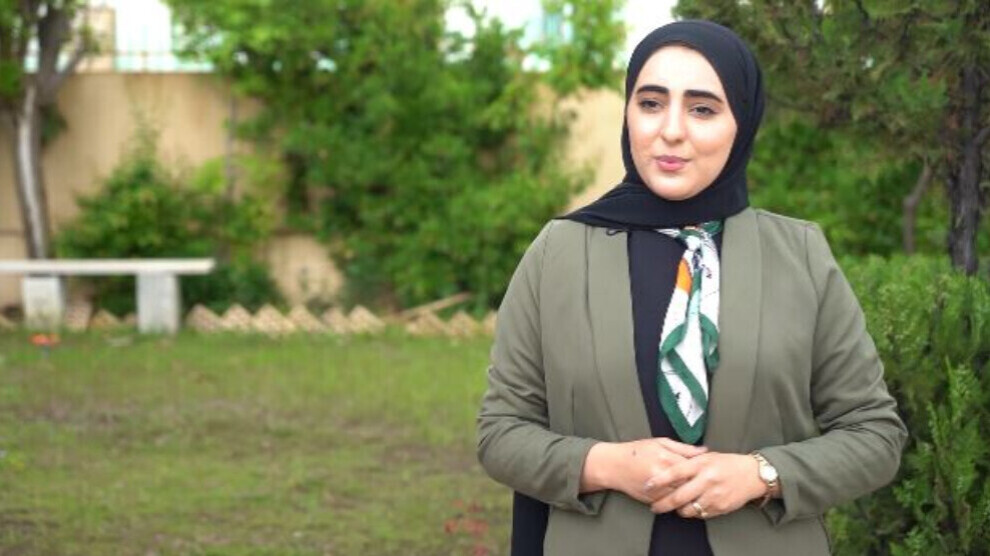
Mehreban Salam
Halabja – While the workplace is a daily site for many citizens' lives, it sometimes turns into a source of risks and health problems. Therefore, raising awareness of health and safety in the workplace has become an urgent necessity. This issue is not limited to protecting workers; it has a direct impact on work productivity and community stability.
Information and statistics concerning workers and craftsmen in Halabja city in the Kurdistan Region are limited and not officially available. Accurate and up‑to‑date data on the size of the workforce or its professional distribution are not published. Local authorities and researchers often rely on unofficial estimates, which indicate that the city's labor market is undergoing continuous changes due to the economic and social conditions in the region.
Population estimates indicate that Halabja's population ranges between 120,000 and 150,000 people, while between 35% and 45% of them are estimated to constitute the actual workforce. The unemployment rate, according to general rates in the Kurdistan Region, ranges between 12% and 18% – a figure reflecting the challenges the city faces in creating new and stable job opportunities.
Regarding the distribution of workers by sector, the agriculture and livestock sector occupies an important position, employing between 25% and 35% of the population, especially in villages and agricultural areas surrounding the city. The government sector and official jobs come at the forefront in terms of the number of workers, absorbing between 30% and 40% of the workforce, making it one of the main pillars of the local economy.
Crafts and handicrafts attract between 10% and 15% of workers, including professions such as carpentry, blacksmithing, and tailoring – professions that still maintain their presence despite economic changes. In contrast, the trade and services sector constitutes about 15% to 20% of the labor market, including shops, markets, transport, maintenance, and other daily activities that residents depend on.
Regarding craftsmen and professional workers, estimates indicate that their number ranges between 5,000 and 8,000 people. Their activity is concentrated in multiple fields, most notably wood and metal products, car maintenance, tailoring and clothing manufacturing, in addition to construction and building works – sectors that are essential to the local economy and meeting society's needs.
These indicators, despite being approximate and unofficial, paint a general picture of the labor market reality in Halabja and highlight the need for more accurate data to develop economic policies and support productive sectors in the city.
Lack of awareness and absence of necessary measures
Brwas Mohsen, environmental monitor from Halabja city in the Kurdistan Region, says that many undesirable accidents in workplaces occur due to lack of awareness and absence of necessary measures. From this standpoint, administrations and institutions should give greater importance to training and educating employees on how to protect themselves, as well as raising awareness among employers.
She affirms that the simplest awareness measure can save a worker's or professional's life. "Awareness is the basis of safety, because the most important step in daily work is saving human life. We hope that this awareness will serve as an important reminder that pushes employers to pay more attention to occupational health and safety."
"Guidance is among our most important duties as monitors"
She pointed out that one of the main tasks of environmental monitoring is to provide guidance to employers. "During monitoring operations, if we notice anything that may affect workers' lives or health – whether chemical, physical, or mechanical – we address it and provide necessary guidance to employers, either by adding what is necessary or removing what is excessive, with the need to pay attention to occupational health."
She explained: "Needs vary according to the nature of the work and the place; each workplace has its own requirements. To date, we have worked with various employers to implement the required measures, and we hope that protection will be provided for professionals."
"A safe environment requires a culture of respect"
She also clarified that it is necessary to provide basic supplies for professionals and teach them how to use them correctly, with the need to focus on both the worker and the employer, working together to ensure their safety.
She added that creating a safe work environment depends not only on equipment and tools but also requires a culture of respecting laws and cooperation among workers. "When everyone feels they are part of this responsibility, the level of safety rises significantly."
Brwas Mohsen concludes by affirming that "raising awareness of health and safety in the workplace is a long‑term investment that can protect human life, while at the same time supporting production and economic growth. A safe work environment is the foundation of a healthy and strong society."