
United Nations Warns of ISIS's Growing Ability to Adapt and Exploit Technology
The UN affirms curbing ISIS requires an integrated strategy beyond military solutions: international cooperation, tackling tech exploitation, supporting stability, addressing enabling conditions.
News Center— The United Nations has warned that ISIS continues to pose a serious threat to international peace and security, affirming that despite ongoing pressures on its leadership and operations, it remains capable of adapting to security and political changes, particularly in Syria.
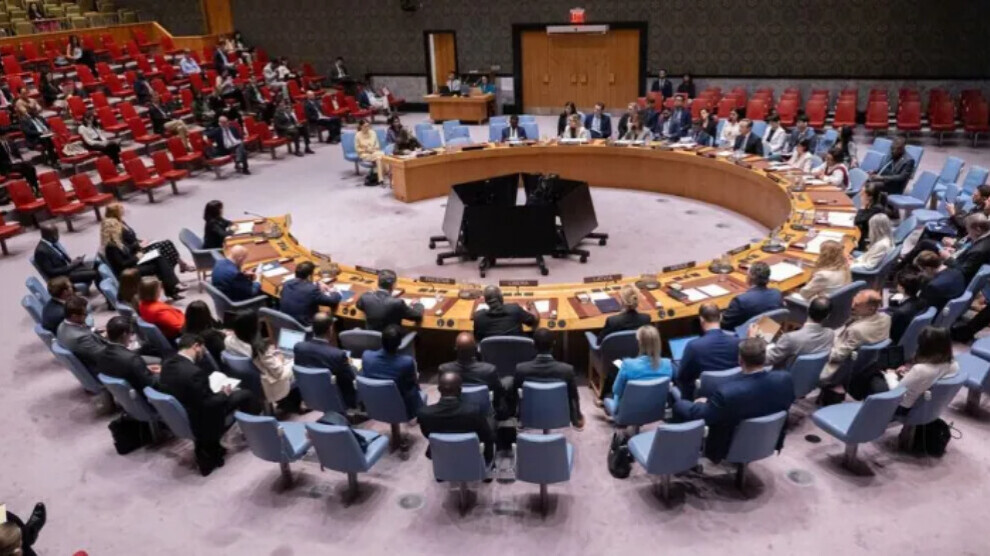
This came during a briefing delivered by Oglujeren Niyazberdiyeva, Director of the Office of the Acting Deputy Secretary-General of the United Nations Office of Counter-Terrorism, to the Security Council, during which she presented the twenty-third report of the Secretary-General on the threat posed by ISIS, in addition to the efforts made by the United Nations to support member states in confronting terrorism.
She explained that ISIS continues to exploit armed conflicts and fragile security environments to enhance its activity, noting that the level of threat remains particularly high in parts of the African continent, especially in the Sahel region and the Lake Chad Basin.
According to the report, a number of terrorist branches have been able to strengthen their capabilities, expand the scope of their operations, and develop their combat tactics. The "West Africa Province" branch remains the most active globally, with an increasing capacity to acquire and use commercial drones in its operations.
UN Concerns Regarding Syria
Regarding Syria, the UN official affirmed that ongoing political and security transformations are redrawing the security landscape, warning that the closure of Al-Hol camp last February has raised growing security concerns, given the unknown whereabouts of thousands of people who had been residing there.
She added that these developments underscore the importance of the Secretary-General's call for the implementation of the safe, voluntary, and dignified repatriation of citizens from the camps, in accordance with the provisions of international law.
In Iraq, she noted that counter-terrorism operations have succeeded in significantly reducing ISIS's capabilities, but emphasized that sustaining these gains requires building strong and accountable institutions, strengthening justice systems, implementing rehabilitation and reintegration programs, and addressing conditions that may allow ISIS to rebuild its capabilities.
In South Asia, she explained that the "ISIS-Khorasan" branch remains one of the most capable branches of executing or inspiring attacks outside Afghanistan, exploiting instability to recruit new elements and plan its operations.
Three Pillars for Countering ISIS
Oglujeren Niyazberdiyeva affirmed that sustainable countering of the ISIS threat requires the continuation of prevention efforts and the strengthening of international and regional cooperation, calling for the adoption of comprehensive responses grounded in international law.
She identified three main pillars for the international response. The first is enhancing cooperation among states through intelligence sharing, improving border management, and coordination in the areas of criminal justice and financial investigations, affirming that no single state can confront this threat alone.
The second pillar is limiting ISIS's exploitation of modern technology, warning of its increasing use of artificial intelligence, encrypted communications, digital platforms, virtual currencies and assets, and drones—necessitating enhanced oversight and cooperation with the private sector, alongside the use of these technologies in counter-terrorism efforts in accordance with international law.
She emphasized that the third pillar is full commitment to international law, including international human rights law, international humanitarian law, and refugee law, considering that respect for these principles is an essential condition for the success and sustainability of counter-terrorism efforts.
Warnings of the Expanding Use of Technology
For her part, Carmen Cantor, Deputy Executive Director of the Counter-Terrorism Committee, stated that the terrorist landscape is undergoing accelerated transformation due to technological developments, explaining that terrorist groups are increasingly relying on social media, encrypted messaging applications, online gaming platforms, and artificial intelligence technologies to disseminate propaganda, recruit individuals, raise funds, and enhance their operational capabilities.
She added that digital platforms are no longer merely propaganda tools but have become part of the operational infrastructure of terrorist organizations, used to coordinate activities, transfer funds, purchase resources, and expand cross-border activity.
She also warned of persistent gaps in confronting the growing links between terrorism and organized crime, pointing to the escalating use and arming of drones for terrorist purposes, particularly in Africa, in addition to the need to enhance the protection of maritime infrastructure and develop mechanisms for information sharing and monitoring the movements of terrorist elements.
She affirmed that a report issued by the Directorate last April on West Africa showed that terrorist organizations are benefiting from weak governance, fragile border controls, and the misuse of modern technologies, including artificial intelligence and drones.
She concluded by affirming that the ISIS threat has not diminished; rather, it has become more widespread and capable of adapting to changes, emphasizing that confronting it requires long-term international cooperation and a comprehensive approach combining security, legal, preventive, and developmental measures—rather than relying solely on military solutions or focusing on a single geographic area.