
Life in the countryside… holding onto roots, authenticity, and the simple life
Women of the Koi Plain villages still find health and comfort in using firewood for cooking and bread. They believe humans were created for nature and movement, not urban life.
Shia Koya
Koya_ Despite the many burdens that life in the village places on women in particular – consisting of continuous work all day long, from baking, milking, and farming – the psychological pressures that accompany it are less, and likewise physical illnesses. Elderly women are more active than young women in the city, and the credit for this goes to the nature of the village, free from pollutants.
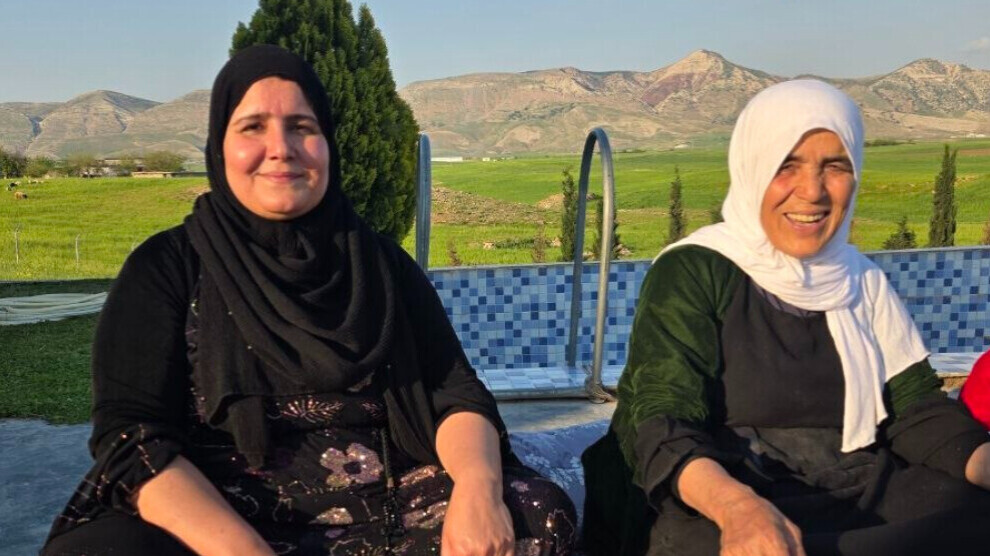
"The water, the air of the village, and working in it make your life healthy." This is the wisdom of a village woman who refuses to move to the city, and even refuses the development that she believes has robbed humans of their happiness. Lali Hamad Juma, from the village of Timaroki in Koi, Kurdistan Region, is known as a strong and skilled woman. To this day, she still bakes on firewood with the women of the village.
She says, "Life now has become easier and better than in the past. Many comforts have become available in work, because in the past we women used to get very tired, and all our work depended on firewood. Today, everything is available and easier, yet we are not as happy as we were in the past."
In the past, as she explains, "We were tired and things were not as available as they are now, but we were happy. Our worries were fewer, and we enjoyed the simplicity of life." As she places another loaf in the oven, she says, "When you had your dinner, you did not think about tomorrow's worries, because contentment existed."
The village women wake up at five in the morning and begin work. They milk the sheep and cows, boil the milk, and make yogurt, and they do not stop until evening. Whether tending livestock or doing agricultural work, the whole daylight hours pass.
Village life is better for human health. Its residents, even the elderly, enjoy good health. "Psychologically, watching those natural landscapes removes worries. I have a grandmother who is 80 years old. She goes by herself to collect wild plants, and her body is still strong. I also spend my day working and moving. Village life is healthy, and water and air play a big role in that. Most importantly is movement. In the city, people eat bread then sit without activity, and women's movement inside the home is less compared to village women."
In the village, the burdens of life are lighter. "We feel comfort when we see dense vegetables and plants, and that makes us forget worries. I myself feel more comfortable in this nature compared to the city."
Lali Hamad Juma explains that before her marriage, she used to prepare about one hundred loaves of bread per day. "I would wake up early and keep baking until nine in the morning, preparing nearly one hundred loaves of bread. In the past, bread consumption was high, not like today, because people exerted greater effort in work, and the varieties of food were richer."
After housework, "we would go to the fields for harvesting and planting, and stay until evening, then return to start again with household chores. The morning routine included milking sheep and cows and preparing food. At that time, rice was only available on holidays, and even then not for everyone. Food was traditional."
She adds that her husband was a victim of the Anfal campaign. When her husband disappeared, she was three months pregnant and had a three‑year‑old child. Five months later, she gave birth to a girl. She raised them alone. "We stayed for six years in my father's house, where they took care of us, then we moved into our own house. I raised my children, and now I live with my son."
“Social life in the village is still ongoing”
Diman Sabir, Lail Hamad’s neighbor, says that they spend most of their time together. She is baking Kolira bread in the oven. “ Although we have a house in the village and another in the city, we love village life. If it weren’t for the children’s schooling, we wouldn’t go to the city. We have been used to living here since childhood. It is true that life in the village is tiring, but women – whether in the city or the village – get tired. However, village women get more tired because work here is plentiful, all with firewood. To this day, I still prepare bread with firewood and have never used gas, so the gas crisis we hear about has not affected us."
She added, "We spend most of our time in the village and do not go to the city. Sometimes weeks pass without visiting it, especially if there is no school. Because city life does not please us; we feel as if it is a prison. We are attached to the village since childhood and feel at ease there. I wish that rural life would return to what it was in the past, and that we would return to farming, and that the opportunity to raise livestock would be available, because self‑employment is beautiful and does not make a person dependent only on a salary. The village is full of blessings from every side."
She learned to prepare oven bread since childhood, and pointed to her oven, saying that it is more than ten years old. She adds, "Our neighbor Lali is like an older sister to me. We understand each other very well and often work together. She prepares Teer bread, and I bake Kolira in the oven. Social life in the village is still alive."