
Rising sacrificial animal prices… soaring costs burden Yemeni families
Thousands of Yemeni families are living under suffocating pressure, as the sacrificial animal and holiday preparations have become a burden beyond their means, amid escalating prices, declining income, and salary disruptions.
Rania Abdullah
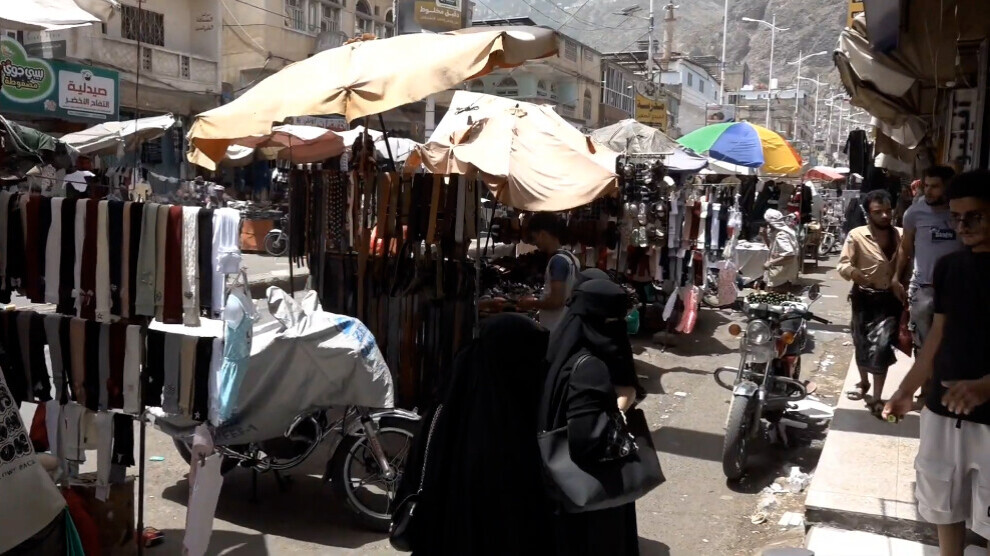
Yemen – On the eve of Eid al-Adha, livestock markets in Yemen have become more active, yet the decline in people’s purchasing power is noticeable due to the sharp rise in prices and the continuing economic and living deterioration.
Fatima Abdullah, one of the women supporting their families, finds the holiday an additional burden, especially with the sharp rise in prices. She can barely provide necessities, let alone holiday requirements. As for the sacrificial animal, it has become, for her and many families, a luxury that only those with high incomes can afford.
She says: “The situation is very bad, and every year is worse than the previous one. The price of a sacrificial animal is very high this year, and we cannot afford it at all. We barely managed to buy clothes for last Eid, and this Eid we cannot even buy clothes for our children."
In a country suffering from one of the worst humanitarian crises in the world, the sacrificial animal has become a burden beyond the means of thousands of families, amid widening poverty, shrinking humanitarian aid, and the ongoing salary suspension crisis in several areas.
Local markets have recently witnessed a noticeable rise in livestock prices as Eid al‑Adha approaches. Prices for small sheep and goats range from about 150to 300, while medium‑sized animals range from 200to
 400. In Aden, the Agriculture Office set the price of a goat or sheep weighing 15 kilograms at about $170. As for large sacrifices, calf prices have recorded a sharp increase.
A sacrifice, but...
Mariam Hassan, from Al‑Wazi'iya district west of Taiz, has a story similar to Fatima Abdullah's. However, she could have had a sacrifice, but due to harsh conditions, she decided to sell the animal she had been raising for a year. She is a livestock breeder, and the sheep she sold was intended for the sacrifice. She says: "Due to the difficult living conditions just before Eid al‑Adha, I was forced to sell the sheep that was intended for the sacrifice to cover my children's needs and provide some basic necessities of life."
She added that her husband is a teacher who earns a salary not exceeding $40, an amount insufficient to meet the minimum living requirements amid continuously rising prices and deteriorating economic conditions. She explained that she faces great difficulty in providing essential family needs, noting that many families in Taiz live under the same circumstances, choosing between providing a sacrifice or their daily bread.
Government salaries
For her part, teacher Arwa Ali believes that government employees, especially in the public sector, are among those least able to afford even the minimum holiday needs. She says: "Sacrificial animals this year are very expensive compared to living income. Buying a sacrifice has become almost impossible for employees and workers this year due to exorbitant price hikes."
Livestock traders attribute the rise in sacrificial animal prices this year to several factors, most notably increased prices of imported fodder, higher transport costs between cities due to fuel prices and road fees, in addition to declining local production due to displacement, drought, and scarce pastures as a result of climate change.
The deterioration of the local currency's exchange rate has also contributed to the rise in prices of livestock‑related supplies, especially fodder and veterinary medicines, leading to higher market prices.
Humanitarian workers have called for expanding cash support programs and food aid ahead of Eid al‑Adha to alleviate the difficult living conditions faced by poor and displaced families, affirming that many families are now unable to provide the minimum basic needs, making the purchase of sacrificial animals extremely difficult.