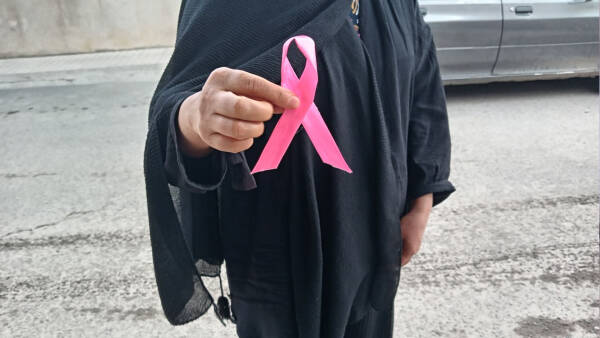
Ignorance and Shame… Hidden Factors Threatening Breast Cancer Patients in Kermanshah
Women in Kermanshah face societal taboos, masculine dominance and health illiteracy around breast cancer, preventing immediate medical care and worsening conditions, significantly increasing death risk.
SARA POUKHZARI
KERMANSHAH_Breast cancer is spreading as a silent danger threatening women’s lives in Iran. What makes the scene darker is the lack of awareness and delayed early detection, alongside the stifling economic burdens that deprive patients of treatment at the appropriate time.
Despite widespread awareness of breast cancer, many women still lack sufficient information about this disease. In Iran, nearly twenty thousand new cases are diagnosed annually and about seven thousand people lose their lives, meaning a new case every 30 minutes and the death of a woman every 90 min.
Among the alarming factors is the delay in diagnosis, as many women do not consult a doctor until the cancer has worsened. The average age of diagnosis in Iran is about 10 years lower than the global average, which doubles the need to increase awareness and attention to periodic examination.
Women's rights activist in Kermanshah, Paria F., says: "In recent years, diligent efforts have been made to raise awareness about breast cancer, but despite these efforts, many women still do not take this disease seriously. The most important reason for this is the way families deal with women's health. A large segment of housewives cannot afford the costs of annual examinations and tests, and often do not find support from their families. For this reason, the early symptoms of the disease are ignored, and their families only pay attention to them when the patient's health condition deteriorates. Most women resort to the hospital when the disease has spread widely and reached a stage where it is difficult to treat or even control."
Kermanshah Records More Than a Thousand New Cases Annually
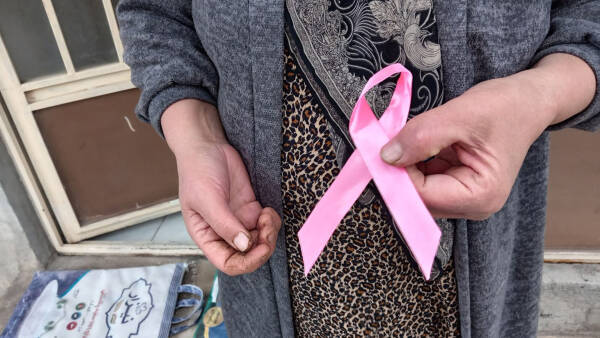
Available data for 2021 indicate that Kermanshah records annually more than a thousand new breast cancer cases among women. Despite the absence of official documented and updated statistics in recent years, historical research and studies related to the prevalence rates of the disease in the province over the past decades confirm that the growth curve of this cancer is witnessing a continuous escalation compared to the female population, as more women fall victim to the disease year after year.
This upward path is matched by a notable weakness in the necessary awareness and education programs, as many women, especially those living in informal settlements and marginalized neighborhoods in Kermanshah, lack the minimum basic information related to the symptoms of the disease, ways to prevent it, and the importance of conducting regular periodic examinations.
Lack of Awareness
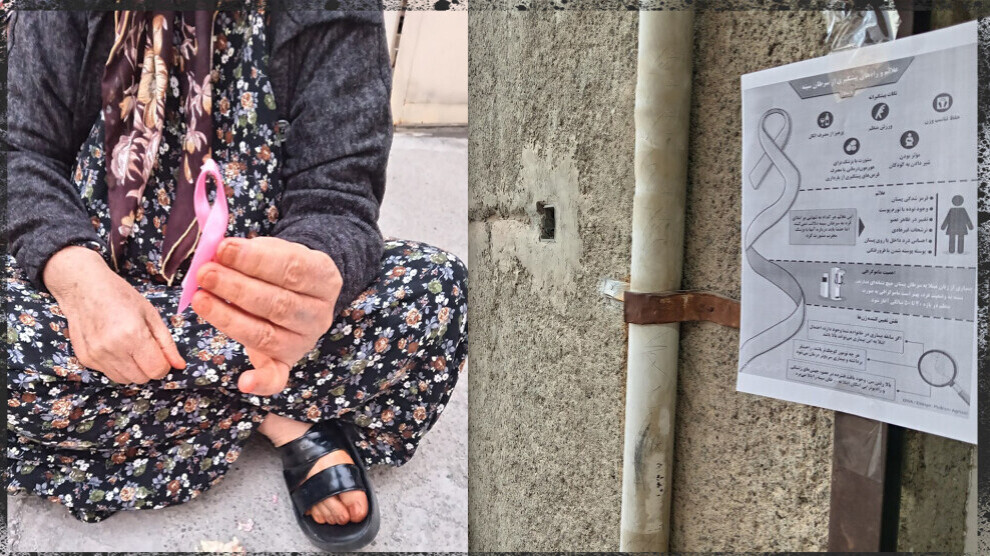
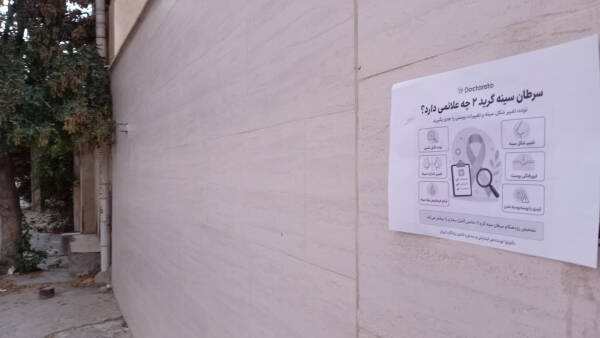
Neda Kh., one of the workers in the marginalized neighborhoods of Kermanshah who works on breast cancer awareness annually, says: "Our group distributes pink ribbons and informational brochures about this disease every year. Alongside distributing these publications, we strive to explain the early symptoms of breast cancer and how to detect it early. Nevertheless, a large proportion of women in Kermanshah do not possess the slightest information about this disease. Sometimes, when we use the term breast cancer, many refuse to listen to us because of a feeling of shame."
She continued: "This indicates that in addition to the lack of awareness, the social taboos related to women's bodies and the feeling of shame imposed on them for years constitute a dangerous obstacle to recognizing the symptoms of the disease and consulting a doctor. This shame and ignorance push many women to take no action to detect early symptoms, and they do not go to the hospital until after the disease has worsened and treatment has become difficult."
She explained that one of the main methods for early detection of breast cancer is monthly breast self-examination to detect solid lumps, and women are advised to do this regularly stating from the age of thrity. She added: “One of the women I trained told me that she performed this examination at home several times, and suddenly her brother saw her and shouted at her, asking why she was doing that, and said it was wrong.
These experiences reveal that what causes, in many cases, the development of this disease in women's bodies and its eventual transformation into a fatal disease is not the disease itself, but the taboos and existing obstacles stemming from patriarchal thought. These are factors that have pushed women to consider even caring for themselves and knowing their potential illnesses as taboo and not allowing themselves to defend this right and know it, because they know that men allow themselves even to obstruct women's efforts to care for their health with words like "shameful" and "extra cost."