
Girls' Rights in Syria Between Religious Interpretations and Legal Gaps
Researcher Kinda Kanaan and lawyer Shukria Youssef warned of the continuation of violations affecting the rights of girls in Syria, stressing the necessity of enacting strict laws that prohibit child marriage and protect girls from violence,discrimination
SORKEL SHEIKO
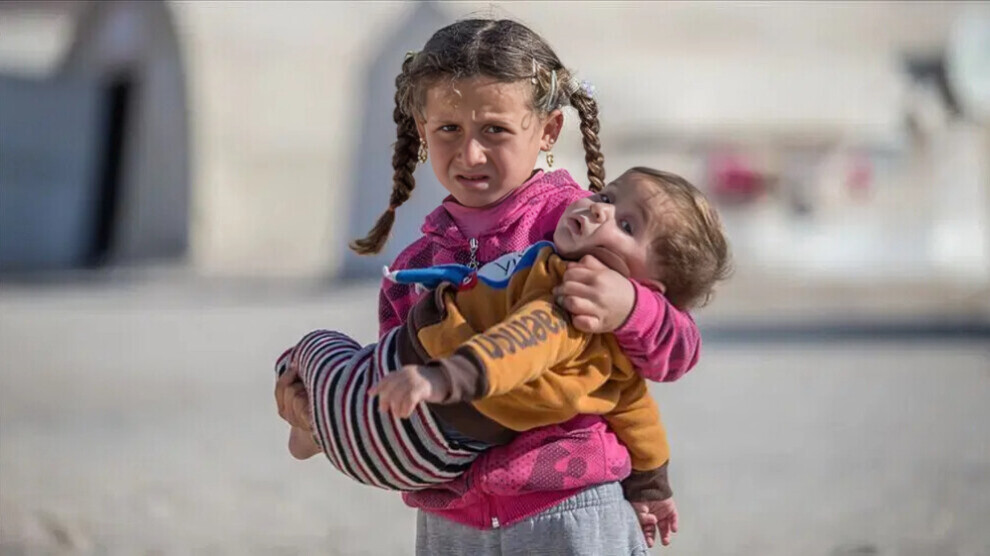
Qamishlo – Despite international covenants affirming girls' right to education, protection, and equality, millions of girls around the world still face challenges threatening their childhood and future, from early marriage and deprivation of education to limited work opportunities.
The United Nations General Assembly adopted, on 19 December 2011, Resolution No. 66/170, declaring 11 October as the International Day of the Girl Child, with the aim of shedding light on girls' rights and the challenges they face.
The importance of this occasion stands out in light of the continuation of violations affecting girls' rights around the world, foremost among them child marriage. International data, including data from the United Nations Children's Fund (UNICEF) and the United Nations, indicate that more than 12 million girls are married annually before the age of eighteen, meaning one girl marries every three seconds, while about 650 million women and girls around the world were married during their childhood, meaning one in every five girls marries before the age of eighteen.
The proportion of girls between the ages of 15 and 19 who are deprived of education, work, and training is double the proportion of boys in the same age group. In Syria, challenges are worsening in light of continuing humanitarian needs. According to the General Household Needs Assessment for Syrian families, the proportion of families with children under eighteen not registered in education reached about 15.8% at the beginning of the 2026–2027 academic year. UNICEF estimates that about 6.9 million Syrian children are still in need of humanitarian assistance and basic services.

Do Holy Books Protect the Rights of Girls and Women?
In this context, researcher Kinda Kanaan believes that religious interpretations should not be a justification for violating the rights of women and girls, noting the difference in religious readings between the past and the present. "When a question is raised about the minor girl who is said to have married in Islam, Lady Aisha comes to mind," she adds. "However, until now, no studies have definitively determined how old Aisha was when she married the Prophet Muhammad."
She explained that some recent studies she referred to suggest that Lady Aisha's age at marriage was 19, considering that historical research is necessary to reach accurate information.
She cited a verse from Surat At-Takwir: "And when the girl [who was] buried alive is asked, for what sin she was killed," noting that "in old interpretations, women's rights were violated, but in modern readings and studies, the protection of women in the Holy Book becomes clear. However, some states interpret the holy books according to their own interests, and justify the failure to protect women."
She confirmed that the Democratic Islam Conference rejects child marriage. "We reject this marriage, and we do not consider it part of Islam. We seek to research ancient history and reveal correct and modern information, to show that the practices committed against girls are crimes."
Kinda Kanaan said that Muhammadan Islam is not applied today, and explained the reasons for that, saying: "The Prophet says: Do not hate girls, for they are the beloved companions of the heart. But this saying is not applied today, because women's rights are violated in the name of Islam. If the rights that the Prophet Muhammad granted to his wives and daughters were applied today, no woman would remain deprived of her rights."
"They Have Taken Islam as a Cover for Themselves"
Speaking about the reality of women and girls in Syria, Kinda Kanaan criticized the use of religious interpretations to justify restrictions imposed on women. "A man's marriage to four women has been justified, while in return women have been prevented from studying and going out, and obliged to cover their faces. They have taken Islam as a cover for themselves, and they wage wars under its umbrella."
She added: "They link the practices they commit against women to divine law, thus distorting religion, while God made the rights of girls and boys equal." She stressed the necessity of protecting the rights of women and girls through laws and constitutions. "Religion must first be separated from the state, so that religion does not become a tool for assaulting women. And when the state establishes human rights laws, it must allocate an important space for the rights of women and girls, especially for protecting minor girls who face rape, murder, and marriage at an early age."
She stressed the importance of enacting laws that hold perpetrators of violations accountable. "There must be a special law that protects girls' rights, and punishes killers and criminals to prevent them from repeating their crimes."
Marriage in Exchange for Blood and Debts
Kinda Kanaan shed light on practices committed against women, saying: "They are still committed against girls in some tribal environments." She explained: "In the tribal system, a girl is offered in exchange for the blood of a man who was lost. Two men may enter into a quarrel, and one kills the other, and a child who knows nothing about what happened and has no connection to it becomes a victim of a man's reaction. Some girls are also offered in exchange for blood and debts, and girls turn into tools for buying and selling."
She called for imposing deterrent penalties on perpetrators of these practices, confirming that protecting girls requires laws that guarantee their rights and prevent their use to settle disputes.
"It Must Be Emphasized That Marriage Before the Age of 18 Is Not Permissible"
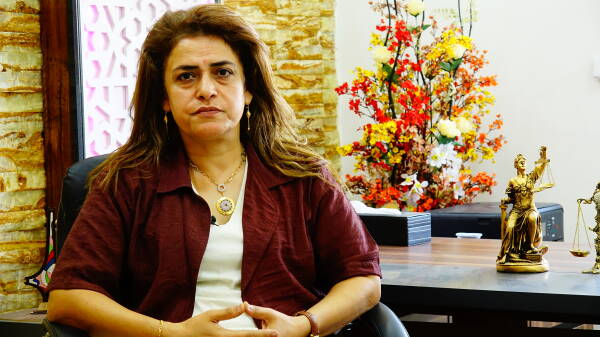
For her part, lawyer Shukria Youssef stressed the necessity of amending laws related to the age of marriage in Syria, considering that a girl at fifteen is still a child, and should not be allowed to marry based on estimates related to physical maturity.
She explained: "Syrian law stipulates that a girl must have completed eighteen years of age in order to marry, but it allowed girls to marry at the age of fifteen, provided that the Sharia judge examines their bodies. From my point of view, a girl at this age is still a child, and has not yet reached the stage of maturity that enables her to express her opinion and take her position. Therefore, the laws must be amended and it must be emphasized that marriage before the age of eighteen is not permissible, and if marriage takes place before this age, it must be annulled. Both the judge and the father who approve this marriage should also be punished."
The Absence of Legal Identity and Its Consequences
She addressed the situation of unregistered persons in Syria, explaining that the absence of official documents exacerbates women's suffering and limits their ability to claim their rights. "Until now, unregistered persons (foreigners) inside Syria are still deprived of obtaining identity. If an unregistered woman marries today, she will not be able to obtain her husband's identity, while her children obtain their father's identity."
She continued: "In this case, the woman cannot claim her rights related to alimony and guardianship over her children and their care, because she is a woman without identity and without official documents."
Shukria Youssef criticized the ambiguity of constitutional texts related to equality. "Two articles were included in the new constitution stipulating that Syrians are equal before the law, but it was not clarified in which aspects this equality is achieved. It should have explicitly stated that women and men are equal in these legal articles." She noted that this ambiguity is also reflected in women's participation in parliament, political decision-making centers, and public institutions.
"There Is a Need for Civil Laws That Include All Components"
She stressed the necessity of establishing civil laws that guarantee women's rights in the various Syrian components. "There must be a law applied to all components, so that any woman who has a complaint today can resort to a law that protects her rights. There is a need for civil laws that form an umbrella for all components."
She also called for amending laws related to identity. "A legal article should be added that allows Syrian women residing outside the country to grant their children their identities when they return to the homeland."
"Establishing a Ministry for Women in Syria Is an Urgent Necessity"
Shukria Youssef believes that establishing a ministry for women or a body specialized in their affairs could contribute to following up on legal cases and enhancing the protection of women and girls. "A ministry or body for women must be established so that we can work on protecting women's legal rights, because women's rights are not protected in this country."
She added that what is required is raising the age of marriage to 20 years, guaranteeing women's rights in work and participation in decision-making, alongside tightening penalties for perpetrators of assaults against minor girls.
"Syria May Face a Model Similar to Iraq and Afghanistan"
At the end of her interview, Shukria Youssef warned of the continuation of violations and legal gaps that allow girls to marry at an early age, noting cases she said were documented in Syrian cities and governorates of girls at the age of ten. "There is a great danger that the situation in Syria will turn into a situation similar to what Iraq and Afghanistan witnessed."
She confirmed that the solution lies in transforming the demands for protecting women and girls into clear and binding legal texts. "The solution is to transform the issues I mentioned above, alongside many other rights for girls and women that I have not addressed, into written legal articles that guarantee their protection."