
Framwork Law Revives Debate on Makhmur Displaced Famillies’ Return to North Kurdistan
The framework law opens discussion on the return of Makhmur residents to North Kurdistan after 30 years of displacement,affirming their right to collective and dignifiec return.
ASIA DENIZ
Makhmur — The drafting of the proposed law known as "Strengthening National Unity and Social Integration" came in the wake of leader Abdullah Öcalan's call, within the framework of a political path that is supposed to open the way for addressing issues of coexistence and integration on a legal basis.
In this context, the law presented to the Turkish parliament's general assembly was passed by a majority vote, yet discussions and debates regarding its content and implementation mechanisms continue.
Parallel to this, discussions continue regarding the file of the return of the people of Makhmur. Camp residents affirm that their return to their land will not be an individual or fragmented return, but a collective and communal return that preserves the unity of the people and their right to return to their homes. They also affirm that this return comes in alignment with leader Öcalan's call, and its orientation toward addressing outstanding issues through political and societal means, and preparing conditions for the safe and dignified return of residents to their areas.
The Framework Law Is an Important Step Toward Achieving Goals
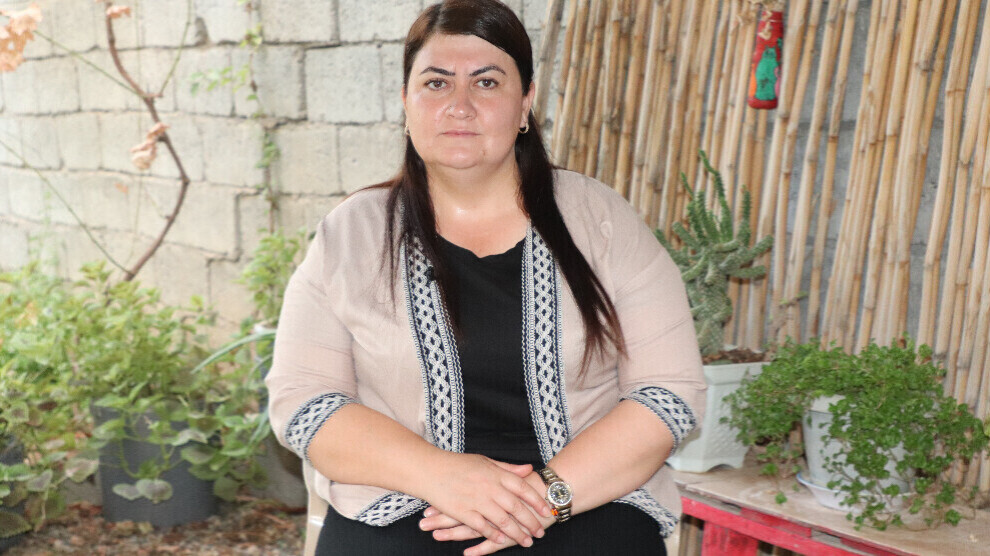
Gurbet İşlek, Vice Co-Chair of the Makhmur Municipality, stated that the camp residents have spent 30 years in exile, during which they have waged great resistance and struggle, affirming their belief in the success of this process under the leadership of leader Abdullah Öcalan.
She noted that the framework law, despite not including a clear and specific clause regarding the Kurdish people, constitutes an important beginning for achieving the goals of the process, considering that this stage came as a result of 50 years of resistance and struggle by the liberation movement and the Kurdish people, alongside the efforts of leader Öcalan.
"The Turkish State Is Inciting Its People Against the Process"
Gurbet İşlek pointed out that the hostile rhetoric used by the Turkish state does not align with the process path, noting that "the use of terms such as 'terrorism' against the liberation movement and the Kurdish people continues, despite the latter's attempt, based on leader Öcalan's call, to approach the process in a spirit of brotherhood between peoples."
She affirmed that some organizations, parties, and media outlets use rhetoric hostile to Kurds and the liberation movement with the aim of obstructing the process, considering that this rhetoric "incites the Turkish people against the process and complicates its path."
She emphasized that the framework law must include fundamental issues for Kurdish society, foremost among them language and culture. "There are efforts in this direction, and what has been achieved so far can be described as somewhat successful."
Gurbet İşlek explained that the role of leader Abdullah Öcalan in this process cannot be denied, noting that recent meetings have concluded that both Kurdish and Turkish societies will not be able to achieve their goals except through politics. She considered that the Kurdish issue, which dates back a century, has, thanks to leader Öcalan's leadership, moved from an issue that was not even allowed to be named to an issue present on the global agenda.
She believes that leader Abdullah Öcalan "courageously approached the issue and said that Kurdistan is under occupation, and started from this point, and brought us to today, where Kurds are gaining a place in laws." She noted that he proved to the world the existence of the Kurdish people, in the face of attempts to erase their language, identity, and culture, emphasizing their belief in the success of the process under his leadership.
"We Grew Up Longing for Our Homeland's Soil, Water, and Air"
Gurbet İşlek affirmed that the Kurdish people will reach their rights as the process advances, noting that Makhmur residents believe that the framework law can constitute a step in this direction.
She explained that Makhmur residents were displaced from their original areas during the events of 1994, which witnessed the killing of thousands of Kurds, noting that they were forced into exile after refusing the Village Guard system.
She added that camp residents have spent 30 years in exile, affirming that any return to North Kurdistan will be based on the call of leader Öcalan and the liberation movement, and that it will be a collective and communal return stemming from their attachment to their land and their connection to it despite years of exile.
In concluding her remarks, Gurbet İşlek, Vice Co-Chair of Makhmur Municipality, emphasized the continued struggle of the camp residents, who during their years of exile have maintained their existence by organizing themselves and forming councils, institutions, and committees. She affirmed that their return, if realized, will be within a collective and communal framework, and that they will continue their struggle for the physical freedom of leader Abdullah Öcalan, which she described as a "red line."