
Warnings of a humanitarian catastrophe: Taiz health tragedy, displacement extending to East Africa
Yemen’s escalating military operations have caused a stifling humanitarin crisis affecting millions, while Taiz faces catastrophic conditions from displacement and depleted medical supplies, amid UN epidemic warnings.
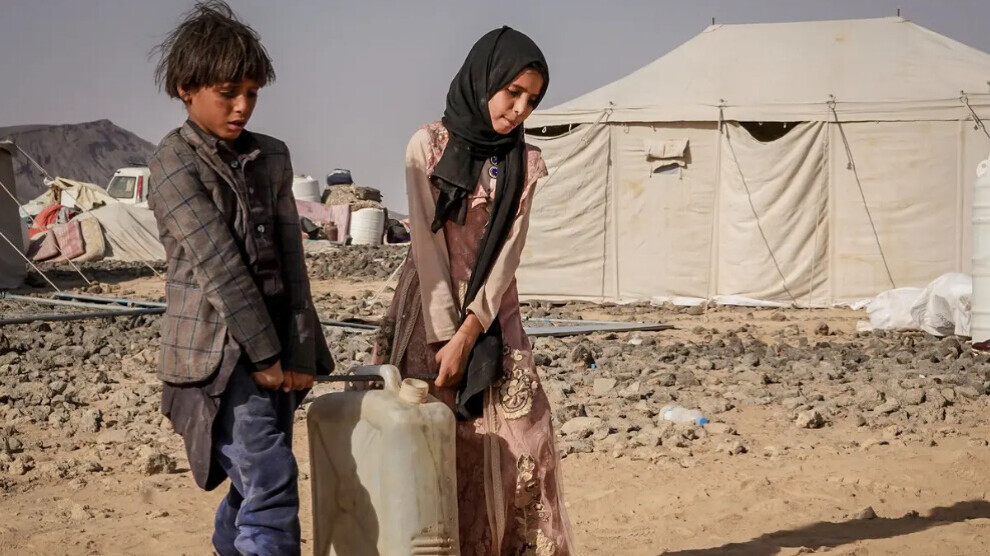
NEWS CENTER– Yemen is witnessing an accelerating military escalation amid violent confrontations on various fronts threatening to undermine stability, which has led to the exacerbation of the humanitarian crisis due to displacement waves and shortages of fuel and food.
UN humanitarian organizations expressed yesterday, Friday, 16 October, their deep concern about the escalation of military operations in Yemen and their dangerous repercussions on civilians, demanding the guarantee of sustainable and safe access of aid to all affected areas, especially Taiz city, which faces a complete siege and isolation due to the cutting of vital roads linking it to other cities, especially Aden.
The spokesperson for the International Organization for Migration, Zoe Brennan, announced that the total number of displaced persons since the beginning of the conflict has reached 233,077 displaced persons, with Taiz city alone hosting 121,530 of them, amid grave concerns related to the protection of families and vulnerable groups.
In a related context, the spokesperson for UNICEF confirmed the displacement of about 110,000 children since the beginning of last September, warning that the recent wave of violence eliminates the fragile stability of children who are basically suffering from hunger and the interruption of education, noting that the organization has verified the killing of 30 children and the injury of 28 others as a result of this escalation.
On the health level, the spokesperson for the World Health Organization warned of an imminent health catastrophe in Taiz with the transfer of confrontations to urban areas, where the surgical stock has completely run out in 12 hospitals in the city, alongside an acute shortage of oxygen and medicines, and it has fuel sufficient for only four days, which threatens the lives of kidney dialysis and intensive care patients, simultaneously with fears of a cholera outbreak.
The repercussions of the crisis were not limited to the Yemeni interior, as the spokesperson for the United Nations High Commissioner for Refugees confirmed the monitoring of 31 cholera cases (20 of whom recovered and one died) in the Markazi camp in Djibouti.
He noted that more than four thousand people fled from Yemen to East Africa, where Djibouti received 3,800 refugees of them, while about 200 others arrived in Somalia.