Human rights demands to accelerate the integration of women into political life in Morocco.
Ahead of September’s legislative elections, human rights voices in Morocco call for accelerating women’s integration into political life, amid a persistent gap between constitutional commitments and reality.
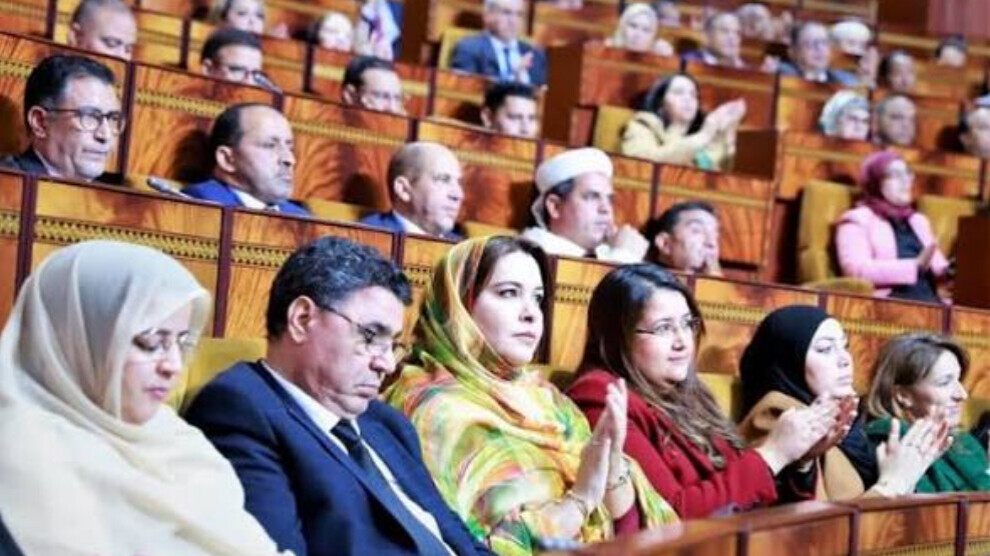
Morocco — With the legislative elections scheduled for September 23 approaching, the political scene is witnessing increased activity among parties seeking to strengthen their presence and attract voters, as discussions intensify over the priorities of the upcoming stage and its economic and social challenges.
The Democratic Association of Moroccan Women called, on Monday, March 30, in a statement addressed to the secretaries-general of political parties, for concrete measures to enhance women's representation in political life, ahead of the upcoming legislative elections set for September 23.
The statement stressed that a gap remains between political rhetoric calling for equality and the reality of exclusion faced by women within elected institutions and parties, noting that the percentage of women in the House of Representatives does not exceed 24.3% (95 out of 395 deputies), while their percentage in the House of Councillors ranges between 11 and 12%.
The statement indicated that women's participation rate in political parties does not exceed 8 to 9%, even though they represent more than half of the electorate, adding that Morocco ranks 101st globally in women's representation in parliaments, according to data from the Inter-Parliamentary Union. This ranking reflects the limited impact of political reforms related to equality.
Criticism of Party Performance.
The association criticized in its statement what it described as a lack of genuine political will among parties to activate the principle of parity, pointing out that women's political participation is often treated as a circumstantial matter rather than a strategic choice.
The statement also noted a number of imbalances, including weak support for women's sections within parties, the absence of sustainable strategies for women's political empowerment, and the failure to take clear positions during the discussion of organizational laws to ensure the institutionalization of parity. It warned that the persistence of these conditions undermines the credibility of the democratic process and limits the effectiveness of public policies in responding to society's needs..
Call for Actions Before the Elections.
The statement called on political parties to take a series of measures before the 2026 elections, most notably: increasing the percentage of women candidates to no less than 30% in local districts, especially those with high chances of winning; adopting criteria based on competence and linking responsibility with accountability in candidate selection; providing material and moral support for women candidates; adopting transparent democratic mechanisms in determining nominations; and developing communication strategies that highlight women's role in strengthening democracy and development..
Between Commitments and Implementation.
The association concluded its statement by emphasizing that the challenge is no longer about adopting principles, but about the extent to which they are translated into public policies and practical measures, considering that achieving parity remains an essential condition for strengthening the democratic process in Morocco.