
“Despite Dark Reality, Afghan Women Cling to Hope of Salvation from the Taliban”
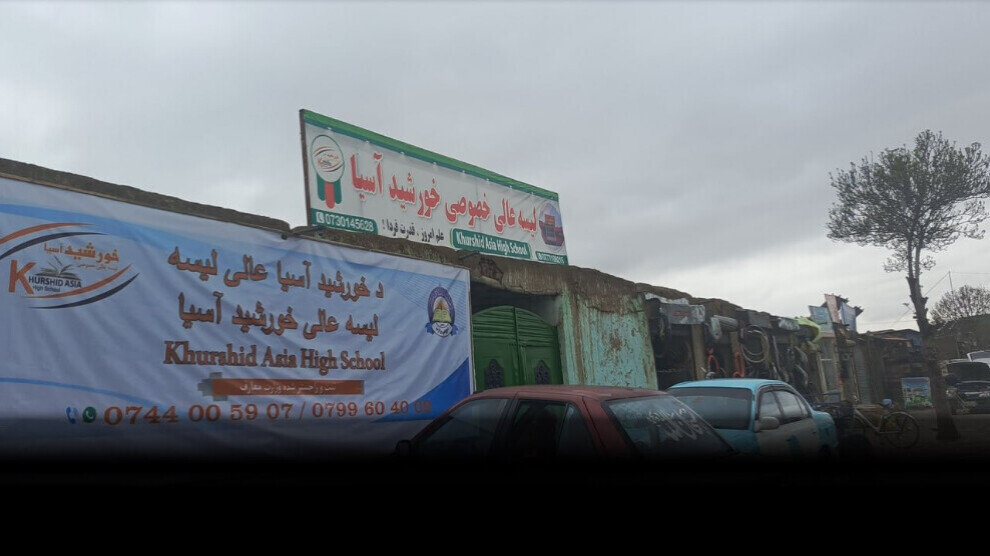
Chahar Asiab, the 'Four Mills' area in Kabul, Afghanistan, with a history of war and extremism, is also a Taliban victim today facing wide restrictions. Yet women, despite pressures, still keep the hope for change.
Bahrain Lahib
Kabul_The district of Chahar Asiab, also known as the “Four Mills,” is in the southern part of the Afghan capital,Kabul. It is one of the districts of Kabul Province. As is the case in other parts of Afghanistan,various ethnic live in this area, including Pashtuns, Tajiks, and Hazaras.
Following the coup of April 27-28, known as the 7th of Sawr(April 27,1978), and the subsequent intervention of Soviet forces, extremist groups began to infiltrate this district,just as they did elsewhere in the country. In this context, Gulbuddin Hekmatyar, the leader of the Hezb-e-Islami
Party,who is infamously known as the “Butcher of Kabul” and “Rockit-iar.” Heavily exploited the unaware young men of the region. His followers killed intellectuals and educated people, and even girls who left their homes to continue their studies were attacked with acid thrown on their faces.
During the period of factional rule in 1992, Hekmatyar’s main base was in Chahar Asiab. Along with other acts of violence, he blocked the entry of food supplies coming from Pakistan through this area to other parts of Kabul and other provinces. On one particular day, about a thousand rockets were launched at Kabul city on his orders from the Chahar Asiab area. For this reason,people gave him the nickname “Butcher of Kabul.”
With the beginning of the first Taliban rule in 1996, this district entered a new phase of violence Taliban fighters would force young men on the streets to ride their motorcycles and then transport them to the north of the country to destroy agricultural lands, homes, and vineyards belonging to the local population. After carrying out these acts, they would write on the walls: “Victory for the youth of Chahar Asiab.” These actions provoked anger among the residents, as they fuelled division and hostility among Afghanistan’s various ethnic groups.
In 2002, with the entry of American forces into Afghanistan and the establishment of what was called the new order, the women of Chahar Asiab – like millions of other Afghan women – tried to secure their place in the family and society and continue their education. However, with the return of the Taliban to power once again in 2022, the women of this district were deprived of security and freedom, and many were forced to remain at home.
Shamsa Sharaf, one of the schoolteachers in this district, spoke about her experiences during different periods and said: "I taught for years in several government schools in Chahar Asiab. After the fall of the first Taliban regime, I and several other women managed to complete our 12th grade here. Due to the prevailing circumstances, we did not have the opportunity to pursue higher education, but we were hired as teachers. At that time, despite many difficulties, we tried to improve our academic level and learn more about teaching methods and school needs."
Currently, as she confirms: "The Taliban have dismissed a number of highly educated female teachers under various pretexts and replaced them with people who lack educational competence. School principals, both women and men, have been removed, and Taliban-affiliated individuals have been appointed instead. As a result, the system and discipline in schools have been severely damaged."
In a tone mixing bitterness and laughter, she says: "Sometimes the Taliban's actions in schools are laughable, even though they are painful in reality. For example, at the beginning of the school year, our principal – who is from the Taliban – called all the teachers to a meeting. During the official meeting, he put his feet on the table and spoke. Without considering the teachers' specialisations, he himself decided which subjects and classes each one would teach. In this way, I, whose specialisation is Dari, was initially forced to teach a different subject, but I insisted on teaching my own subject."
After a moment of silence, she continues: "Recently, this principal suggested that I also teach English and Pashto, because he believes these languages are similar to Dari. When I explained to him that this is not the case, he simply answered: 'All these languages have grammar rules!'"
Shamsa Sharaf also criticises the behaviour and appearance of some Taliban teachers: "These people speak to male students with insulting words, and they do not care about their appearance or personal discipline. Some of them display inappropriate behaviour when speaking to female teachers, causing great discomfort. Therefore, no female teacher wants to speak with them."
She adds: "A while ago, the school principal announced that he intends to marry a third wife, and suggested that if there were any unmarried female teachers, he would choose from among them. We all replied that we are married. I am sure this situation will not last, and the day will come when this regime also collapses, and a system will be established in which women play a leading role."
It can be said that Chahar Asiab, like many parts of Afghanistan, tells the story of long years of violence, instability, and restrictive policies. Nevertheless, amid these difficult circumstances, the women of this district continue their struggle with will and hope to preserve their identity, knowledge, and social standing. Stories like that of Shamsa Sharaf show that despite all the restrictions, hope for change and a better future remains alive. And this hope may be the foundation for positive transformations in Afghan society.