
Debate over women's representation in Algeria… Between parity and the challenges of political reality
The reduction of women's representation on election lists in Algeria has sparked debate: some see retreat from political gains, others a necessity imposed by field difficulties revealing fragility of women's political qualification within parties
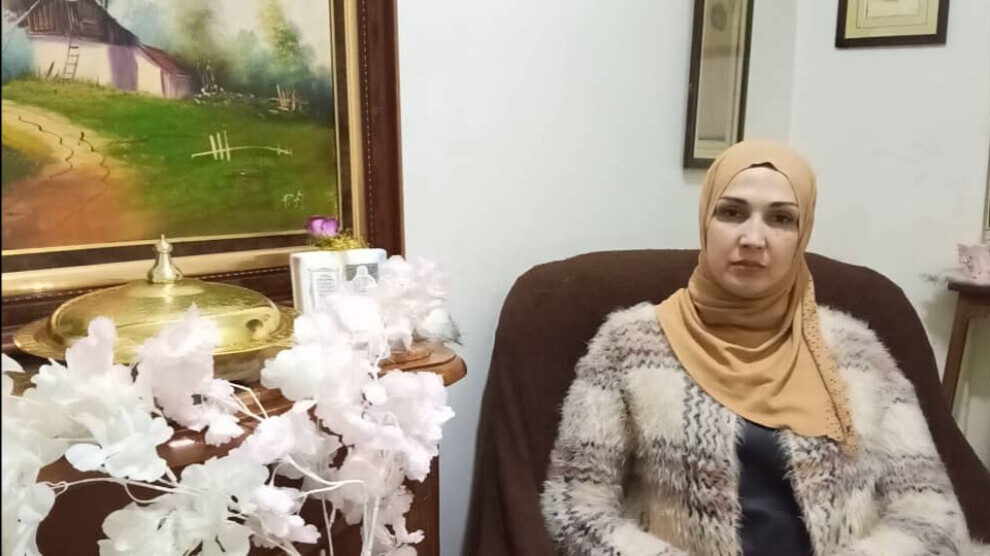
Rabaa Kharis
Algeria — Since the announcement of the amendments to the electoral law, controversy has escalated among women political activists and feminist rights associations regarding women's representation in elected councils. This is due to the decision to reduce the percentage of women's presence in candidate lists from half to one-third, along with the addition of a transitional provision exempting lists that fail to meet this condition during the first parliamentary elections scheduled for Thursday, July 2, as well as the local elections to be held after the issuance of this law.
Amidst the ongoing discussions about reducing or expanding women's representation in elected councils, a fundamental question arises about the repercussions of reducing women's representation in electoral lists from half to one-third.
Background and factors
Widad Lichani, a political activist, says, "This measure represents a notable regression from previous gains, and it results in reducing women's presence in elected councils, especially since the aforementioned amendment was accompanied by a transitional provision exempting lists that fail to meet this condition in the upcoming parliamentary and municipal elections."
Regarding the backgrounds behind the proposal to reduce the percentage of women's representation in electoral lists to one-third, she points out that "the decision is due to several realistic considerations that emerged during the application of the organic law on the electoral system of 2021, most notably an attempt to ease restrictions on parties in forming lists and the difficulty of finding female candidates in some areas, as society in some regions still views political work as a field reserved for men due to the influence of customs, traditions, and some social beliefs."
She noted "the great difficulties faced by parties and lists in attracting women, especially young women who have not previously experienced political work, as they are dominated by fear of participating in elections or engaging in party activity."
Widad Lichani affirms that "field experience has revealed that imposing parity compulsorily without a prepared and trained political female base may lead to formal nominations that do not achieve the real goal of involving women in political life." In conclusion, the new amendment to the electoral law came to grant greater flexibility to parties and lists.
The percentage of women's representation in the National People's Assembly (the first chamber of the Algerian parliament) witnessed a notable decline in the parliamentary elections held on June 12, 2021, reaching only 8% of the total seats, equivalent to just 34 seats, after the percentage had previously exceeded 30% thanks to the quota system.
From quota system to parity
Based on her field experience, she affirms that "the real problem that needs to be addressed in the Algerian political arena lies not in raising or lowering the percentage of women's representation in elected councils, but in ensuring that every woman who reaches a decision-making position—whether in government, parliament, or senior positions—is truly able to exercise her role efficiently and responsibly. This will only happen through real investment in political training."
Widad Lichani reviewed the trajectory of women's political participation in Algeria, explaining that this path began with the adoption of the women's quota system, which was applied for the first time after the constitutional amendment of 2008. Article 31 bis of the 1996 Constitution guaranteed women's right to representation in elected councils, followed by the issuance of Organic Law 12-03, which defined mechanisms for expanding women's presence in these councils.
She points out that the quota system had both advantages and disadvantages, but its most prominent positives were breaking the psychological barrier for many women who previously hesitated to enter the political arena due to societal and family views and deeply rooted customs in traditional upbringing. It also contributed to enhancing societal acceptance of women's political participation and obligated parties to include a specific percentage of women on their lists, which helped reduce the gender gap in the political field.
Thanks to the quota system, she noted that "Algeria ranked first in the Arab world in terms of the women's quota system in parliament and elected councils, and in that specific period, the representation rate jumped to more than 31% in 2012, ranking 25th globally."
The results of the legislative elections held in Algeria on May 10, 2012, showed that the application of the organic law on expanding women's participation in elected councils led to a significant increase in the number of women in the National People's Assembly, reaching 145 out of a total of 462 deputies, approximately one-third of its members, which constituted a qualitative leap for Algerian women compared to established democracies.
She explains that the women's quota system pushed parties at the time to include a specific percentage of women on their candidate lists, which led many of them to push women to the forefront in a circumstantial or formal manner, without providing real political training or effective field accompaniment.
She adds that some women whose names were included on electoral lists during that period did not have the necessary political competence, leading to various labels being attached to the elected parliament between 2012 and 2017, which she prefers not to mention. She stressed that the quota system should not become an end in itself, but rather a real means of promoting women's political rights and their actual empowerment.
For these reasons, Widad Lichani says, "the shift from the quota system to the principle of parity came under the constitutional amendment of 2020 with the issuance of Ordinance No. 21-01, with the inclusion of transitional provisions allowing for the reduction of the percentage of women's representation if it cannot be achieved in the parliamentary elections held in 2021 and the subsequent municipal elections, which significantly affected the presence of women in elected councils, and thus Algeria's ranking declined at the Arab and international levels."
Based on this trajectory, she concludes that "women should not be viewed as an image used only to fill electoral lists, but rather as qualified politicians. In the absence of political training and genuine party support, some nominations become merely a formal response to laws issued from time to time, without any real empowerment of women to perform their legislative and oversight roles." The unfortunate thing, in her words, is that "the weakness of parties, their limitation to working only during election periods, and the absence of training programs negatively affect the quality of performance within elected institutions."
Effects of tribalism and lack of financial support
She highlighted an important point: the current electoral law provides direct financial subsidies to independent lists led by youth under 40 to contribute to financing their election campaigns, asking, "Why have women been excluded from these subsidies?"
She also focused on another factor preventing women from being present in the political arena: "tribalism." She says, "Women usually cannot run without obtaining the approval of the tribal chief. Another obstacle is that some candidates are elected based on family affiliation or personal relationships, regardless of competence, where voting becomes loyalty to the tribe rather than a choice based on programs, abilities, and competence."
Widad Lichani concludes her speech by saying, "Despite all these difficulties, the belief in the necessity of women and youth participating in political work remains the motivation to continue, because change only comes through trying, patience, experience, and responsibility."