
“Violence Against Women in Iraq… Calls for Legal Reform and Protection for Survivors.
“Amid the absence of deterrent legislation and effective protection mechanisms, feminist and human rights activists in Iraq have called for legal reform and for ensuring women’s dignity and protection.”
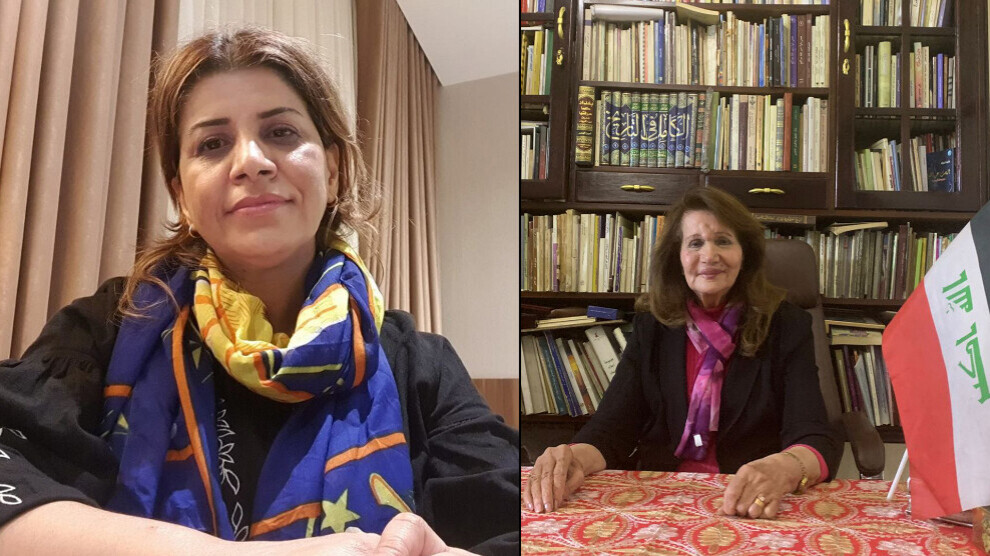
Karima Al-Rubaie
Iraq – In recent years, Iraq has witnessed an alarming escalation in various forms of violence against women and girls. These forms range from physical, psychological, sexual, and verbal abuse to domestic violence that threatens the stability of families and society as a whole. This reality has raised widespread concern among civil society organizations and women’s rights activists, who are calling for a review of existing legislation and the enactment of laws that protect women from marginalization and abuse, while ensuring justice and human dignity.
Violence against women is not merely an individual violation, but a serious social phenomenon that reflects deep flaws in the legal and cultural structure of society. It hinders women’s participation in development and public life. Hence, the importance of concerted efforts between official institutions and civil society organizations to provide effective protection mechanisms and to commit to international conventions that call for the elimination of all forms of discrimination and violence, thereby guaranteeing women equal status and genuine partnership in building society.
Demands for Justice and Human Dignity
Khayal Al-Jawahiri, a feminist activist and Deputy Secretary of the Iraqi Women’s League, stated that Iraq has recently witnessed a significant rise in violence against women and children, whether sexual, physical, psychological, or verbal, including domestic violence manifested in beating and humiliating wives and abusing children. “The city of Baghdad alone has recorded more than 53,000 lawsuits of this kind against women.”
She explained that, as civil society organizations and feminist, human rights, and cultural figures, they are working to curb this phenomenon and to combat marginalization, abuse, and interference in women’s lives under flimsy justifications such as “disciplining the wife” or imposing control even over women’s clothing. These practices, she stressed, are inherited from outdated customs that no longer have a place in a society striving for justice and human dignity.
Legalizing Child Marriage as Another Form of Violence
Khayal Al-Jawahiri believes that the recent amendment to the Personal Status Law, known as the Ja‘fari law, legalizes the marriage of underage girls. This constitutes one of the most severe forms of violence and coercion against children, in addition to permitting physical abuse under the pretext of “disciplining the wife.” Such cases have risen in Baghdad to more than 17% of society, a dangerous indicator of the regression of women’s rights.
She affirmed: “As civil society organizations, we reject these outdated ideas that are incompatible with the values of the modern era. We call for legislation and laws that protect women from such practices. Women in the twenty-first century must be treated as essential partners in life and development, and their status must be respected, especially as women constitute nearly 60% of society.
“Violence in Its Various Forms Threatens Women’s Lives”
Civil activist Intisar Al-Miyali emphasized the importance of combating violence against women and girls, noting that this struggle is closely linked to the Universal Declaration of Human Rights and the Convention on the Elimination of All Forms of Discrimination against Women (CEDAW), which aims to eliminate all forms of violence and discrimination against women. Iraq ratified the convention in 1986, albeit with certain reservations that have sparked widespread debate.
She explained that the period from 25 November to 10 December has served as a designated timeframe for launching events, field activities, and mass awareness campaigns, in addition to joint initiatives involving government sectors, institutions, and civil society organizations. These efforts aim to raise awareness of the dangers of violence and its various forms.
She stressed that violence constitutes a direct threat to the lives of women and girls, whether sexual, physical, domestic, psychological, economic, digital, or manifested through hate speech. She noted that hate speech is among the most severe forms of violence faced by women human rights defenders and advocates for women’s issues.
The Importance of Protection Mechanisms for Women in Iraq
Intisar Al-Miyali underscored the urgent need to provide effective protection mechanisms for women and girls, pointing out that while there are response procedures, emergency numbers, and platforms, these tools remain extremely weak in Iraq.
She explained that the lack of political will and the absence of shelters constitute major obstacles. When a survivor of violence files a complaint and seeks help from security forces, she faces a fundamental question: “Where can she be sheltered?” In many cases, she is left in a police station, which negatively affects her and exacerbates her suffering. Ultimately, she is forced to return to her family and bear additional burdens, while remaining at risk of being killed due to prevailing customs and traditions. To date, Iraq still lacks a specific law to protect women from domestic violence.
She also pointed out that the family—supposed to be a fortress of safety and protection and a refuge for women—often becomes, in many cases, a source of violence. Women are killed under various pretexts, such as burning or being thrown from high places, after which these crimes are recorded in forensic and hospital files as cases of suicide. She referred to crimes known as “honor killings,” the existence of so-called “Graves of the Mistaken” in the city of Al-Muthanna, and other violations committed against women.
The Need to Review Legislation
She affirmed that Iraq today bears a major responsibility to fulfill its international commitments and obligations, stressing the urgent need for serious measures to protect and prevent violence. She called for accelerating the adoption of a specific domestic violence law and for holding perpetrators genuinely accountable, away from superficial solutions that often result in perpetrators being released on bail or cases being deliberately delayed, while the victim alone pays a compounded price.
Intisar Al-Miyali further stressed the necessity of reviewing Iraqi legislation and purging it of provisions that institutionalize injustice, such as Article 398, which allows a rapist to escape punishment if he marries his victim—constituting a compounded crime against the girl. “The Iraqi legal system is required to enact clear and comprehensive legislation to confront all forms of violence, including digital violence, and to guarantee women’s rights to protection, safety, and peace, enabling them to participate equally in public life.