
"The Woman from Tantoura"... Memory Is a Homeland and Resistance Is an Endless Story
The novel "The Woman from Tantoura" traverses decades of the Nakba, exile, and refuge, documenting the pain of Palestinian memory, and embodying human resilience and adherence to identity and the dream of return.
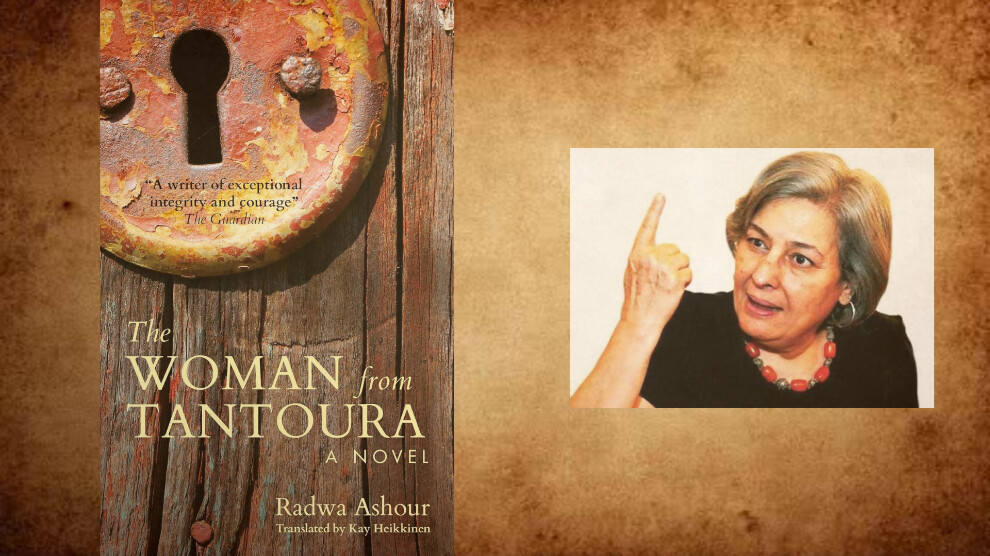
NEWS CENTER – In the novel "The Woman from Tantoura," Egyptian novelist Radwa Ashour sheds light on the Palestinian village of Tantoura, located south of Haifa, to tell the story of a wounded homeland through the biography of a woman named Ruqayya, who lived through the Palestinian Nakba of 1948 and witnessed the uprooting of her family from their land, along with the killing, displacement, and loss that accompanied it.
Radwa Ashour (1946–2014) was an Egyptian novelist, writer, literary critic, and university professor. She was born in Cairo and graduated from the Department of English at the Faculty of Arts at Cairo University in 1967. She obtained a master's degree in comparative literature in 1972, then a doctorate in African American literature from the University of Massachusetts in the United States in 1975. She worked as a professor at Ain Shams University and left a distinctive mark on Arabic literature through her novelistic and critical works, most notably "Granada Trilogy," "Atyaf," "Faraj," and "The Woman from Tantoura."
The novel "The Woman from Tantoura" was published in 2010 by Dar Al-Shorouk. It took its title from the Palestinian village of Tantoura, located on the coast south of Haifa, through which she revives the memory of the Palestinian Nakba of 1948 and the massacres, displacement, and uprooting of the population from their land that accompanied it.
The novel embodies the story of Ruqayya, the Palestinian girl who lived through the tragedy of her family's displacement from their village and witnessed what happened to her family, home, and homeland. Through her voice, events extend over long decades, from the Nakba to the beginning of the new millennium, moving between Palestine, Lebanon, and Egypt, and tracing the lives of four generations who lived through refuge and exile, drank the bitterness of loss, and continued to carry the dream of return.
Radwa Ashour is distinguished in this work by her ability to blend novelistic narration, historical documentation, and human conscience, moving smoothly between past and present, and giving the daily details of refugees a wide space of presence; from camp life and the harshness of exile, to marriage, motherhood, and raising children, and the constant longing for the homes and villages they left behind.
"The Woman from Tantoura" is not just a novel about the Nakba, but a literary testimony to the memory of a people, and an embodiment of the meanings of resilience, resistance, and adherence to land and identity. It tells of a homeland whose people may be absent from its geography, but which remains present in their conscience, and of generations who inherit the story so that the truth is not lost. Radwa Ashour was able to make Ruqayya's story a story that transcends the limits of a single character, to become a mirror of the suffering of an entire people, and to confirm that memory itself can be a form of resistance.