
When Women Stood Alone Against Genocide… The Birth of the YPJ
Emerging between Aleppo's siege and Shengal's genocide, liberating cities, rescuing abducted women, the YPJ became legacy transcending borders, demanding recognition as a force that defeated ISIS and reshaped women's image.
AVRIN NAVDAR
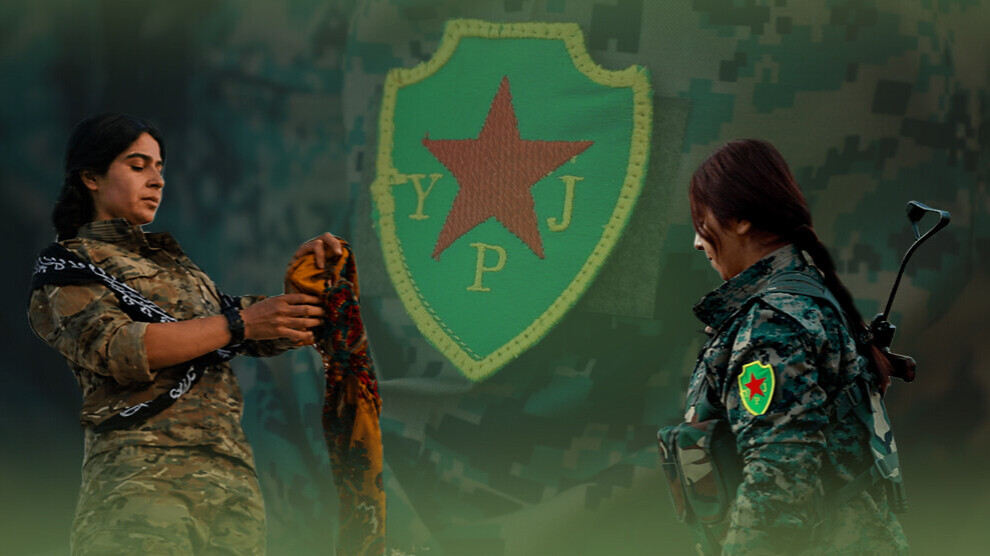
News Centre — For more than a decade, the Women's Protection Units (YPJ) have transformed from an emerging women's force founded under exceptional circumstances into one of the most prominent women's military experiences in the Middle East and the world.
Since the announcement of its founding on April 4, 2013, in Rojava — a date deliberately chosen to coincide with the birthday of leader Abdullah Öcalan as an intellectual and political symbol of the project of women's liberation — the name of the YPJ has been associated with the defence of local communities and the confrontation of extremist organisations, as well as with women's participation in fields that for many years were exclusively male, foremost among them the military and security fields.
The choice of this date affirmed the organic connection between the YPJ and the philosophy developed by leader Öcalan regarding women's liberation, self‑organisation, and legitimate defence — a philosophy that holds that the freedom of society begins with the freedom of women, and that no democratic project can rise without women's participation in leadership, protection, and decision‑making.
Therefore, since its founding, the YPJ has adopted the principles of "democratic confederalism" and "women's liberation," which form the core of leader Öcalan's thought, becoming not only a military force but also an organisational framework reflecting a broader vision of women's role in building a new society.
During the Syrian war and its profound political and military transformations, the YPJ played multiple roles that went beyond military action to include social, organisational, political, and intellectual aspects. This experience gained wide international attention, especially after its participation in the battles against ISIS and its role in protecting civilians and contributing to the liberation of areas controlled by terrorists.
Founding in the Midst of the Syrian Crisis
The founding of the YPJ came at a time when Syria was undergoing rapid changes as a result of the crisis that erupted in 2011, in the context of the so‑called "Arab Spring," which opened the door to a wave of popular uprisings in the region.
As the scope of confrontations and uprisings expanded across large parts of the country, the need arose to form local forces to protect areas and populations. In the midst of this transformation, the Rojava Revolution was launched in July 2012 as a political and social project based on self‑organisation and grassroots democracy, considering society a direct partner in managing its own affairs.
From the heart of this revolution emerged the women's revolution as one of its fundamental pillars, as Rojava adopted a vision that holds that the liberation of society begins with the liberation of women, and that no democratic project can rise without women's participation in leadership and defence. Thus, the founding of the YPJ came as a practical embodiment of this philosophy, not only as a military force but as a declaration of the birth of a new feminist actor that simultaneously participates in protecting society and shaping its future.
The goal was not limited to the military aspect alone, but was also linked to a broader vision seeking to enhance women's role in various fields of public life and decision‑making.
As the activity of these units expanded in the regions of northern and eastern Syria, increasing numbers of women began to join them, driven on the one hand by the desire to protect their communities, and on the other hand by the desire to prove women's ability to assume security and military responsibilities.
From the Siege of Aleppo to the Ranks of the YPJ
Among the thousands of women who joined the YPJ during the war years was fighter Destina Mazloum, one of those whom the circumstances of conflict carried to this choice.
Destina Mazloum says that her decision to join in 2016 was a direct result of what she experienced in the Sheikh Maqsoud and Al‑Ashrafiya neighbourhoods in Aleppo, where civilians were subjected to siege, armed attacks, and bombardment during the war years. She indicates that these circumstances pushed her to think about how to protect herself and her community in the face of the dangers that threatened the population daily.
She explained that joining the ranks of the YPJ opened new horizons for her to understand herself, her abilities, and her identity, as the experience was not limited to military training but included intellectual, organisational, and political aspects that helped her develop her personality and enhance her self‑confidence. "Within the YPJ, I learned the meaning of free will and how women can live a life based on awareness and dignity," she said, pointing out that her joining also came as a response to the dominant forces that "were fighting humanity," in her words, affirming that she found in these units a women's force that seeks to protect human beings above all else.
Destina Mazloum describes the YPJ as no longer merely a military formation, but has over the years become an integrated social and organisational experience for many women in Rojava, combining defensive work, community organisation, political participation, and diplomacy. "The YPJ has become an identity and a philosophy of life for women in Rojava."
She also indicates that the fighters faced significant social and cultural challenges from the outset, represented by the traditional view that doubted women's ability to lead or perform military work. However, women's participation in the field and their success in performing various tasks contributed to changing many of these perceptions. "The fighters were able to overcome the retrogressive mentality and became the most prominent women's force that contributed to liberating women from the slavery imposed by ISIS on society."
She affirms that the attacks targeting northern and eastern Syria were specifically targeting women, pointing to the violations committed by extremist groups, including what the elements of Hay'at Tahrir al‑Sham did to Kurdish female fighters in Sheikh Maqsoud and Al‑Ashrafiya. She concluded by saying that the strength of women today is rooted in "the courage of the martyrs who gave their lives for freedom."
The Rise of ISIS and the YPJ's Transformation into an Effective Force
The year 2014 witnessed a major turning point in the trajectory of the region in general and the YPJ in particular, with the rapid expansion of ISIS in Syria and Iraq.
In June 2014, ISIS seized control of the Iraqi city of Mosul, then expanded its influence to vast areas of the two countries, leading to waves of mass displacement and violations affecting hundreds of thousands of civilians.
In the midst of these developments, the YPJ emerged as part of the forces that participated in confronting terrorism, especially in the regions of northern Syria. During the period between September 2014 and January 2015, the fighters participated in the Battle of Kobani, which became one of the most prominent episodes of the war against ISIS. That battle helped draw the world's attention to the role played by women on the front lines of combat.
During that period, the YPJ gained wide international fame, and images of fighters participating in the defence of the city became a symbol of resistance against ISIS.
The presence of the YPJ was not limited to the Battle of Kobani, even though it was the episode that drew the world's attention to Kurdish female fighters. The YPJ later participated in a series of major military campaigns against ISIS. In June 2015, it contributed to the liberation of the strategic city of Tel Abyad, which connected the Jazira and Kobani regions. It then participated in the Tishrin Dam campaign, which began in December 2015 and resulted in the liberation of one of the most important crossings on the Euphrates River.
It also played a role in the campaign to liberate Manbij between June and August 2016, which aimed to cut one of ISIS's most important supply lines between Syria and Turkey. As military operations moved towards ISIS's main strongholds, the YPJ participated in the Battle of Tabqa between March and May 2017, contributing to the liberation of the city of Tabqa, the Euphrates Dam, and the Tabqa airbase — strategic sites that paved the way to reaching Raqqa. Women leaders from the YPJ emerged during these operations, which constituted a pivotal phase in the war against ISIS.
On June 6, 2017, the battle to liberate Raqqa began. The city was known as the capital of the proclaimed "caliphate" of ISIS in Syria. YPJ fighters fought long battles inside the city's neighbourhoods alongside the Syrian Democratic Forces, before the liberation of Raqqa was declared on October 17, 2017. After that, the forces moved to the Deir ez‑Zor fronts, participating in the Jazira campaign, the Storm of the Jazira campaign, and operations to end the presence of ISIS east of the Euphrates River during 2017 and 2018, leading to the battles that ended with the fall of ISIS's last strongholds in the Baghouz area in March 2019.
Local and International Solidarity
As the presence of the YPJ in the military scene grew, local and international interest in the experience increased. Many considered that women's participation in military operations against ISIS represented an unprecedented experience in the region, especially since the YPJ was not content with combat work but also presented itself as a project aimed at empowering women and enhancing their role in society.
Destina Mazloum affirms that this experience attracted the attention of women from different countries. Some visited the region to learn about the nature of work and organisation within the YPJ, while international and human rights organisations expressed interest in the women's experience that emerged in war conditions.
Shengal (Sinjar): The Genocide That Changed the Course of Thousands of Women
If the Battle of Kobani was a pivotal episode in the war against ISIS, what happened in Shengal was among the most influential events in the region's contemporary history.
On August 3, 2014, ISIS launched a wide attack on the predominantly Yazidi Shengal region in northern Iraq. Within days, mass killings, forced displacement, and the abduction of thousands of Yazidi women and girls occurred, events that amounted to genocide.
Opening Humanitarian Corridors and Rescuing Civilians
After ISIS seized control of large parts of Shengal, tens of thousands of civilians found themselves besieged on Mount Shengal in extremely difficult humanitarian conditions. During that period, the YPJ, alongside the Free Women's Units (YJA STAR), participated in efforts to open safe corridors for civilians and evacuate the besieged from danger zones.
Khin Khidr, a Yazidi leader who fought within the ranks of the YPJ, later became a leading figure in the Women's Defence Units of Shengal (YJŞ) and was known as "Akheen Intiqam." She had survived the Sinjar massacre and joined the YPJ, eventually becoming one of its prominent commanders. She describes that phase as a battle to save lives before being a military battle, affirming that thousands of civilians were able to survive thanks to the efforts of the YJA STAR and the YPJ.
As she says, the attack did not target only the land; it targeted the existence of the entire Yazidi community, pointing out that the crimes committed against women — killing, enslavement, abduction, and sale in slave markets — are among the most heinous crimes of the twenty‑first century.
Akheen Intiqam believes that those events and the genocide left a deep impact on the conscience of Yazidi women and pushed them to seek ways to protect themselves and their community from the repetition of such disasters. She was among those women. She noted that what happened to the Yazidi people in 2014 was the main reason that drove her to join the ranks of the YPJ in Shengal, as she was deeply influenced by the fighters who fought ISIS with great will, and by the women who carried the message of peace and freedom despite the violence they suffered.
She indicated that the genocide was not a sudden event but the result of an "international conspiracy" that had been unfolding for years against the peoples of the region. She describes the crimes committed by ISIS against the Yazidis as "a war on existence."
The Liberation of Shengal and the Founding of the Women's Units in Shengal
In November 2015, the liberation of the city of Shengal from ISIS control was announced after wide military operations that lasted months. Akheen Intiqam believes that the liberation of the city marked the beginning of a new phase for the Yazidi people, as it was not limited to reclaiming land but also included an attempt to rebuild society after the catastrophe.
She affirmed that the philosophy of leader Abdullah Öcalan — whom women in the region consider an intellectual reference on issues of freedom and self‑organisation — played a pivotal role in restoring hope to the Yazidi people after the genocide. "We can say that the leader's philosophy and his disciples, who are characterised by human qualities, restored spirit and life to the Yazidi people."
During this phase, the efforts of Yazidi women to organise themselves emerged, contributing to the founding of the Women's Defence Units of Shengal (YJŞ) in 2015 as a Yazidi women's force responsible for defending the Yazidi community and protecting women, drawing inspiration from the experience, strength, and will of the YPJ. "The YPJ had the greatest role in liberating Yazidi women from the grip of ISIS, which led them to organise themselves and establish the YJŞ, which later became a primary defensive force in the region."
Akheen Intiqam considers that the founding of these units was one of the most important outcomes of the resistance experience after the genocide and a "restoration of life" for the Yazidi people, because it gave women a direct role in protecting their areas and participating in managing their community's affairs, pointing out that their primary goal was "revenge for the genocide" by protecting the community and preventing the recurrence of crimes, and that feminist solidarity between the fighters of Rojava and Shengal was a decisive factor in breaking the power of ISIS in the region.
Rescuing Abducted Women and Supporting Survivors
After many areas were recaptured from ISIS, a new phase began, involving the search for abducted Yazidi women and working to free them and return them to their families. The YPJ participated in efforts to rescue abducted women and provide psychological and social support to survivors.
Akheen Intiqam affirms that this mission was no less important than military battles, because the effects of the crimes committed by ISIS continued even after its military defeat.
She recalled the Yazidi leader Heza, who survived ISIS captivity and later joined the ranks of the fighters, becoming an example of women's ability to rise from the heart of tragedy and transform their suffering into strength to defend others. "She is an example of women's ability to rise from the heart of genocide."
Participation in the Campaign to Liberate Raqqa
In 2017, the YPJ participated among the forces that fought the battle to liberate Raqqa, which ended in October of the same year with the breaking of ISIS's grip on the city that was considered its most prominent stronghold in Syria.
Akheen Intiqam indicates that a number of Yazidi women also participated in this campaign, considering that their contribution to the battle came as a continuation of a path that began with the Sinjar catastrophe and transformed into a broader resistance project against ISIS. "This liberation was the result of a global feminist circle that gathered around the values of freedom and resistance."
Official Recognition and the Legacy of the Experience
More than thirteen years after its founding, the YPJ still represents one of the most influential women's experiences in the region. The people and women who fought a common struggle alongside the YPJ believe that official recognition of it represents an appreciation of the role played by the fighters in defending areas, confronting ISIS, and contributing to rescue and liberation operations.
Moreover, such recognition could enhance women's participation in security and defence institutions and preserve the gains achieved during the war years.
In her message, Akheen Intiqam affirmed that the Middle East "is indebted to women's forces like the YPJ," considering that denying the existence of these forces is a denial of humanity itself. She called on the women of the Middle East to stand up to the threats targeting the YPJ, especially in light of what she describes as the "extremist jihadist mentality" that controls the fate of women in Syria, stressing that the YPJ has become a "women's heritage" in the region, and that the fighters of Shengal will continue to stand alongside the fighters of Rojava "until victory is achieved."
While Destina Mazloum invokes the sacrifices of the fighters who lost their lives during the battles, and Akheen Intiqam affirms that Yazidi women continue to work to protect their community, the YPJ remains an experience tied to pivotal episodes in the history of the region: from the defence of cities and villages, to the rescue of civilians in Shengal, to supporting survivors and contributing to reshaping the role of women in public life during one of the most complex periods in the contemporary history of the Middle East.