
The Recurring Zagros Fires: Nature Pays the Price of an Invisible Conflict
Beyond a natural disaster, the annual Zagros fires raise growing questions about their true causes and the entities responsible for protecting this vital environment.
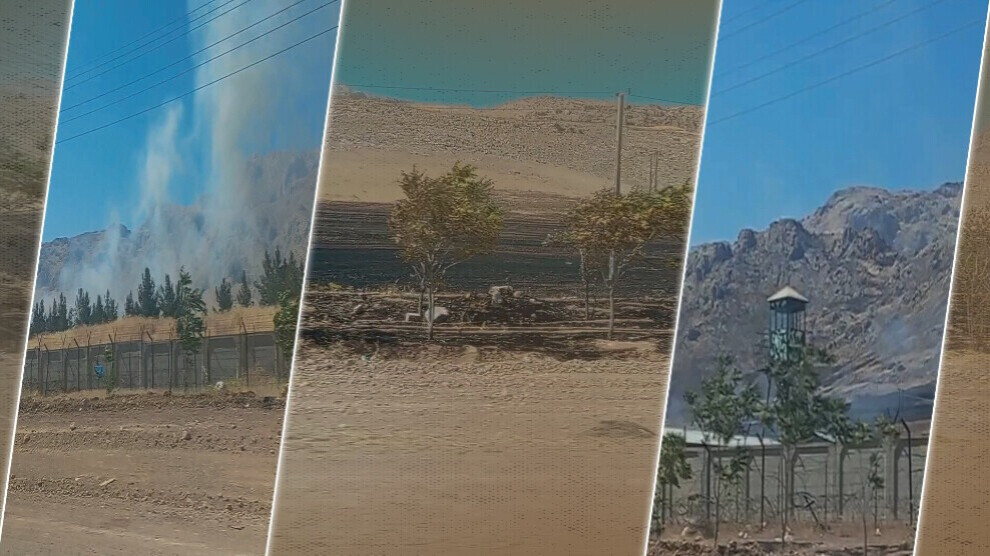
Kermanshah — Forest fires in the Zagros Mountains are no longer viewed merely as seasonal disasters tied to rising temperatures or intensifying droughts. Instead, they have evolved into an issue raising growing questions about their true causes and the parties benefiting from them.
Each summer, flames consume new swathes of forests and pastures, leaving devastating ecological and economic losses in their wake. Meanwhile, debate persists between the official narrative—which attributes these fires to natural factors or human error—and the accounts of environmental activists and volunteers. The latter present alternative hypotheses based, they say, on field observations and recurring patterns documented over several years.
Zagros: Between Ecological Disaster and Repeated Allegations
Forest and pasture fires represent one of the most critical threats to the ecosystem of the Zagros Mountains. Recurring annually with escalating frequency, they leave behind widespread destruction affecting vegetation and biodiversity in one of Iran’s most vital ecological zones. As the intensity of these fires grows year after year, explaining them solely through climatic factors is no longer sufficient in the eyes of many environmental activists and volunteer groups.
While there is no dispute that rising temperatures, drought, and declining vegetation moisture create conditions highly favorable for the ignition and spread of fires, several activists argue that these factors do not account for all recorded incidents. They suggest that a portion of the fires may, in their assessment, result from deliberate actions carried out by military or paramilitary forces of the Islamic Republic, as part of recurring security policies in various areas of the Zagros region.
Conversely, Iranian authorities reject these accusations, consistently asserting that the fires stem from natural causes or human errors, without acknowledging any military role in their outbreak.
Fires in Military Zones: Accidental Incidents or Deliberate Acts?
In recent days, vast areas of Kermanshah’s natural landscape have witnessed major fires—incidents where close inspection of the starting points reveals a concerning pattern. A significant percentage of these fires occur within areas controlled by military institutions, designated as military zones.
Typically, these areas are enclosed by high concrete walls, multi-layered fences, and watchtowers, making unauthorized entry virtually impossible for anyone other than military personnel. Consequently, a crucial observation emerges: the outbreak of fires inside these restricted, closed areas cannot be equated with typical wildfires occurring in open, natural landscapes.
Had these fires been caused by natural factors—such as extreme heat, hot winds, or spontaneous combustion of vegetation—it would be expected that military forces stationed nearby, being the closest and best-equipped, would immediately intervene to suppress the flames to safeguard their strategic sites. However, field reports indicate that, in many cases, no intervention took place; instead, the fires were left to burn until they expanded significantly.
Environmental activists argue that this data supports the hypothesis that fires breaking out in or around military zones may be intentional, orchestrated by the military forces themselves. They point to the repetition of these incidents inside closed military areas, the lack of an adequate response from stationed forces, and their coincidence with heightened security sensitivities in the region as factors that, in their view, make this scenario highly likely.
From Scattered Fires to Military Vehicles
Rashin F., an eyewitness who volunteered to fight fires in the mountains of the Dalaho region in Kermanshah province, recalls:
"About five years ago, a massive fire broke out in the local oak forests, and the flames spread rapidly. We immediately headed to the highlands to help extinguish them. The mountain slope was extremely steep, and the heat radiating from the burning oak trees was suffocating.
After hours of work, we managed to bring the fire under control on one of the slopes, only to be surprised by a column of smoke rising from another distant slope, starting a new blaze. We rushed to the site and put it out, but then another fire broke out even further away. We were all stunned because the three fire hotspots were not adjacent; they were separated by vast distances. Had they been close, the spread could have been blamed on sparks or the wind, but this distribution seemed highly unusual and suspicious."
He added:
"To verify what was happening, we observed the distant slopes using binoculars and noticed several individuals dressed in civilian clothing moving among the trees. From what we saw, they were using sprayers to apply a flammable substance to the tree trunks before setting them on fire.
The distance between us was too great to approach them or identify them in time. However, others later reported seeing these individuals boarding a vehicle bearing Revolutionary Guard (IRGC) license plates and entering one of the military bases in the area."
Environmental Destruction in the Service of Security and Military Goals
In recent years, vast stretches of natural resources in the border regions of western Iran have suffered major, repeated fires. Many environmental activists and regional analysts believe these fires may be part of a deliberate policy by the Islamic Republic aimed at stripping potential active zones of Kurdish opposition factions of their natural cover—particularly in mountainous areas with dense vegetation, which offer greater mobility and concealment.
Proponents of this view point to what they describe as recurring military operations conducted by the Islamic Republic against Kurdish forces in border areas inside Iran and within the Kurdistan Region, arguing that these operations support their hypothesis. They note that some bombardment campaigns have not only destroyed natural habitats but also sparked widespread fires—either directly through exploding munitions or indirectly by detonating landmines previously planted in those areas. According to these accounts, these mines can detonate due to heat, fire, or even the movement of rescue teams, triggering chain explosions and expanding the blaze.
Although the Iranian government has consistently denied these allegations, activists point to the 2018 death of Sharif Bajour and several of his companions as one of the incidents supporting this hypothesis. According to multiple sources, the incident resulted from a landmine explosion and deliberate fires. While some official sources initially reported the cause of death as a landmine blast, the official narrative later shifted, attributing the incident to other causes—a change that activists believe only adds to the ambiguity surrounding the case.