
Mining Threatens Bamyan's Farmlands and Homes, Displacing Afghan Families
In Bamyan, Afghanistan, mining projects threaten agricultural lands and homes, pressuring dozens of families to leave as extraction activities expand across the province.
BAHARAN LAHIB
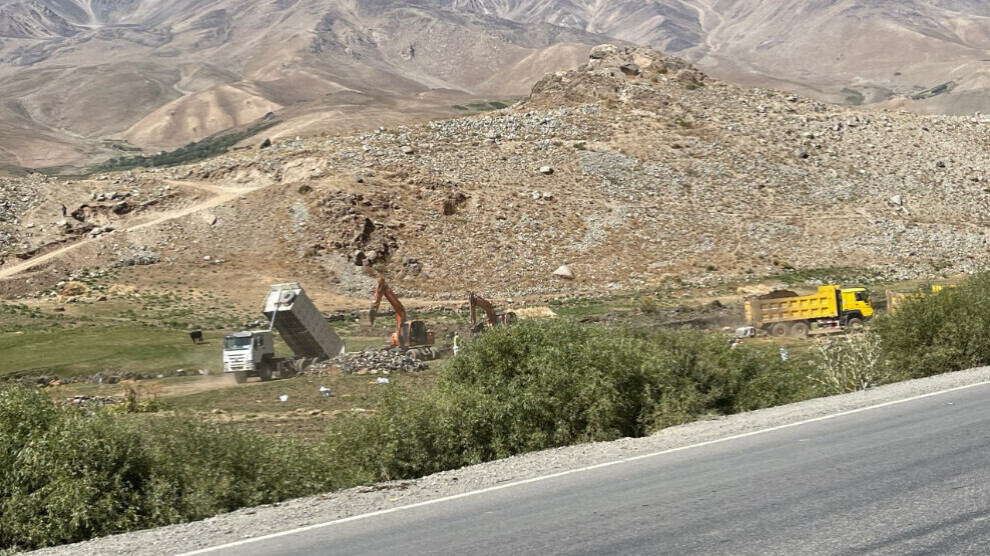
Bamyan_ On the road to the village of Bay Kowtal, agricultural lands appear amid mining‑related operations—lands that until recently were planted with potatoes and formed one of the sources of livelihood for the village's families. Residents say that with the start of mining activities, a number of families were asked to leave their homes and lands.
Bay Kowtal is one of the villages surrounding the mining area in Bamyan, where residents' lives depend on land and agriculture. About 50 families live in the village, while the future of the lands they have used for farming for years has become unknown to them.
To reach the village, our correspondent encountered Taliban forces at the entrance to the area, who were not allowing anyone other than local residents to enter. Thus, our agency did not have the opportunity to speak with a larger number of residents or directly observe other parts of the village.
However, one female farmer agreed to speak. She said that for the village's families, the lands are not merely agricultural plots but the primary source of income and livelihood: "We are poor people. Our only hope was this small amount of potatoes, but the Taliban destroyed it." As she affirms, families were forced to harvest their crops before they fully ripened, because they did not know how long they would be able to use their lands, amid pressures exerted on them to leave their homes and lands.
But the conversation stopped when an armed man approached the place. After the farmer saw him, she fell silent and refused to continue speaking. Our agency's correspondent left the place after a while, feeling she was under surveillance.
This field experience shows that the mining issue in this area is not limited to extracting natural resources; for residents, it is directly linked to land, home, income, and the security of their lives.
Mining and Promises of Development
Bamyan is among Afghanistan's mineral‑rich areas, and over the past years various projects have been proposed to exploit its iron reserves and other mineral resources.
In June of this year, the Taliban's Ministry of Mines and Petroleum announced the signing of a 30‑year contract to extract iron ore in Bamyan with two local companies. According to the ministry's announcement, the mine's area is 85 square kilometers, and a 20 percent royalty is to be paid, with all mineral materials to be processed inside Afghanistan.
Taliban officials see the exploitation of these mines as part of Afghanistan's economic development and job creation. But the fundamental question for the residents of Bay Kowtal is different: If mineral extraction comes at the expense of losing land and home, what is the local population's share of this development?
When Land Is the Family's Only Capital
For rural families, land is not merely a place for farming; the income generated from it covers the costs of food, treatment, education, and other family needs. Losing land, especially in an area lacking job opportunities, may place the family before an unknown future.
Under such circumstances, the issue of compensation acquires particular importance. If a family is forced to leave its land or home, it must be clear what will replace it, and whether the compensation is capable of covering the real cost of losing the family's source of income or not.
There is another question: Will local residents benefit from the job opportunities that mining projects will provide? And will part of the revenues generated from mineral extraction be allocated to improving roads, schools, health services, and other infrastructure in the area?
Women and Children on the Margins of Decisions
The effects of losing land are not limited to men or official property owners. Rural women also participate in agriculture and securing the family's needs, and losing land can affect their economic and social conditions.
If families are forced to relocate, women may face, more than other family members, economic difficulties and problems accessing services. Children may also lose, as a result of leaving the village, their schools and the environment they were accustomed to.
Yet the voices of women and other family members directly affected by mining projects are often the least present in decision‑making processes.
What Will People Get from the Mine?
For the residents of Bay Kowtal, mining development can only mean real progress when their lives are part of this equation.
Residents want to know what support families who will lose their lands or homes will receive, whether alternative housing will be provided for them, how many of the area's sons will be employed in the projects, and what the village's share will be of the services and infrastructure being promised.
In contrast, the Taliban authority and investing companies speak of revenues, investments, and job opportunities resulting from mining. The gap between these two narratives is the question that remains standing in Bay Kowtal: For whom does the development provided by the mine come, and who pays its price?