
Forest Fires Renew Every Year…Flames Consume Zagros
Zagros has witnessed a recurring cycle of forest fires for many years, fueled by fragile governance, lack of resources, and the decline of civil institutions. During crisis, it isn’t only the forests burn but also the lives of those who defend nature.
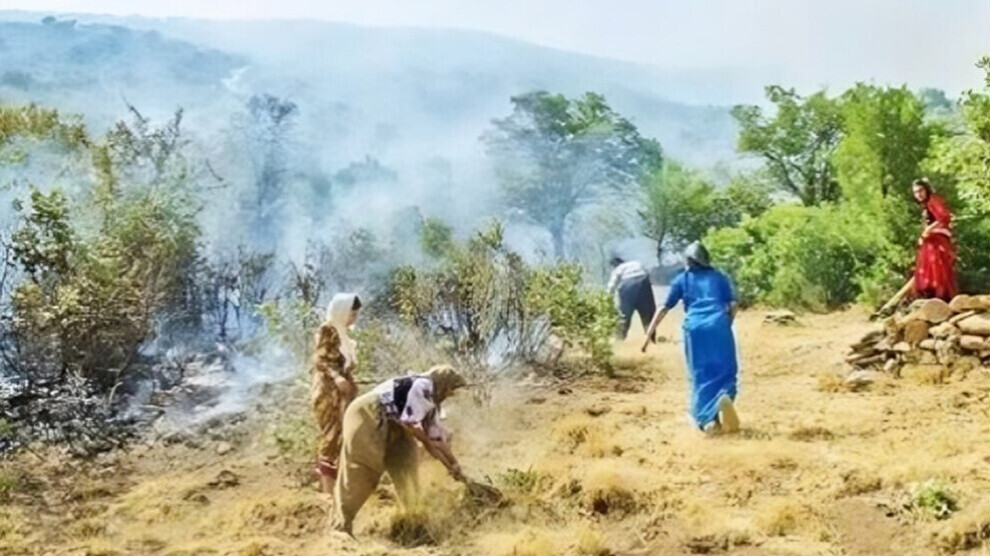
News Center_ Although the heavy spring rains in Zagros appear at first glance to be good news for nature, under current climate conditions they quickly reveal another face. The denser and more abundant the vegetation cover becomes during spring, the more it transforms into a vast flammable stockpile in summer. This contradiction has also been reflected in the official warnings issued this year.
The Lorestan Province announced that the good rains have contributed to the flourishing and significant growth of vegetation. However, these samw conditions have raised the likelihood of fires breaking out. Thus,Zagros today is greener,yet at the same time more fragile_a nature that revives in spring, then turns into a disaster with the first spark of summer heat.
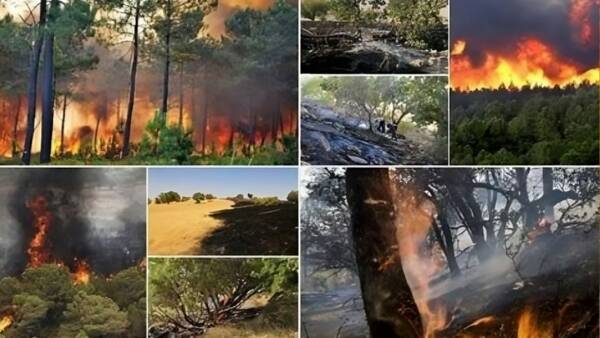
It is not only the forests that burn, but also the souls of those who defend nature—some activists and volunteers lose their lives while fighting fires or protecting the environment.
At the level of human factors, a clear and recurring pattern emerges: the burning of agricultural crop residues (straw and harvest leftovers), from which fires spread to natural areas. In 2024, the commander of the Natural Resources Protection Unit stated that farmers setting fire to crop residues was the most significant factor in recent fires in Zagros.
In East Kurdistan, fires do not only consume nature but also reveal underlying political dimensions. Hence emerges the concept of "political ecology"—when forest conservation becomes directly linked to civil organization, the demand for rights at the local level, and even resistance to turning environmental issues into security files.
The Green Jiya Association in the city of Marivan, East Kurdistan, is one of the most prominent environmental NGOs, active since 1999. However, this association and its members have repeatedly faced security pressures. In 2011, Amnesty International announced the arrest of environmental activist Farzad Hagh-Shenas. In 2019, a joint raid by Revolutionary Guard forces, intelligence agencies, and police on the association's annual meeting in an area near Marivan resulted in the arrest of at least 25 people. In 2023, it was reported that more than 35 members of the association were arrested during its annual meeting and transferred to an unknown location.
This securitized character is part of the crisis itself: at a time when efforts to protect the environment and strengthen civil institutions should be supported, defenders of nature face suspicion and pressure.
The collective memory of the Zagros region, particularly in Sineh (Sanandaj) and Kermanshah, is associated with the names of individuals who are no longer known merely as environmental activists but are now regarded as "martyrs of the environment"—those who lost their lives on the front lines of defending the land and the oak forests.
At the level of governance and management, the issue goes beyond a simple technical shortfall. A scientific study published in 2022 clearly indicated that Iran suffers from a shortage of specialized personnel, a lack of dedicated forest emergency bases, and a weak aerial support system for firefighting. Firefighting teams often face difficulties in quickly accessing water sources or reaching fire sites.
Media reports concerning the Khaeez fire showed that helicopters arrived several days after the fire broke out, and were only dispatched following direct orders from the highest official levels.
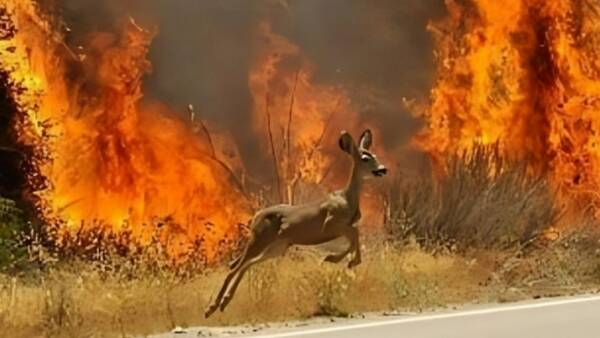
In Lorestan and other mountainous areas, local officials have repeatedly stressed the need to provide specialized water-dropping helicopters. Thus, the crisis lies not merely in the absence of one or two tools but in the absence of an integrated professional forest firefighting system—including fixed emergency bases, trained personnel, and effective coordination among various institutions.
In addition, technical and media reports have spoken of debt accumulation and administrative delays, which have further exacerbated the crisis. Instead of building a rapid and effective response system, some officials preferred to attribute the causes to farmers' behavior, citizens' negligence, or sudden winds, while the facts show that burning agricultural residues, prolonged drought, the absence of aerial support bases, delayed aid arrival, and the security treatment of environmental volunteers all contributed to the making of this disaster.
In the first half of 2024, 697 fires were recorded in natural areas, while flames consumed 460 hectares of the Khaeez region. In 2023, 1,704 fires were recorded, affecting more than 12,000 hectares of natural land.