
Women of Gaza Facing Winter… Flooded Tents and Mounting Burdens
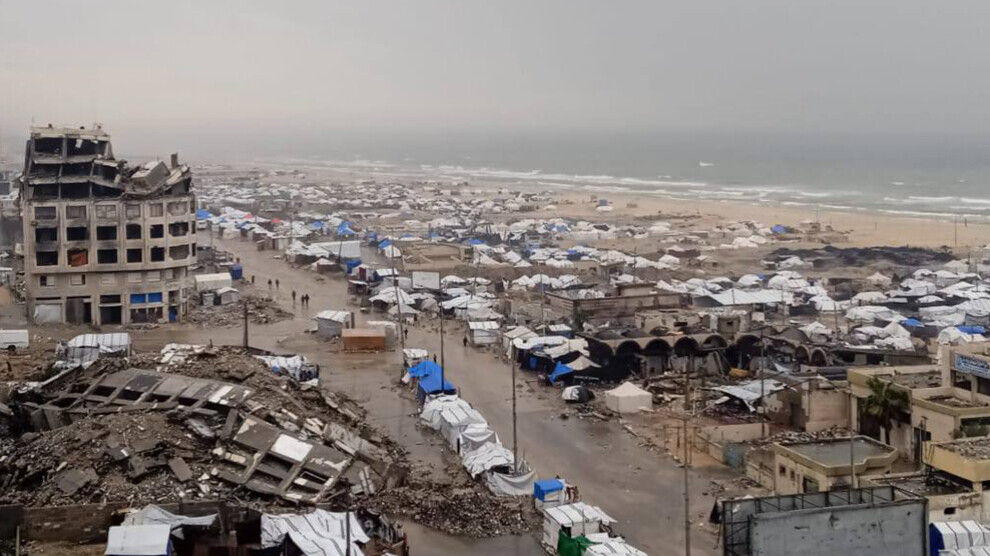
Displaced women in the Gaza Strip are living through a new chapter of suffering as severe weather systems intensify. Worn-out tents turn into traps for rain and cold amid the absence of any shelter that preserves their dignity and protects their children.
Nagham Karajah
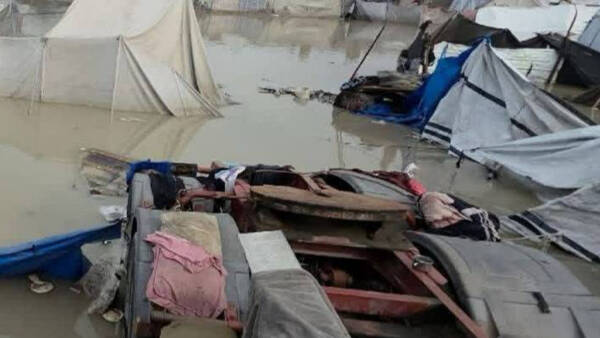
Gaza —On a night unlike any other in her displacement journey, 30-year-old Faten Al-Shawa found herself surrounded by water, cold, and helplessness after her dilapidated tent flooded and its fragile poles collapsed under the force of a violent low-pressure system that struck the Gaza Strip. This scene once again brought to the forefront one of the harshest images of humanitarian suffering endured by hundreds of thousands of displaced people—most of them women and children—living in tents unfit for habitation or protection.
Faten Al-Shawa, a mother of four girls, says these days are the hardest of her life since her first displacement from her home east of Gaza City. She stresses that she never imagined her life would turn from stability and comfort into such extreme fragility and deprivation.
She recounts the details of that night:
“I never thought rain could turn into an enemy like this. I woke up in the middle of the night to find myself sleeping in a pool of water. The tent that barely protected us had collapsed, its wooden supports scattered on the ground. The cold was brutal, and water was seeping into everything. I had no choice but to start gathering what remained of our belongings and mattresses before they were completely soaked.”
She continues in a voice weighed down by anguish:
“The hardest part wasn’t the water or the wind, but trying to wake my terrified children and carry them through the darkness and rain to a neighbor’s tent, after sleeping in our own tent became impossible.”
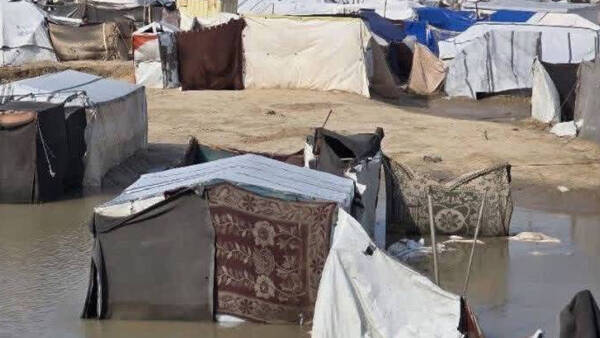
Tents Turn into Water Traps
Faten Al-Shawa—wife, mother, and sole provider at the same time—tries to comprehend the magnitude of the responsibility forcibly placed on her shoulders. Her husband, who was seriously injured while attempting to check on their targeted home, is now partially disabled, leaving her alone to confront the harsh realities of displacement.
“I was carrying soaked mattresses, heavy blankets, and tent poles by myself in the middle of the night, with no one to help me. In those moments, I felt crushed under an unbearable weight—not just the weight of things, but the weight of injustice and helplessness,” she says bitterly, before asking, “Why all this humiliation? How long will this criminality continue? Aren’t siege, displacement, and hunger enough?”
Faten’s suffering is not limited to the loss of safe shelter; it extends to the loss of the most basic elements of human privacy. Living in a worn-out tent means constant exposure and a complete absence of security, especially for women.
“Privacy in the tents is nonexistent—no walls to protect us, no doors to close, no space where we can feel alone. A woman here lives under constant pressure, torn between fear for her children and trying to preserve her dignity in merciless conditions,” she explains.
She adds that the recent low-pressure system has exacerbated women’s suffering in the camps, as tents have turned into water traps and the cold has intensified, with no real alternatives available.
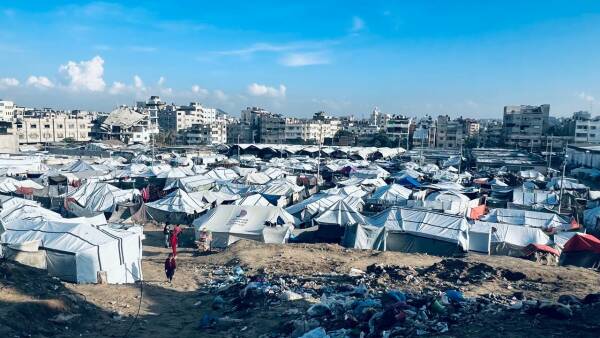
With the heavy rainfall, hundreds of tents across the Gaza Strip were flooded—a scene that repeats with every weather depression, with no radical solutions in sight. Estimates indicate that around 70% of the Strip’s population now live in tents or temporary shelters after widespread destruction of homes, leaving them directly exposed to harsh weather conditions, especially during winter.
“My wish today is very simple,” Faten says. “A strong tent that can withstand wind and rain and protect us from this freezing cold. I don’t want more than that—just for my children to sleep without waking up soaked in water.”
“Even Our Small Dreams Did Not Survive the War”
Beside the mother stands 14-year-old Nada Al-Shawa, a witness to the cruelty of a reality that has stolen her childhood and dreams. She says, “What did we do to deserve living like this? Even the word ‘life’ feels too big for what we’re living.”
Nada has been shivering from the cold since winter began and has been forced to sleep on a water-soaked mattress due to the lack of alternatives. “Our financial situation doesn’t allow us to buy a better tent, or even blankets to protect us from the cold.”
She speaks of losing her small dreams:
“I used to love studying. I spent my time learning new languages and cared deeply about school. Today, I can’t buy a notebook or pay school fees. I look at my classmates, remember my academic excellence in previous years, and grieve my dream of becoming a surgeon,” she adds sadly. “The war left us with nothing—even our small dreams didn’t survive.”
On the night the tent flooded, Nada tried to support her mother despite her young age.
“When the tent flew away because of the strong winds, I tried to help my mother move our belongings because I’m the eldest among my siblings. I had to stay with them and take care of them, while my mother was removing the accumulated water and moving what remained of our belongings to another place after everything had been soaked.”
A Scene Reflecting the Depth of the Humanitarian Crisis
From a human rights perspective, what Faten Al-Shawa’s family—and thousands of displaced families in the Gaza Strip—are experiencing constitutes a flagrant violation of basic human rights, foremost among them the right to adequate housing, the right to protection from harsh climatic conditions, and the right to human dignity.
International humanitarian law places responsibility on the occupying power to protect civilians and ensure the provision of safe shelter for them, especially in situations of armed conflict.
However, the reality in Gaza reveals a systematic failure to provide even the minimum of these rights, as families are left to face winter in worn-out tents, without infrastructure, sustainable solutions, or a humanitarian response proportionate to the scale of the catastrophe.
As torrential rains continue to flood tents across the Strip and real alternatives remain absent, the suffering of women and children deepens—painting a scene that reflects the gravity of the humanitarian crisis and raises urgent questions about the responsibility of the international community and the effectiveness of mere warnings and condemnations, at a time when displaced people are in desperate need of real protection and shelter worthy of their humanity.