
Under the Weight of Shelling in Yemen... Health Fears for Civilians from the Use of Toxic Shells
Civilians in the Taiz countryside face grave health risks due to repeated Houthi shelling with shells suspected of containing gaseous and toxic substances that have caused widespread cases of suffocation.
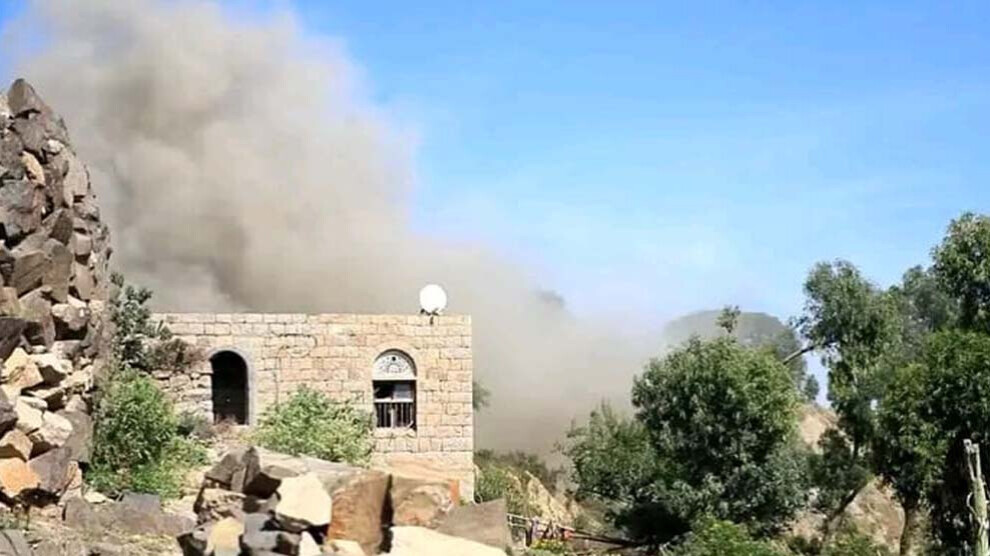
YEMEN_The residents of the villages of Jabal Sabr in Taiz city in Yemen are no longer facing the danger of shells and shrapnel alone. With the continuation of Houthi shelling, fears have emerged recorded among residents. As residents live under the weight of shelling, their fears are increasing about the effects of these substances on their lives, especially women, children, and the elderly.
The "SAM" Organization for Rights and Freedoms reported that it launched an urgent distress call to the international community and the United Nations to intervene and stop the Houthi shelling targeting civilians in the Kahalan area of Sabr Al-Mawadim district and Duba in Al-Aqrud, Taiz. It noted that Kahalan was subjected to intensive shelling that lasted more than 20 hours, during which more than 200 rocket and artillery shells fell on citizens' homes, resulting in deaths and injuries, including women and children.
The organization warned of the deterioration of humanitarian and medical conditions and the destruction of homes and property, amid the difficulty of evacuating the injured and counting the victims due to the continuation of shelling and the siege. It considered the targeting of civilians and civilian objects with heavy weapons a war crime and a violation of international humanitarian law and the Geneva Conventions.
Risks of Suffocation
Media professional Sama Al-Fadhli said that the Houthis did not content themselves with targeting women and children with sniping and ballistic missiles, but, according to what she stated, resorted to using shells and toxic and irritant substances that caused cases of suffocation among civilians in a number of targeted villages.
She explained that shelling with these shells led to the spread of substances in the vicinity of residential areas, exposing residents, including women and children, to health risks. She noted that cases of suffocation were recorded that required transferring a number of the injured to hospitals to receive medical care.
For her part, community activist Zubaida Al-Wajih condemned what she described as the crimes committed by the Houthis against civilians in the villages of Jabal Sabr, confirming that the villages were subjected during the past period to repeated shelling with various types of weapons, including mortar shells and shells suspected of containing toxic substances.
She added that civilians now face the risk of death by more than one means. Alongside the shells and shrapnel that reap lives and injure residents, there are fears of substances and gases emitted from some shells, which may cause suffocation and serious injuries even among people who were not directly hit by shrapnel.
She considered that targeting civilians with these weapons and substances represents a grave violation of international humanitarian law and calls for an independent investigation to reveal the nature of the substances used and identify those responsible.
For her part, media professional Layan Abdel Raqib said that the Houthis "have gone too far in targeting civilians" by firing shells suspected of containing toxic substances. She explained that the danger of these shells is not limited to the explosion or the shrapnel they produce, but extends to the substances believed to be emitted from them and spread in the vicinity of their fall.
She noted that this type of targeting doubles the risks to residents' lives, as people near the shelling sites are exposed to suffocation or poisoning even if they are not directly hit by the shells, making civilians in the targeted villages vulnerable to a danger they cannot avoid or know the extent of.