
New Restrictions Deprive Blind Girls of Continuing Education in Kabul
Girls with disabilities in Afghanistan face new restrictions depriving them of continuing education, after new instructions imposed by the Taliban prevented girls over 12 years old from studying in schools for the blind and deaf.
BAHARAN LAHIB
Kabul – With the issuance of a new directive from the Taliban preventing girls over 12 years old from continuing education in private schools and educational centers, the last windows of education and empowerment have been closed for blind and deaf children in Kabul.
In Afghanistan, living with a physical disability or loss of sight often means beginning a difficult journey from childhood — a journey that becomes even more difficult for girls. Children with disabilities are often deprived of their fundamental right to education and grow up amid contradictory societal treatments ranging between marginalization and pity.
The effects of this treatment are not limited to depriving them of equal opportunities to live and participate in society, but over time contribute to entrenching the image of "incapacity" and the need for pity in the consciousness of persons with disabilities themselves.
Small Steps Toward Empowerment; Windows Closed
Over the years, institutions, civil bodies, and activists in the field of the rights of persons with disabilities have made efforts to provide educational opportunities and prepare more suitable conditions for their integration into society. In this context, special schools were established to educate deaf and blind children, and a number of graduates of these centers, after completing their education, were able to return to them and work there as teachers.
This experience constituted one of the important steps toward empowering persons with disabilities, as it was not limited to providing education for them, but also allowed some of them to move from school desks to positions of teaching and giving.
But this limited space of hope began to shrink with the continuation of the broad restrictions imposed on the education of women and girls in Afghanistan. Recently, girls with disabilities faced a new wave of deprivation, after the Taliban issued, on 14 September, instructions preventing girls over 12 years old from continuing their studies in these special schools.
Armed Forces Entering the School for the Blind
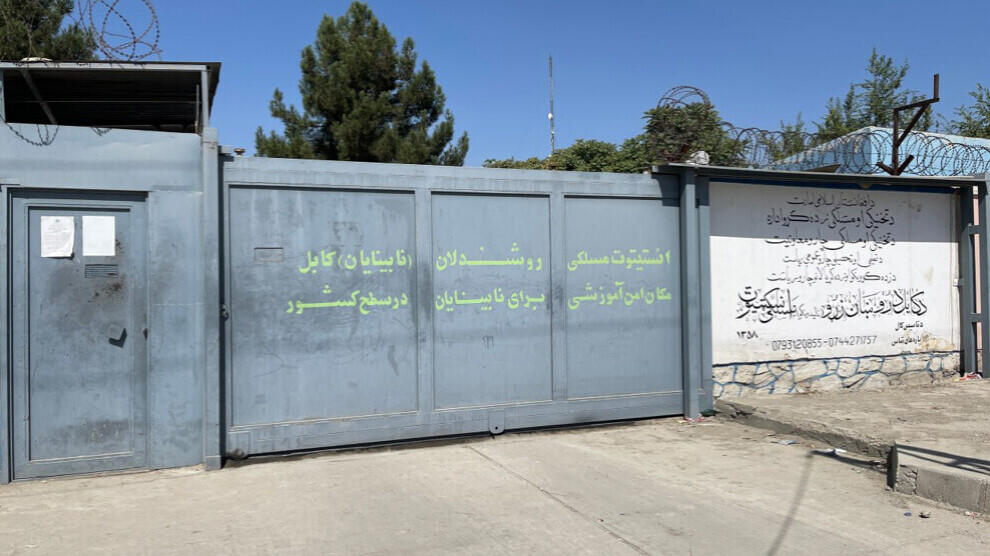
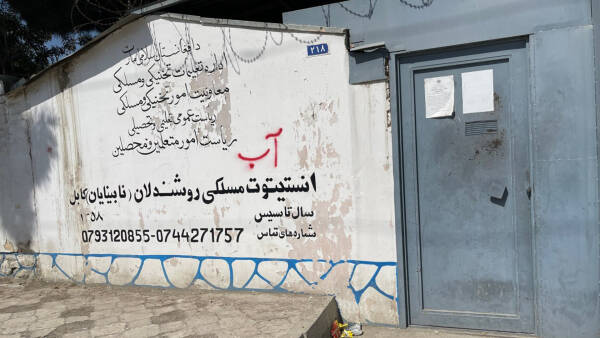
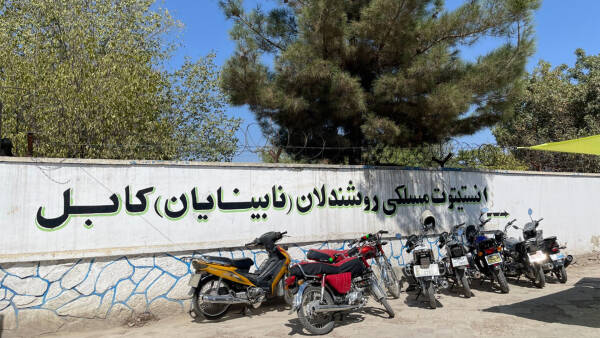
To examine the dimensions and repercussions of this decision, our agency's correspondent went to one of the private schools for the blind and deaf in Kabul. The school door was closed, and after persistent follow-up, we were able to enter the compound.
From the first moment, signs of anxiety were clear on the faces of employees and students. One of the center's teachers, "Nargis Roya" — a pseudonym — recounted the details of what happened: "We were busy teaching when a group of armed forces affiliated with the Taliban entered the school. Their presence caused a state of terror and fear among students and teachers. Then they asked questions and made remarks about our clothing, some of which were accompanied by threats, and this continued for long hours."
The teacher added: "In the end, they showed us a document stating that girls over 12 years old are not entitled to continue their studies. No matter how much we explained to them that education, according to the applicable frameworks, continues until the sixth grade, they showed no interest, and they warned us that we would face imprisonment if we continued teaching girls over 12 years old."
The End of Educational Hopes Under the Weight of Coercion
Following this incident, school officials were forced to keep the entrance closed, and the school was also forced to remove girls over 12 years old from the center. Since then, every path at the school gate has stirred a wave of anxiety and fear throughout its premises.
As for Nargis Roya, who was born blind, she was able, despite the difficulties, to graduate in the specialty of literature from one of Kabul's universities. After years of study and struggle, she chose to work as a teacher to serve children with disabilities, to convey to them what she learned, and to help them build a more independent future.
But the new instructions have placed her ambitions and those of her students before a new obstacle. The problem facing these girls is not related to their capabilities or their disability, but to the restrictions imposed on the educational opportunities and life available to them.