
Rotavirus Vaccine Shortage in Iran Puts Parents in a Race Against Time
The shortage of the rotavirus vaccine continues in Iran, amid a clear absence of doses in several health centers, putting parents in a race against time to secure the vaccine before their children exceed the specified age for receiving it.
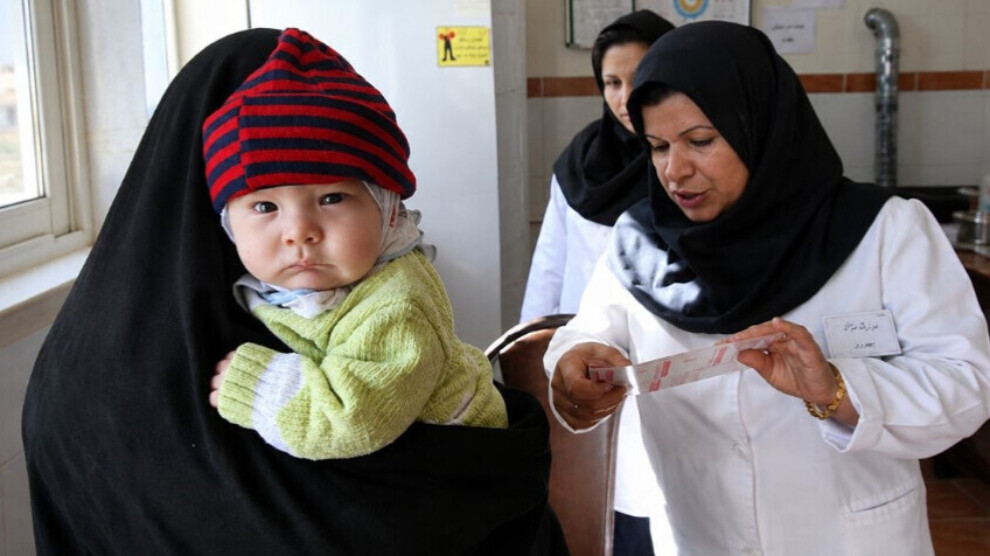
ZILAN ATMANI
URMIA_At a time when vaccines are supposed to be the first line of defense for children’s health, fathers and mothers in Iran find themselves in a race against time to obtain doses that are supposed to be available in health centers.
The shortage of some vaccines is not a new phenomenon in the country, but the repercussions of the 40-day war, alongside the continuation of supply problems, have brought the vaccine shortage file back to the forefront, and raised the level of anxiety among parents, especially with the existence of vaccines linked to a specific age that cannot be exceeded without losing the opportunity to obtain them.
The rotavirus vaccine stands out as one of the vaccines suffering from an acute shortage at the country level. According to circulating information, the production and distribution of the vaccine in Iran have been suspended since last February, at a time when an infant is supposed to receive it orally in the second, fourth, and sixth months of age. But a number of children born this year have not even been able to obtain the first dose.
Shida Kamali (a pseudonym), a nurse working in one of the health centers, says that the shortage also includes Urmia province. "Until now, no shipment of the rotavirus vaccine has reached us. We were using the limited remaining quantities only in special cases and for infants suffering from weak immunity, but this quantity is no longer available to us either. According to officials, the Ministry of Health has not purchased the vaccine, even though it was supposed to begin distributing it as of the first of last September."
She explained that the problem is not related to merely a delay in the vaccination date, but to a vaccine whose receipt is linked to a specific age limit. "There are age restrictions on administering it. If the infant exceeds eight months of age, they are no longer permitted to receive it. The purpose of this vaccine is to prevent severe diarrhea and dehydration."
For parents, the vaccine shortage turns into a journey of waiting and searching between health centers, in an attempt to snatch a dose that may not be available at the next appointment.
The Vaccine Shortage Confuses Parents
Hadiyeh Sh., a mother of a six-month-old child from Mahabad, says that she was forced to search for the vaccine through her acquaintances to obtain a dose for her child. "It is not exactly clear why this vaccine is not being distributed. I obtained the second-month vaccine after a two-week delay, through following up with one of my relatives in a health center in one of the villages. The quantity of vaccines was very small and ran out on the same day. The neighborhood health center said it would notify mothers as soon as other doses became available, but until now no news has arrived."
It does not appear that the rotavirus vaccine problem began with the last war alone. Although officials attribute its unavailability to sanctions and import problems that followed the 40-day war, data indicate that the shortage was also present during periods preceding the war, which raises questions about the actual reasons behind the failure to secure the vaccine and the continuity of the problem.
In the absence of a clear clarification regarding the mechanism for securing the rotavirus vaccine, fears are widening to include other essential vaccines for children, including the pentavalent vaccine, as well as adult vaccines, such as the influenza vaccine. Parents fear that the temporary shortage of one vaccine will turn into a broader problem affecting the regularity of the vaccination program, especially for children whose some doses are linked to specific age periods.
The importance of the rotavirus vaccine increases given the nature of the disease it is intended to prevent. The rotavirus is considered one of the most common viral causes of acute diarrhea in children and infants in countries that do not apply vaccination against it, and it causes annually more than 25 million outpatient medical visits, two million hospital admissions, and about 440,000 deaths among children under five years of age.
According to the report of the Ministry of Health, Treatment, and Medical Education in Iran, the country records annually no less than 10,000 cases of severe diarrhea requiring hospitalization, alongside deaths.
While parents await the arrival of new shipments, the most important question remains suspended: When will the rotavirus vaccine return to health centers, and how many children will be forced to exceed the permitted age to receive it before it becomes available?