
As-Sweida…A Worsening Humanitarian Crisis Amid a Shortage of Basic Needs
As-Sweida enters a more severe humanitarian crisis phase, with limited food, medicine, and fuel entry, power outages, declining services, while local organizations struggle to meet residents' and displaced persons' needs amid scarce resources.
ROCHELLE JUNIOR
As-Sweida – Since the events of July 2025, the city of As-Sweida in Syria has been living under a siege that tightens at times and loosens at others. Although limited quantities of basic necessities are allowed to enter, they do not meet the demands of the residents, and these restrictions have become part of daily life, before the crisis reached a new, more severe phase. Since 27 August 2026, As-Sweida has been suffering from a fuel cutoff alongside a decline in trade and transport movement.
For the residents of As-Sweida, the matter is no longer related only to the rise in prices of materials or the difficulty of obtaining them, but to the population's ability to secure the minimum necessities of life. This raises a question about whether the restrictions imposed on the entry of basic materials into the city have turned into a tool of political and security pressure on the residents of As-Sweida.
A Humanitarian Crisis
The repercussions of the crisis did not stop at the shortage of food supplies and fuel. Several areas in As-Sweida witnessed a long power outage that lasted for eleven days in the city of Shahba and its surrounding villages, in addition to parts of As-Sweida city.
The power outage had direct repercussions on basic services, especially hospitals, wells, and bakeries. Medical facilities may need power to ensure the continued operation of devices and the preservation of medicines and supplies, while the stoppage of wells exacerbated the water crisis, and the fuel cutoff caused many bakeries to stop.
As for the health sector, it was among the most fragile sectors in the face of this crisis. Workers in the civil field indicate that cancer patients, kidney patients, and patients with neurological, psychological, and chronic diseases found themselves facing additional difficulties in obtaining medicines and treatments, amid the interruption or shortage of a number of pharmaceutical categories.
"My House Is Your House"... A Return to Humanitarian Response
Under these circumstances, the "My House Is Your House" organization intensified its relief and humanitarian work, after it began its work in As-Sweida in 2011 as a relief committee that responded to waves of displacement coming from different areas in Syria.
Over the years, the organization's work developed to include livelihood programs, empowering youth and women, and enhancing social cohesion, in addition to partnerships with local and international bodies.
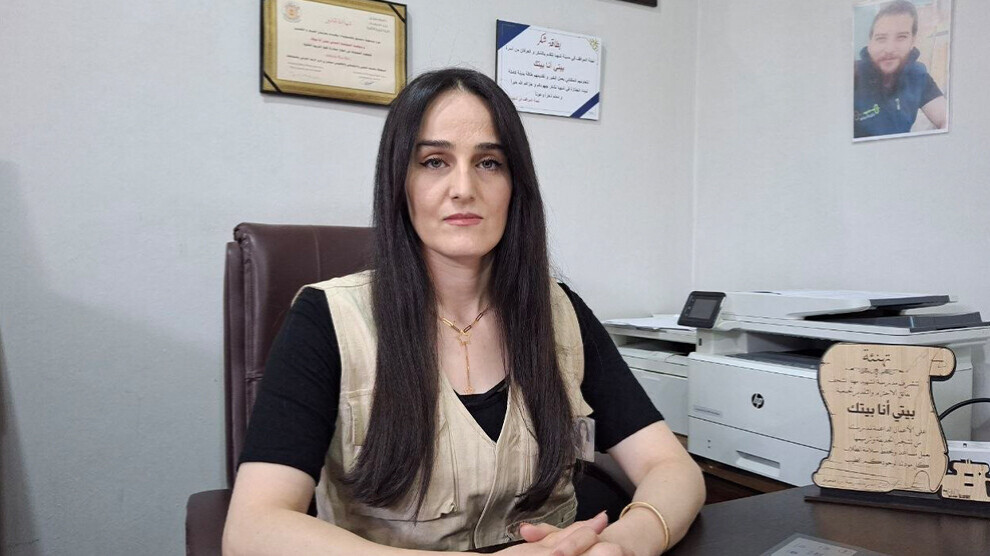
Regarding the organization's role and the work it is currently doing, Lamees Munzer from the "Programs Department at the Organization" says that the organization returned during the recent crisis to relief work intensively, especially after the waves of forced displacement that followed the events of July 2025.
She explained that the organization did not receive international support dedicated to humanitarian response during this phase, and relied mainly on local initiatives and assistance. It was also part of the unified relief committee in Shahba, in coordination with the city council, social figures, charitable associations, and civil organizations.
Needs Exceeding Local Capacity
The difficulty of humanitarian response increases with the widening scale of needs. The numbers of displaced persons and internally displaced persons as a result of the July events approach 190,000 people, based on the report of the International Investigation Committee. This figure places local organizations before needs that far exceed their financial and human capabilities.
In this context, Lamees Munzer explained that the response was limited, amid scarce funding, to providing food supplies and some medical and pharmaceutical assistance, in addition to rehabilitating and maintaining a number of shelter centers to provide safe and dignified places for the displaced.
She pointed to the challenges facing local organizations: "The lack of funding represents one of the most prominent challenges facing these organizations, as they find themselves before large, continuous, and recurring crises, while available resources remain limited."
She explained that the "My House Is Your House" organization worked during the crisis in cooperation with organizations present in As-Sweida within the "Reviving Civil Society" network, with the aim of raising the voice of civilians and conveying their suffering to international bodies, alongside conducting assessments of the needs resulting from the crisis.
When Needs Become a Tool of Pressure
Lamees Munzer addressed the methods of pressure exercised by the authorities to control the people. "When people's survival and resilience become directly linked to their access to basic needs, needs automatically turn into a tool of pressure in the hands of those who control those needs."
She confirmed that what is happening in As-Sweida cannot be reduced to a relief crisis only. "It is, first and foremost, a crisis of dignity and rights."
The "My House Is Your House" organization believes that any political or security arrangements concerning As-Sweida must not lead to burdening civilians, directly or indirectly, with the consequences of those arrangements.
Lamees Munzer summarizes the danger of the humanitarian crisis witnessed in As-Sweida city by saying: "The most dangerous thing about the siege is not what it takes away in resources, but what it takes away in a person's sense of their humanity. Access to basic needs has turned into a daily battle that pushes a person to defend their humanity and survival before they can defend their other rights."