
"Uprooted from our roots"... Displaced women tell stories of loss
The displacement from the villages of Sweida city has revealed the extent of suffering experienced by displaced women, from loss of land to multiplied burdens and fear of an unknown future.
Rosheil Junior
Sweida — For the women of the villages in the Syrian city of Sweida, displacement was not merely a forced transfer from one place to another; it was a complete uprooting from their roots, from the land that embraced them, from the homes that witnessed the details of their lives, and from a simple life that was nevertheless full of stability and contentment despite its simplicity.
The city of Sweida in southern Syria witnessed one of the largest waves of displacement in its modern history, following the violent attacks carried out by Hayat Tahrir al-Sham jihadists in mid-July 2025. These confrontations turned into a suffocating humanitarian crisis that pushed tens of thousands to flee.
"We didn't just leave a house... we left our entire lives"
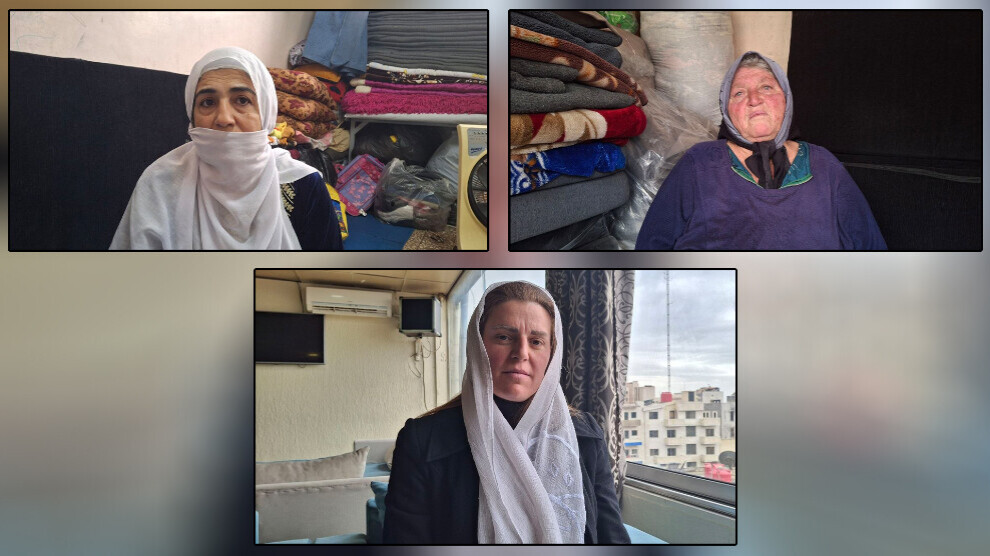
Fidaa Al-Muhaithawi begins her speech from the depths of pain, describing what happened as not just displacement but "harsh uprooting" from everything that constitutes the meaning of life. Fidaa hails from the village of Rimat Hazem, one of dozens of villages whose residents were forced to leave, leaving behind their homes, lands, and livelihoods.
She says that the eight months she spent away from her land did not pass like ordinary days; they were heavy, filled with anxiety and constant thinking about what they left behind. Recalling the image of the house and the small fenced plot of land that brought the family together, she adds, "We didn't just leave stones; we left our memories, our hard work, the details of our daily lives."
She explains that the land was not just an economic resource; it represented psychological and social stability and was a source of livelihood for many families, especially elderly women who had no other source of income. "We used to plant, harvest, wait for the season... we lived off our labor."
She points out that displacement was not limited to the loss of place but also led to the dispersal of families, as relatives became distant, and gatherings were no longer possible as before. "We used to be always together; now everyone is in a different direction," affirming that this distance has increased feelings of loneliness.
What pains her most, she says, is the situation of the elderly who lived their entire lives in those villages. "How can a woman who spent her whole life in one place suddenly adapt to a new life? This is a detachment from life itself."
Fidaa Al-Muhaithawi concludes her speech by expressing her fear for the children, that they might forget their land over time, affirming the importance of preserving collective memory, even through words and memories.
"We lived off the land... and today we have nothing"
As for Nadia Nasr from the village of Najran, she tells a story different in its details but similar in pain. For years, she depended on the land to raise her children and secure their lives. She says that farming was her source of strength and independence, and through it, she was able to raise her children and live with dignity.
"We used to plant and eat from the goodness of our land," she recalls days when the family would gather around one table from the product of their labor. She adds that that life, despite its simplicity, was full of contentment and tranquility, but displacement turned everything upside down. The land is no longer available, and there is no longer a source of income.
She sadly recounts a tragic incident when some young men tried to return to farm their land, and a landmine exploded, killing two of them. "Since that day, fear has become greater than nostalgia."
She describes the feeling of leaving home as indescribable. "I closed the door of the house feeling that I would never be able to return to it," noting that that moment is still stuck in her mind.
Nadia Nasr lives in a state of confusion, no longer knowing where some of her family members are, and fears dying far from her land.
"The hard work of 30 years is gone... but we will not abandon our land"
Salwa Yousef Kamal owned a house and land from which she and her family lived for decades. She says the land was everything to her. "It was our home, our livelihood, our life." She explains that she and her husband worked for many years to build a stable life, married off their children, and depended entirely on what the land produced.
But after displacement, there is nothing left. "The hard work of 30 years is gone." Salwa Yousef Kamal adds that her husband suffers from a health condition that prevents him from working, which increases the difficulty of the situation. "Currently, I live in a school, in difficult conditions, without any source of income or job opportunity." However, she affirms her clinging to her right to return.