
As-Suwayda… Unity of Components Overcomes the Wounds of Events.
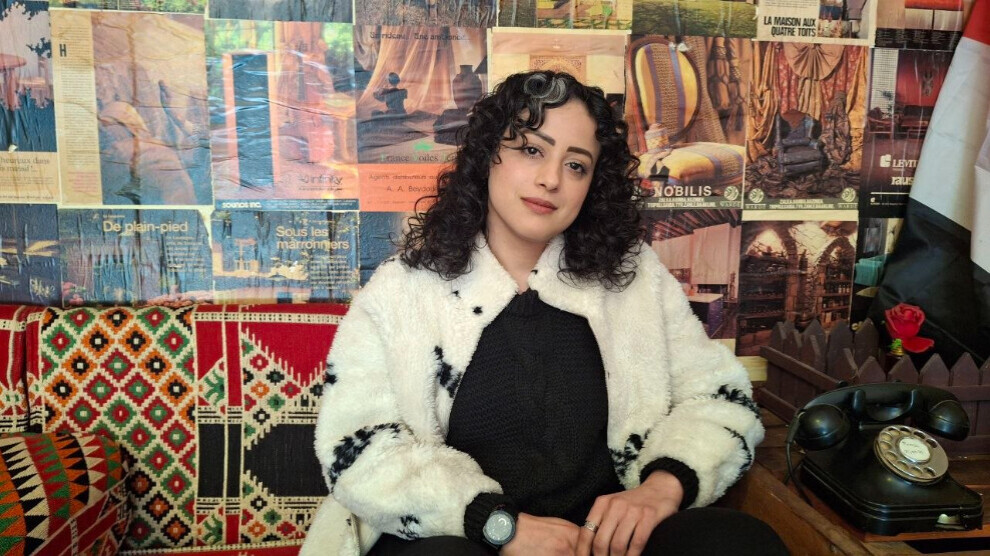
Yasmeen Ameen affirmed that the scenes of solidarity she experienced in As-Suwayda—from opening homes and sharing resources to supporting damaged projects—restored her confidence in the community's ability to recover.
Rochil Junior
As-Suwayda – Despite the religious and sectarian diversity that characterizes the city of As-Suwayda, where members of the Druze community form the majority alongside Sunni and Christian components, the area has historically been known for a state of coexistence and social stability. This cohesion is not a recent development but is the result of decades of deep human relationships that transcended narrow affiliations, establishing a tightly-knit social fabric.
Amid recent events and the accompanying violence and sectarian rhetoric, questions arose about the extent of these developments' impact on the unity of the local community, especially given the bloody attacks targeting civilians on sectarian grounds that the city witnessed. However, testimonies from within As-Suwayda paint a different picture, affirming the residents' commitment to values of solidarity and mutual support, even under the harshest circumstances.
In this context, Yasmeen Ameen, a woman who has lived in As-Suwayda for seven years, recounts her experience, which serves as a living example of the nature of relationships within the community. She says she went to the city with her cousin and opened a small project, quickly integrating into an environment that never asked her about her religion or affiliation, treating her on a purely human basis.
She explains that what changed after the recent events was not people's behavior, but rather the awareness of affiliations that were not previously part of daily life. "We have come to know who is Sunni and who is Druze, but not because people have changed; rather, because circumstances imposed this classification," she affirmed, stressing that relationships remain grounded in the same mutual respect.
At the height of the tension, Yasmeen Ameen found herself facing a real test. However, what she experienced, in her description, revealed the depth of the bonds between the different components. Druze families took the initiative to host her and provide her with protection in their homes, despite knowing her Sunni background, out of fear she might be harmed. She says, "In times of fear, they were the ones reassuring me, affirming that I was one of them."
This experience is not limited to its individual dimension; it reflects a long history of relationships between Sunni and Druze families in As-Suwayda. Sunni families have settled there for decades, weaving relationships of neighborliness, work, and sharing joys and sorrows with the local community, becoming an integral part of its fabric. Yasmeen Ameen affirms that these bonds did not weaken due to the crisis but grew stronger and more cohesive.
She added, "The role of women in As-Suwayda stands out as a fundamental pillar in maintaining this social cohesion," describing the woman in As-Suwayda as the "backbone of society" due to the multiple roles she plays, from caring for the family to managing crises and fostering a spirit of solidarity. She pointed out that women played a crucial role in calming spirits, containing fears, and transmitting the values of coexistence to new generations.
Coexistence is a Daily Practice That Manifests in Times of Crisis
She noted that the prevailing upbringing in the local community is based on respecting a person and their character, far removed from religious classifications, which contributed to solidifying a culture of acceptance of others. "People here raise their children on how to interact, not on [tribal] affiliation."
Despite the pain and losses caused by the events, Yasmeen Ameen affirms that the scenes of solidarity she witnessed—from opening homes and sharing resources to supporting damaged projects—restored her confidence in the community's ability to recover. Her neighbors and friends helped her reopen her project, reflecting the depth of solidarity among the residents.
Concluding her speech, Yasmeen Ameen said that As-Suwayda, despite its wounds, remains committed to its internal unity. The shared history, extended family ties, and the active role of women are all factors that have strengthened the community's resilience and affirmed that coexistence is not merely a slogan but a daily practice that becomes clearly evident in times of crisis.